

























































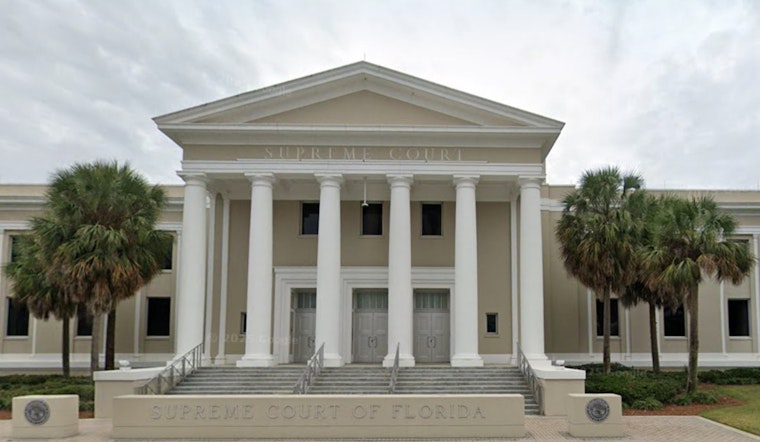
Florida’s highest court is being asked to answer a deceptively simple question with big real-world consequences: Can a statewide grand jury indict someone for leaking what happens behind its closed doors? The issue grew out of a Broward County case tied to the Parkland-era statewide grand jury and, after a round of appellate wrangling and a new push from state prosecutors, is now knocking on the Florida Supreme Court’s door. However the justices respond could either shore up secrecy protections for sprawling, multi-county probes or lock statewide grand juries into the exact list of crimes the Legislature put in statute.
Prosecutors press the Supreme Court
State attorneys led by the Solicitor General’s office have filed a jurisdictional brief urging the Florida Supreme Court to take the case, warning that the Fourth District Court of Appeal’s recent ruling “creates a dangerous precedent” by reining in how statewide grand juries can deal with leaks, according to the Tampa Free Press. In the brief, they argue that statewide grand juries form a “class of constitutional officers” whose inherent authority includes the power to safeguard the confidentiality of their own proceedings.
How the Myrick case reached the high court
The fight centers on Barbara Myrick, former general counsel for Broward County Public Schools. Prosecutors say that after she testified before a statewide grand jury, she called a witness and shared confidential details, including that then superintendent Robert Runcie was testifying, and allegedly added that the witness was “not supposed to tell” anyone about it. The Fourth District reversed a trial judge’s decision denying Myrick’s motion to dismiss, holding that the statute that criminalizes disclosure of statewide grand jury proceedings is not among the offenses a statewide grand jury is statutorily authorized to indict for, as explained in the opinion of the Fourth District Court of Appeal. The appellate panel instructed that the case be dismissed unless the Florida Supreme Court agrees to step in and review the issue.
Plea deal, appeal rights and earlier arrests
In October 2024, Myrick pleaded no contest to a reduced misdemeanor charge and received a one-year probation term that can be cut off after six months, while preserving her right to appeal the trial court’s refusal to dismiss the case, as reported by WUSF. Hoodline previously covered Myrick’s 2024 plea alongside the broader Parkland-era statewide grand jury probe. Her 2021 arrest landed the same day as that of then superintendent Runcie, following grand jury inquiries originally empaneled to examine school safety that later widened to look at contract and procurement practices in Broward.
What the Fourth District said and the dissent
The Fourth District grounded its decision in statutory construction. Florida’s statewide grand jury statute lists the specific categories of crimes that such grand juries may investigate and indict, and the court concluded that violations of secrecy are not on that menu. A concurring and dissenting judge countered that the statutory scheme should be interpreted with an eye toward preserving the grand jury’s effectiveness, but the majority leaned on the rule of lenity and what it saw as clear statutory language in favor of dismissal. In the opinion’s view, if that reading hamstrings the system, the fix has to come from either the Legislature or the Florida Supreme Court.
What comes next
In the coming months, the Florida Supreme Court is expected to decide whether it will accept the jurisdictional petition. If the justices pass, the Fourth District’s ruling will remain in place and effectively limit the statewide grand jury’s reach when it comes to prosecuting secrecy violations. If they take the case, the court will have to decide whether a statewide grand jury’s authority is confined to the statute that itemizes its subject-matter jurisdiction or whether the broader “inherent powers” theory pitched by prosecutors wins out.
Legal stakes and practical consequences
At the heart of the dispute are two statutes: §905.34, which restricts statewide grand jury jurisdiction to a specific list of offenses, and §905.395, which makes it a crime to disclose statewide grand jury proceedings. Both sit side by side in Florida law. If the Supreme Court agrees with the Fourth District, prosecutors who want to go after alleged secrecy violations may have to rely on county grand juries, other charging paths, or ask lawmakers to rewrite §905.34 to explicitly include disclosure offenses. Court documents and filings in the case underline that whatever the outcome, it will shape how future multi-county investigations protect witnesses and the integrity of sensitive probes that depend heavily on confidentiality.
Bottom line
On paper, the case is a narrow debate over statutory wording. In practice, it asks whether statewide grand juries can punish leaks to protect their own work or whether that kind of enforcement power needs to be spelled out more clearly in the law. The Florida Supreme Court’s decision about whether to review the case will set the path that courts, prosecutors and possibly legislators follow next.





