

























































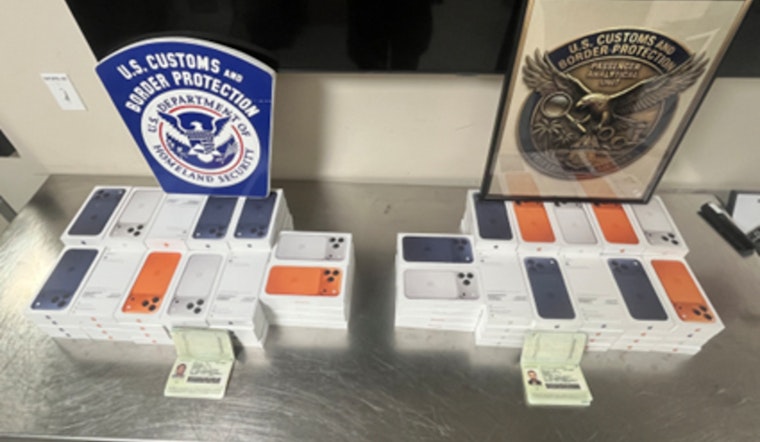
U.S. Customs and Border Protection officers at Fort Lauderdale-Hollywood International Airport seized 106 iPhones during an outbound enforcement sweep, according to authorities. The phones were discovered with passengers headed to Guatemala who, officials said, did not have the paperwork required to legally export commercial goods. CBP submitted the travelers’ visas for revocation and declined to release their identities or the estimated value of the haul, describing the operation as part of ongoing efforts to curb trade violations and smuggling.
CBP's account and warning
In a social media post, the Director of Field Operations for CBP in Florida said officers uncovered the stash during routine outbound checks and added a pointed reminder: “Planning to export iPhones? This is not the way to do it.” As reported by WPEC/CBS12, CBP said the devices were being exported without the documentation required for commercial shipments and confirmed that visas tied to the passengers were submitted for revocation.
How export rules apply to travelers
U.S. export rules can treat bulk quantities of consumer electronics carried by travelers as commercial shipments, which can trigger documentation or licensing requirements depending on destination and quantity. The Department of Commerce’s Bureau of Industry and Security administers the Export Administration Regulations and provides guidance on when a consignment needs classification or a license. That framework is one reason CBP and other federal agencies scrutinize outbound passenger baggage for potential trade violations.
Where the seizure happened
The seizure occurred at Fort Lauderdale-Hollywood International Airport, which is listed at 100 Terminal Drive in Fort Lauderdale on the Broward County Aviation Department customer service page. CBP did not release the passengers’ names or the estimated value of the phones. The agency also pointed the public to Department of Homeland Security resources on how to legally export items, according to WPEC/CBS12.
Legal and immigration consequences
CBP said visas associated with the travelers were submitted for revocation, an administrative move that can affect a person’s ability to reenter or visit the United States even if no criminal charges follow. Civil and criminal penalties for export-control violations vary based on intent and quantity, and the Commerce Department’s export-enforcement office regularly pursues administrative settlements and fines, as reflected on the BIS enforcement pages. CBP has cautioned that seizures can spark broader immigration and trade inquiries, not just the loss of the items in question.
Anyone planning to move multiple phones or other high-value electronics abroad is urged to keep invoices, declare items to CBP and consult federal guidance before traveling. The agency has directed travelers and businesses to Department of Homeland Security (DHS) and Commerce resources to understand export requirements and avoid seizures. When there is uncertainty, officials advise contacting the relevant agencies or seeking export-compliance advice to steer clear of forfeiture and immigration trouble.



