

























































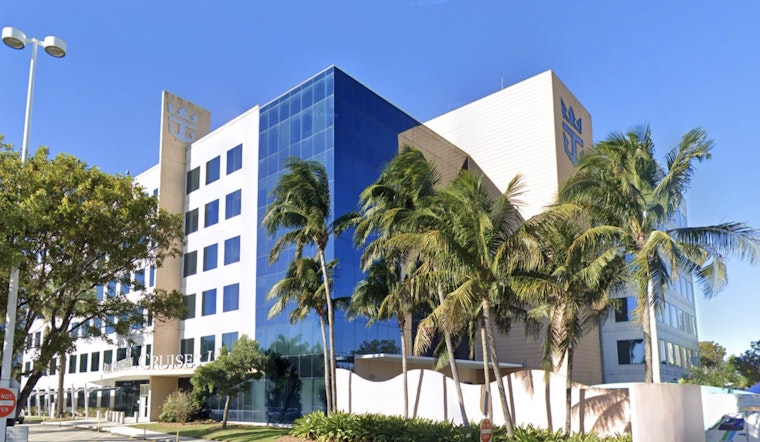
Royal Caribbean’s attempt to shove a hidden-camera scandal into private arbitration just took a hit in federal court in Fort Lauderdale.
On Wednesday, a U.S. magistrate judge there recommended that passengers who say a crew member planted hidden cameras in their cabins be allowed to press their claims in open court instead of being forced into one-on-one arbitration. The recommendation stems from a class-action lawsuit filed after a hidden camera was discovered in a passenger cabin on February 25, 2024 aboard the Symphony of the Seas. If the trial judge signs off, affected passengers could air their allegations publicly rather than fight quietly in individual arbitration proceedings.
According to the Miami Herald, U.S. Magistrate Judge Detra Shaw-Wilder concluded the plaintiffs had adequately alleged a “sexual assault dispute” under the federal Ending Forced Arbitration of Sexual Assault and Sexual Harassment Act, and recommended that the law cover the entire case. Shaw-Wilder noted that multiple federal circuits have held that masturbation can qualify as sexual contact, and that under maritime law the plaintiffs’ theory that “personal injury” encompasses emotional harm was enough to block Royal Caribbean’s move to compel individual arbitration. The report is a procedural win for the named plaintiffs and their attorneys, although it still awaits review by a district judge.
The original class-action complaint, filed October 15, 2024, identifies the lead plaintiff as “Jane Doe” and states that she was aboard Symphony of the Seas around February 25, 2024. The proposed class covers passengers who stayed in cabins serviced by crew member Arvin Joseph Mirasol between December 1, 2023 and February 26, 2024, and estimates as many as 960 potential victims, according to ClassAction.org. The suit alleges invasion of privacy, intentional infliction of emotional distress, and that Royal Caribbean failed to implement an adequate safety-management system.
In a parallel criminal case, prosecutors say Mirasol pleaded guilty to producing child pornography and was sentenced to 30 years in federal prison on August 28, 2024, according to the U.S. Attorney's Office. Investigators reported seizing his electronic devices and finding numerous videos, including footage involving minors and videos of him installing a camera in a guest bathroom. Those criminal findings undergird the civil claims and have already sparked multiple lawsuits against the cruise line.
What the EFAA does
The Ending Forced Arbitration of Sexual Assault and Sexual Harassment Act (Public Law 117-90) gives people alleging sexual assault or harassment the choice to go to court instead of being locked into pre-dispute arbitration, and makes those pre-dispute arbitration clauses unenforceable for such disputes, according to Congress.gov. That legal backdrop is the basis for the plaintiffs’ argument that the statute strips Royal Caribbean of the power to funnel these claims into individual arbitration. The law took effect on March 3, 2022 and has already surfaced in other recent lawsuits where courts refused to compel arbitration in alleged sexual-assault cases.
Next steps and what to watch
Magistrate Shaw-Wilder’s report and recommendation now heads to the district judge, who will review it under Legal Information Institute materials on 28 U.S.C. § 636 and Rule 72 of the Federal Rules of Civil Procedure. The judge can accept, reject, or modify the recommendation after considering any timely objections from either side. If the magistrate’s view is adopted, Royal Caribbean can still seek further review or appeal, and the fight over whether the case belongs in court or arbitration is likely to continue.
Plaintiffs’ lawyers have cast the recommendation as a meaningful victory for passenger victims, while Royal Caribbean did not immediately respond to requests for comment, the Miami Herald reported.
Legal implications and scale
If the district court lets the case proceed in open court, discovery could force Royal Caribbean to turn over internal records about crew training, supervision, and safety procedures that plaintiffs say fell short. The complaint relies on maritime law and seeks damages for invasion of privacy and emotional harm, estimating up to 960 affected passengers, a figure that would make this litigation unusually large for cases of this type, according to ClassAction.org. How the district judge rules, and whether the company appeals, will determine whether the dispute moves forward as a class action or splinters into individual suits.
What began when a guest discovered a hidden camera in February 2024 has now become a high-stakes test of how far cruise lines can go in steering scandals into private forums. The magistrate’s recommendation marks a significant procedural turn, and more filings are all but guaranteed as the district court weighs the report and any objections.





