

























































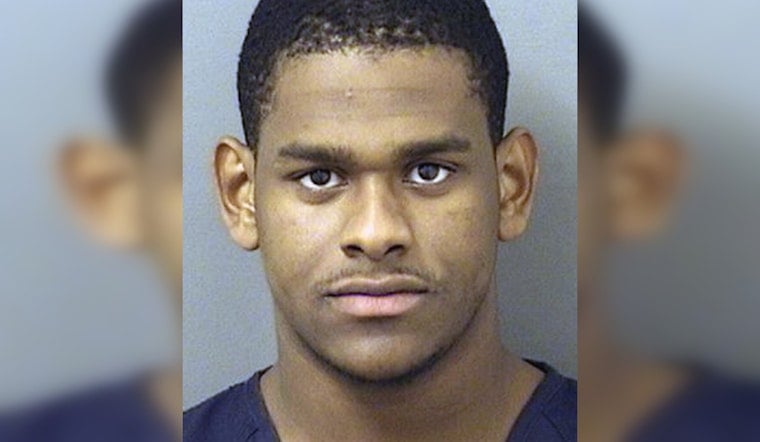
A Palm Beach Gardens man was sentenced to 30 years in prison this week after pleading guilty to manslaughter and fentanyl trafficking charges connected to the February 2024 overdose death of Daniel John Vetter, avoiding a capital murder trial that had been scheduled to begin Friday.
Casey Whitney Lafontant pleaded guilty to manslaughter, sale of fentanyl, and trafficking in fentanyl, according to CBS12. Prosecutors had alleged that Lafontant distributed fentanyl on or about February 16, 2024, and that the drug caused or was a substantial factor in Vetter's death. A Palm Beach County grand jury had indicted Lafontant that year on first-degree murder by drug distribution, sale of fentanyl, and trafficking in fentanyl, but the manslaughter plea resolved the original murder charge.
Under the negotiated agreement, Lafontant was sentenced to 15 years each on the manslaughter and fentanyl-sale charges, with those terms set to run concurrently with a 30-year sentence for trafficking. He must serve 20 years of that trafficking sentence and was ordered to pay $105,000 in fines, due by November 2056.
What Investigators Found in the Palm Beach Gardens Apartment
The case traces back to a search warrant that Palm Beach County Sheriff's Office investigators executed at Lafontant's Palm Beach Gardens apartment in June 2024, per the probable cause affidavit cited by the station. Investigators found several plastic bags containing a white powdery substance inside a backpack in the kitchen, and field testing identified the substance as fentanyl. The material weighed approximately 28 grams, and Lafontant admitted the fentanyl found in the residence belonged to him, according to the affidavit.
That quantity placed Lafontant's case at the upper end of Florida's fentanyl trafficking threshold. Under Florida Statute § 893.135(1)(c), trafficking between 14 and 28 grams of fentanyl carries a mandatory minimum of 15 years in prison and a $100,000 fine, with maximum penalties reaching 30 years, according to the Meltzer & Bell law firm. Because Florida law calculates those thresholds by the total gross weight of a recovered mixture rather than its purity, prosecutors did not need to establish how much pure fentanyl was actually in the bags to pursue the top-tier trafficking charge, per the Joshi Law firm.
Why Prosecutors Could Have Sought a Murder Conviction
Lafontant's original indictment reflected a Florida legal framework that treats fatal overdose sales as homicide. Under Florida Statute § 782.04(1)(a)(3), distributing a controlled substance like fentanyl that proximately causes a death is classified as first-degree murder — a capital felony carrying mandatory life imprisonment without parole or the death penalty — and prosecutors do not need to prove intent to kill, according to the Sammis Law Firm. That framework traces to a 2023 state law, Senate Bill 612, which expanded Florida's homicide statute to explicitly cover fentanyl and its synthetic analogs, removing any requirement that prosecutors show a distributor knew the substance was lethal, per the Drew Fritsch Law Firm's analysis of the statute.
That exposure to a capital charge is exactly what gives prosecutors leverage to negotiate guilty pleas on lesser counts rather than take cases to trial, according to the Musca Law firm's review of the statute. It is a pattern Palm Beach County has used before. State Attorney Dave Aronberg and local police agencies have repeatedly used drug-induced homicide charges and mandatory minimum sentences as prosecutorial tools against distributors, according to a WLRN report. As a state prisoner convicted under mandatory minimum drug trafficking terms, Lafontant will not be eligible for parole on his sentence, per the Brancato Law Firm's guide to Florida homicide statutes.
Part of a Broader Pattern of Overdose Prosecutions
Lafontant's case is not an isolated one for the county. In October 2024, Palm Beach County prosecutors secured a first-degree murder by drug distribution indictment against 20-year-old Kevin Gonzalez-Alejo following a fatal West Palm Beach overdose involving fentanyl sold as cocaine, as Hoodline previously reported. And in February 2026, Boca Raton police assisted North Carolina authorities in arresting a suspect on a death-by-distribution warrant tied to a 2025 fentanyl overdose, showing how regional agencies increasingly treat fatal overdose scenes as active homicide investigations.
The prosecutions come amid a documented decline in fatal overdoses across the county. Overdose-related fatalities in Palm Beach County fell by as much as 64% between 2022 and 2025 following aggressive local task force operations targeting illicit recovery centers and drug dealers, according to a CBS 12 News report, which credited more than 120 arrests by the Palm Beach County Sober Homes Task Force for the drop. Still, the crisis had been severe leading up to Vetter's death — Palm Beach County recorded the third-highest number of fentanyl-related deaths among Florida counties in the first half of 2023, with more than 580 fentanyl fatalities recorded across South Florida during that period, according to data from the Florida Medical Examiners Commission cited by Police1.




