

























































After decades of planning, arguing and engineering, workers at the Hanford nuclear reservation in southeast Washington this week quietly did something that had never happened there before: they started burying glassified nuclear waste on site.
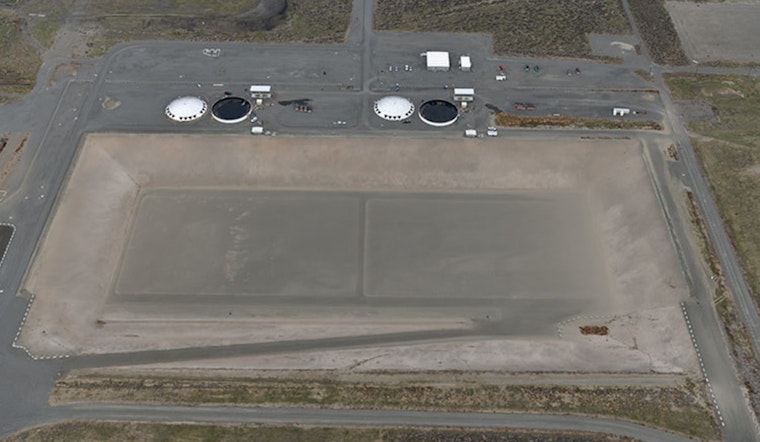
Crews began placing the first stainless-steel canisters of vitrified tank waste into Hanford’s new engineered landfill, the Integrated Disposal Facility. It is the first on-site burial of glassified waste produced by the Waste Treatment and Immobilization Plant. Each canister is roughly seven feet tall, weighs about seven tons, and several dozen containers have been staged on a concrete pad near the landfill. It is one of the most tangible steps yet in a cleanup effort that stretches back to the Manhattan Project and the Cold War.
DOE calls the placement a milestone
The U.S. Department of Energy is treating the move as a big deal, calling it "key progress" for Hanford’s tank-waste cleanup and saying roughly 25 containers were staged and ready for disposal. Hanford Site Manager Ray Geimer put it this way in the agency’s announcement: "Safely beginning disposal shows that the systems, facilities and people needed to support tank waste treatment are working together." According to the Department of Energy, the work reflects coordination of engineering, regulatory and readiness activities across the site.
How the waste is turned to glass
At the vitrification plant, low-activity tank liquids and sludges are mixed with glass-forming materials, heated in melters and poured into stainless-steel canisters, where they cool into a durable glass matrix. Local reporting noted that about 30 canisters have been staged on a concrete pad and that roughly six were expected to be moved into the sandy disposal cell by the end of the week. The Integrated Disposal Facility, an engineered landfill in central Hanford designed to hold these glass logs, has been described as roughly two-and-a-half football fields long, five football fields wide and about 45 feet deep, as reported by OPB.
The size of the cleanup task
For all the fanfare, the job is only getting started. State records show Hanford’s tank farms still contain about 56 million gallons of radioactive and chemical waste stored in 177 underground tanks, a legacy of weapons production that regulators call the site’s most dangerous challenge, according to the Washington State Department of Ecology. The agency says vitrification followed by disposal at engineered facilities like the Integrated Disposal Facility is central to reducing long-term risk to the Columbia River and surrounding communities. Contractors and site partners say the early disposals are a test of transport, handling and disposal systems that will have to scale up safely to address the remaining waste.
What is next for the vit plant
The Waste Treatment and Immobilization Plant now employs about 3,000 people, and site reporting says the start-up phase is expected to produce roughly three to four glass canisters per day, ramping toward a low-activity waste capacity of as many as five containers per day at full operation, according to the plant’s fact sheet from the Hanford Site. Local industry coverage in the Tri-Cities Area Journal of Business frames the milestone as a shift from readiness to steady treatment while cautioning that the job is far from finished. Contractors and partners emphasize continued regulatory oversight and community engagement as operations scale to treat tens of millions of gallons still in the tanks.
For residents, regulators and workers in the Tri-Cities region, the new disposals are a visible sign that decades of engineering and oversight are finally producing results, even if full cleanup will play out over many years. Officials say the disposals will be monitored and the systems refined as production increases and more canisters are moved into the Integrated Disposal Facility.


