

























































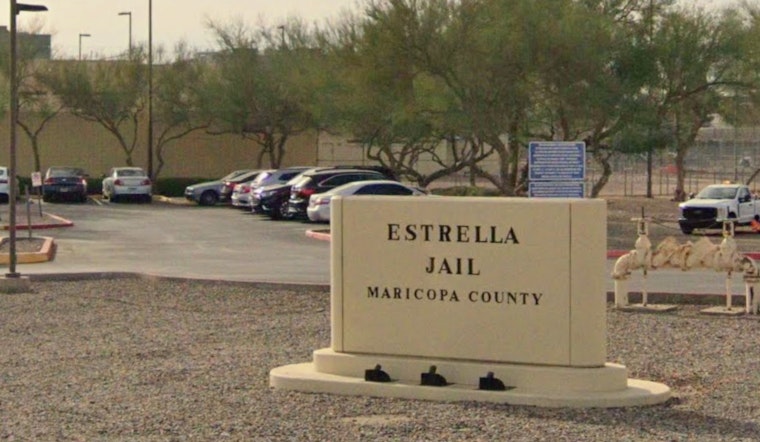
A groundbreaking survey inside Estrella Jail found that roughly half of the women locked up there say they have been sex trafficked. The confidential questionnaire, completed by 408 incarcerated women, represents about half of the jail’s female population and also surfaced extremely high rates of sexual assault and domestic violence. County officials and university partners say the findings are already reshaping the kinds of trauma-informed programs that will roll out this spring. Advocates argue the data underline a hard truth: many women hit the criminal-justice system as victims first, not as offenders.
What the survey found
Run jointly by the Maricopa County Sheriff’s Office and Arizona State University’s Office of Sex Trafficking Intervention Research, the survey offers a stark snapshot of the women held at Estrella. According to ASU News, 50.9% of respondents reported being sex trafficked, 62.2% reported sexual assault as an adult, and 80.1% reported experiencing domestic violence. Many also disclosed mental-health diagnoses and histories of substance use. Researchers say those numbers will guide new programming and a revamp of staff training inside the jail.
New programs and funding
County leaders say the findings lit a fire under efforts to expand services. Officials have lined up 11 new trauma-informed programs that will focus on mental health, addiction, education, parenting and recovery for women during their time in custody. Deputy Chief Brandon Smith told ABC15 that routine intake screenings had previously flagged about 25% of women as trafficking victims, so the survey effectively doubled what they thought they knew. That gap, he said, will help the jail fine-tune how it delivers services. County officials say a grant from the Arizona Department of Public Safety is helping fund the effort and that both staff and volunteers are training to lead the new classes.
Survivors and advocates react
On the streets of Phoenix, survivor-advocates say the numbers feel all too familiar. Carrie Bradley, founder of IdentiFreed, told ABC15, "I was out here for 12 years. Are you sick of it yet?" and pushed for the jail’s new offerings to be tied to real follow-up support, including case management and housing, so women do not boomerang back into trafficking. Volunteers who lead recovery and parenting courses at Estrella note that jail stays are often short, while the hard work of re-entry stretches on long after release and has to be carried by community groups on the outside.
Why this matters
Researchers say the Estrella findings echo a pattern seen in earlier local work: people who are victims of trafficking and chronic abuse often move through probation, jail and prison without being consistently identified or connected to help. A 2015 review of sex-trafficking incidence on Maricopa County adult-probation caseloads called for specialized interventions and stronger systems to flag victims, helping explain why jail-based data can be so useful for designing services. Leaders at ASU and the sheriff’s office have signaled they want to repeat the survey and build out a longer-term data set to track change over time, according to KOLD and the McCain Institute.
What comes next
Officials say the results will be folded into Maricopa County Sheriff’s Office training, including detention-academy coursework, and will serve as a baseline to see whether the new programs reduce recidivism and unmet needs. Advocates and researchers caution that classes inside a jail are only a starting point; long-term healing, they say, depends on stable housing, sustained case management and treatment networks that reach far beyond the jail’s perimeter. ASU researchers told ASU News that the study gives counties a way to measure progress and to design services that acknowledge the deep, layered trauma many incarcerated women carry with them.





