

























































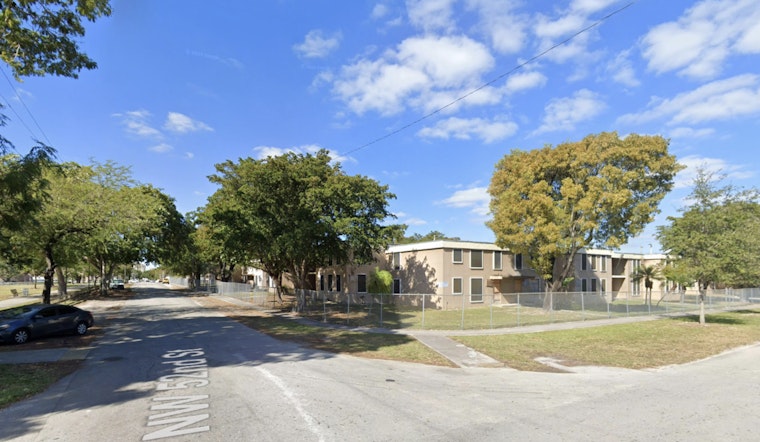
Integra Investments is looking to dramatically remake a former public housing parcel at 2101 NW 52nd St, pitching roughly 316 new apartments targeted to affordable and workforce households. The concept folds in ground-floor retail, a food hall, community spaces and on-site resident services. The site is tied to Miami-Dade’s broader Rental Assistance Demonstration (RAD) push, so the plan will need a full slate of local, state and federal approvals before any dirt turns.
Project plan and design
According to South Florida Business Journal, Integra’s filing lays out a more-than-300-unit project and names Lantz Boggio Architects as the design team. A ground-floor food hall is listed among the retail amenities, part of a pitch for a mixed-income community that keeps the street active while providing services for residents.
Integra did not include a construction start date in its filing. That clock will be set by the approvals process and the timing of subsidy awards, which will have to line up before the project can move from glossy renderings to actual construction.
Where the site sits and public-housing rules
The property falls within the Annie Coleman 14 cluster and is labeled as 2101 NW 52nd St (Group 1) in Miami-Dade’s RAD solicitation. As detailed by Miami-Dade County, any RAD redevelopment has to replace existing public-housing units one-for-one and must include resident protections, relocation plans and sustained community engagement.
The county’s guidelines also require selected developers to build model units and carry out phased transfers, so that current residents can move into new apartments on a rolling basis rather than being permanently displaced. The promise on paper is that tenants can return to replacement units under comparable terms.
Residents and neighborhood reaction
Residents and neighborhood organizers are not taking those promises on faith. They have been pushing for written guarantees that original tenants will be able to come back and for clear, enforceable standards on how affordable the new units will be and what community benefits will actually show up on site.
The Miami Times chronicled public meetings where residents raised blunt fears about displacement, and quoted county housing officials insisting that “anyone who lives in public housing will be able to continue to live in public housing.” The proposed deal outlined in that reporting includes an on-site police workstation and pledged contributions to neighborhood cultural funds as part of a negotiated community-benefits package.
Where this fits in Miami's larger RAD boom
This Integra proposal is one tile in a much larger RAD mosaic across Miami-Dade. The county is trying to convert aging public-housing complexes into thousands of new affordable and workforce units, using RAD to pull in private and public financing that officials say is needed to modernize deteriorating buildings.
The Real Deal has reported that county leaders are counting on long-term lease revenue from these deals, while critics keep pressing for answers on appraisals and oversight. Supporters argue that without RAD, many complexes would simply continue to crumble. That tug-of-war between building more housing and protecting public value and transparency hangs over projects like Annie Coleman 14.
What happens next
For Integra’s plan, the road ahead is heavily procedural. The proposal has to clear county review, secure U.S. Department of Housing and Urban Development sign-offs or CHAP letters where required, and assemble a complex capital stack that includes low-income housing tax credit equity and public loans. The Miami-Dade County RAD solicitation spells out those steps along with detailed community-engagement requirements.
Developers that win RAD awards are responsible for relocation logistics, resident outreach and building model units that the public can review before a full build-out. Timelines will depend on when subsidies are awarded, how financing markets behave and how quickly permits move through the bureaucracy.
Housing advocates say they plan to keep a close eye on contracts and future filings to see whether the promises being made now are backed by legally enforceable language. County officials, for their part, point to RAD rules that they say are designed to preserve residents’ rights. For the moment, neighborhood groups and commissioners are watching a familiar set of milestones: commission votes and subsidy rounds that will determine whether Integra’s plan stays on paper or turns into a construction site.





