

























































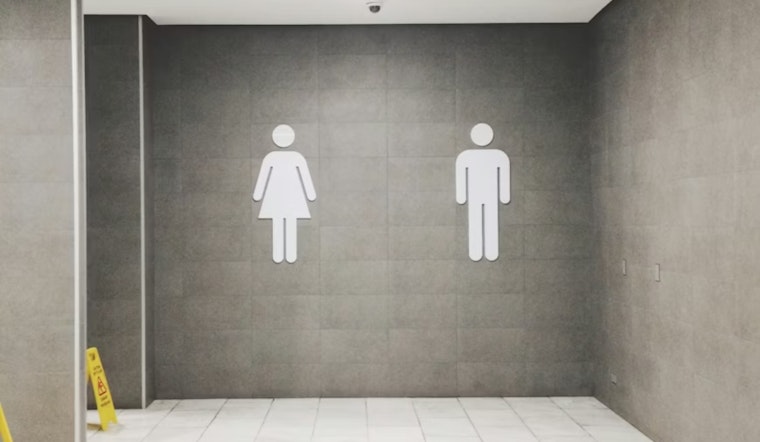
When San Diego’s public restrooms vanish behind locks and curfews, transgender and gender-diverse residents say the fallout is not just awkward or annoying, it is making them sick. Community members and clinicians report that cutting back on water, holding urine, and avoiding restrooms that feel unsafe or hostile have led to urinary tract infections, flare-ups of bowel disease, and long-term pelvic-floor damage. The health problems are serious enough that some people stay home, miss work, and shrink the distance they feel safe traveling around the city.
First-Hand Accounts and Medical Diagnoses
Recent local reporting has surfaced specific cases. Franky Arambula told Times of San Diego that an apartment pool bathroom he depended on was suddenly restricted to residents only during the 2022 Christmas rush. He later connected that change to worsening irritable bowel syndrome and a diagnosis of pelvic-floor dysfunction.
UCSD urogynecologist Cecile Ferrando explained to the outlet that the problem is bigger than one building. “When patients either can’t access a bathroom or don’t feel safe accessing a bathroom, they’re much less likely to hydrate properly,” she said, warning that long-term fluid restriction can damage both bladder and kidney health.
National Data Show the Stakes
Those stories line up with national data. According to the National Center for Transgender Equality, which conducted the 2015 U.S. Transgender Survey, nearly one-third of respondents reported experiencing homelessness, and many said they avoided public restrooms altogether. Among those who steered clear of bathrooms, the survey found higher rates of urinary-tract and kidney issues tied to holding urine or severely limiting fluids.
San Diego’s Thinning Bathroom Safety Net
In San Diego, those health risks run headfirst into an already fragile restroom network. Investigations and local watchdogs have repeatedly highlighted that the city’s public-bathroom supply is unreliable and often inaccessible. Voice of San Diego has noted that outbreaks of hepatitis A and shigella were tied in part to limited bathroom access, and that many supposed public facilities are closed, poorly maintained, or subject to tight curfews.
Policy Patchwork, and a Partial Fix
City officials are starting to move, but only partway. In July 2024, City Councilmember Jennifer Campbell asked city staff to draft an ordinance that would require all new or significantly renovated city buildings to include all-gender restrooms. State law already mandates that single-stall facilities be gender-neutral, KPBS reported.
Advocates say those rules would help but warn that signage alone will not solve the crisis. They argue the city also needs more total fixtures, reliable cleaning and maintenance, and clear standards for when businesses must let people use their restrooms so that workers and unhoused residents have dependable options.
On the Ground: What People Are Doing
Until policies catch up, people are improvising workarounds. Some locals keep mental maps of friendly coffee shops and gas stations. Others simply drink less and narrow the places they travel. One San Diego resident told Times of San Diego they stick to a 30-minute travel radius to avoid being stranded without a safe restroom. For unhoused residents, advocates say, the stakes can be even harsher, with some facing worsening incontinence or the prospect of permanent catheterization when bathrooms are consistently out of reach.
What Needs to Change
Public-health experts and transgender advocates are largely in agreement on the fixes. They call for more single-stall, all-gender restrooms in parks, transit hubs, and city buildings, backed by stable funding for upkeep, plus a clear rule that businesses open their toilets in emergencies. Without that mix of infrastructure and policy, local clinicians warn, San Diego is likely to keep seeing preventable medical problems in communities that already shoulder heavy burdens in housing, employment, and health.



