

























































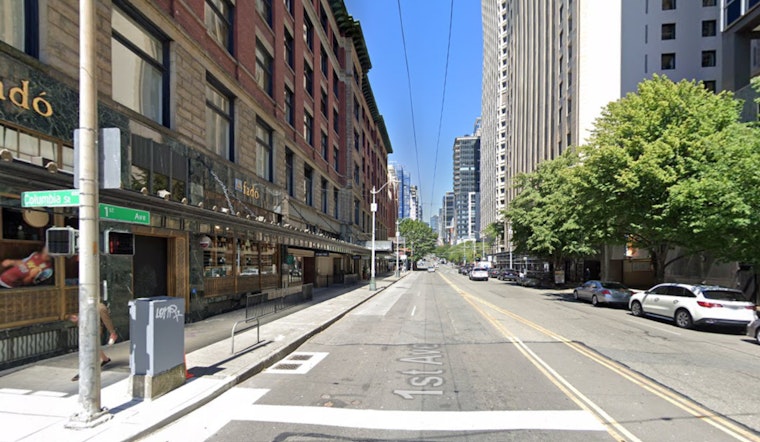
What was supposed to be a flashy, arts‑forward World Cup hangout next to Lumen Field is now headed for a far more practical fate. Instead of a public gathering space, city and event planners plan to fence off the vacant WOSCA terminal and turn the five‑acre lot into a charter‑bus staging yard on match days. The pivot trades neighborhood programming and a sustainability showcase for a massive logistics zone where fans will arrive by the busload. It also reshapes how crowds will move and where public activations can realistically fit around the stadium this summer.
As reported by Puget Sound Business Journal, the state‑owned property at 801 1st Ave S will be fenced off so it can hold charter buses for the 2026 FIFA World Cup. That reporting notes that a parcel long floated for a more community‑oriented activation has instead been slotted into the less glamorous role of coach parking and shuttle staging on match days.
Public records reinforce how the site is classified. County assessment rolls and city planning documents list the parcel as DOT land and identify it as the former WOSCA terminal, about five acres just north of the stadium. Those records also point to the lot’s redevelopment potential and trace its history as a rail and freight terminal, according to Seattle.
City special‑events planning documents show that logistics were already front and center. Meeting minutes note that planners “may need to relocate coach staging from Occidental” and are looking at “possible move to 1st,” while also sketching out shuttle service between downtown and the stadium on match days, according to the Special Events Committee. Those notes lay out early discussions about curb use, barricades and transit routing as agencies try to keep streetcar and bus service moving while moving huge numbers of fans.
Fan planning moves beyond one big plaza
Organizers are also spreading fan programming across the region instead of banking on one giant plaza outside the stadium. SeattleFWC26 has announced official fan‑zone locations around Washington and a neighborhood liaison program designed to help small businesses and communities host watch parties and local activations. That wider network eases pressure on any single downtown parcel, although it also means that the blocks right around Lumen Field will be driven more by security and transportation needs than by free, open programming.
Security, transit and crowd control
Seattle transportation staff have been modeling barrier layouts, pedestrian routes and temporary curb changes to handle World Cup crowds while still protecting market areas and transit operations. SDOT has released renderings and timelines for temporary barriers and other near‑term treatments, signaling a strong appetite for hard physical separations where they are considered necessary. Within that framework, a large, fully controlled staging yard for buses can look like a tidy solution on paper, even if it squeezes out space that might otherwise host public activations.
What this means for neighbors and businesses
Neighborhood advocates and business groups have long argued for more welcoming public space and clearer vendor rules around the stadium. Losing an open central lot to a fenced bus yard could leave some hoped‑for activations searching for a nearby home base. Reporting on tactical‑urbanism efforts for Occidental Avenue has already documented worries about vendor displacement and the limits of quick‑build fixes in the public realm, concerns that could grow louder if the WOSCA parcel is locked up for charter coaches, per The Urbanist. Local businesses and neighborhood organizations say they will be watching how operations are structured as match days draw closer.
What's next
Officials are still ironing out the details for match‑day operations, street closures and transit service, and city agencies along with the local organizing committee are expected to release more specifics in the coming weeks. For now, the decision to trade a potential fan plaza for a bus staging yard stands as a very visible example of how mega‑event logistics and security planning can override earlier neighborhood‑scale visions.



