

























































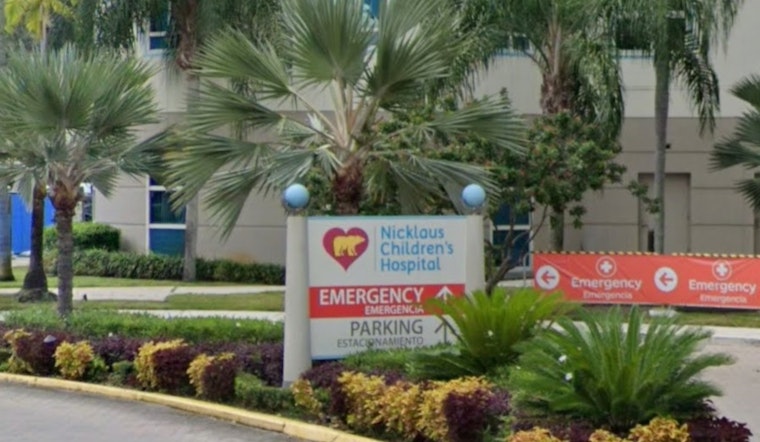
A 12-year-old Miami boy is already back on the baseball diamond after doctors at Nicklaus Children’s Hospital used virtual reality to plan a catheter-based fix for a complex congenital heart defect, avoiding open-heart surgery entirely. The team rehearsed the minimally invasive repair inside a 3D virtual model of his heart, then threaded a graft through a catheter and sent him home within days.
Matthew, 12, had been living with an undetected congenital heart condition that only surfaced during a routine checkup. His mother, Yessenia Sierra, went in search of multiple medical opinions before landing at Nicklaus Children’s. There, a team led by Dr. Shyam Sathanandam created a patient-specific 3D virtual heart and mapped out a less invasive approach. As reported by Local 10, that virtual game plan allowed clinicians to skip open-heart surgery and instead place a graft using a catheter.
“There was no cutting, no stitching,” Dr. Sathanandam told Local 10. He said the VR system let the team study Matthew’s specific defect in advance and walk through each step of the repair in a simulation setting, which boosted confidence and precision once they moved to the catheter procedure.
How VR guided a catheter repair
Nicklaus Children’s describes its VR workflow as a way to build an interactive, individualized 3D heart that surgeons and interventional cardiologists can rotate, zoom and explore from every angle, then use to rehearse procedures in a simulation lab. The hospital notes that the same technology can be brought into the procedure itself to help guide exact device placement without opening the chest. According to Nicklaus Children's Hospital, its Heart Institute is one of the few centers in Florida using VR in this kind of hands-on procedural role.
Part of a growing trend in pediatric cardiology
Across the country, pediatric programs are rolling out 3D imaging and immersive tools to better understand complex congenital heart anatomy and shave time off intricate procedures, especially in children with challenging defects. Children’s Hospital Colorado has reported using a blend of 3D echocardiography and VR to refine planning for pediatric heart cases, and a recent review found immersive platforms are increasingly woven into imaging and interventional workflows. Those national shifts help explain why centers like Nicklaus are putting money and staff into VR systems and multidisciplinary Heart Institutes to offer less invasive options. Children's Hospital Colorado and a review in MDPI outline the growing role of immersive tech in direct patient care.
Sierra said having a realistic alternative to open-heart surgery “changed the world” for her family. Matthew was back home and walking around within a few days, and he has already returned to daily routines as he gears up for baseball season in his Phillies jersey. Clinicians say the mix of seasoned specialists and new imaging tools is opening the door to more treatment choices while cutting recovery time for some children with complicated heart conditions.
Dr. Sathanandam, chief of cardiovascular medicine at Nicklaus Children’s, has published research and helped usher in interventional techniques that rely on advanced imaging and VR, according to the hospital’s clinician information. That expertise, combined with the Heart Institute’s dedicated catheterization lab, made the minimally invasive path possible in Matthew’s case. Nicklaus Children's Hospital profiles Dr. Sathanandam and highlights his leadership role at the Heart Institute.



