

























































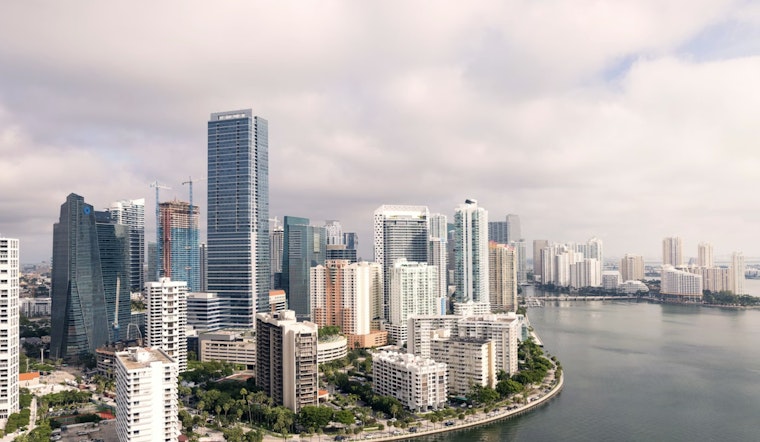
Miami has become the default stage for flashy hedge fund moves – new offices, headline hires and eye-popping real-estate bets – but the bodies in those glass towers tell a quieter story. Regulatory tallies and filings show that while firms are expanding globally, fewer investment professionals are actually listed as Miami-based than a year ago. That split is shaping who really profits from the migration: lawyers, developers and landlords look like early winners, while senior traders are not relocating in the same numbers.
What the filings show
Fresh regulatory filings indicate that eight major multistrategy firms, including Millennium, Citadel and Point72, reported a combined 218 investment professionals in Miami in 2025. A year later, that total had fallen by 20. As reported by Business Insider, the drop came even as those firms increased their overall investing headcount by more than 11% across their global networks. The filings break out only where investing staff sit, which means some Miami offices may still be growing in non-investment roles such as support, technology or administration.
Citadel's big bet
Citadel's move has become the poster child for Miami's financial makeover. The firm shifted its headquarters from Chicago to Miami in 2022 and has pushed major office and development projects into Brickell. According to Fortune, Citadel employs hundreds of people locally and has been central to Miami's pitch that it can stand as a new U.S. financial hub.
Expansion Without The Same Talent
The filings suggest, however, that the new Miami addresses are not always bringing the senior portfolio talent that firms ultimately trade on. Citadel, for instance, reduced its Miami investing staff by 15 even as its global investing bench grew by 77. Millennium trimmed its Miami investor roster from 53 to 48 while consolidating into a single Brickell office. In a statement to Business Insider, a Citadel spokesperson described Miami as a “world-class city” and said the firm has “more than 400 colleagues” based there.
There are some outliers. ExodusPoint and Walleye were notable exceptions, adding small numbers of investors to their Miami outposts. Several other firms, meanwhile, shifted more of their hiring growth to New York, Dubai, Atlanta and Austin, suggesting that the hedge fund buildout is increasingly multi-city even when the glossy marketing photos are shot on Biscayne Bay.
Why top traders aren't all relocating
Industry recruiters and regional observers point to a simple structural issue: the pool of senior portfolio managers is finite, and many prefer to stay close to the deepest talent clusters, counterparties and capital markets in places like New York and London. As noted by eFinancialCareers, some firms that have relocated to Miami have been disappointed by the local supply of specialized tech and trading talent. Put together, it helps explain why executive suites and office signage are multiplying faster than the city's list of senior investors.
Local market effects
The disconnect is showing up in Miami's commercial real estate market. High-profile leases and new towers share the skyline with slower overall leasing volumes. Cushman & Wakefield's Q4 2025 Miami market report documents a slowdown in leasing activity late in 2025 even as marquee deals reshaped Brickell and Wynwood, underscoring a market that is very much in transition. On the hiring front, local growth may tilt more toward operations, legal and compliance roles, while competition for top portfolio managers remains intense.
For Miami, the verdict is mixed. The city has secured headline relocations, splashy real-estate wins and a growing roster of hedge fund outposts. Yet the high-value human capital that fuels trading profits is still scarce and heavily clustered elsewhere. In the months ahead, that imbalance is likely to decide which neighborhoods and local businesses truly cash in on the finance migration and which are left mostly with the branding.





