

























































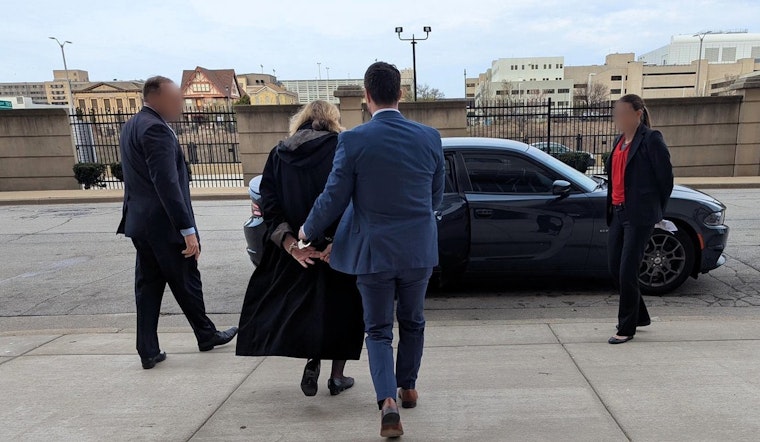
Former Milwaukee County Judge Hannah Dugan will have to live with a federal jury’s split verdict, at least for now. On Monday, U.S. District Judge Lynn Adelman rejected Dugan’s attempt to throw out her conviction, denying a post-trial motion that had asked for the December verdict to be set aside and a new trial ordered. The ruling leaves the guilty finding intact and keeps her sentencing date in limbo, even as her legal team signals it is not backing down from its appeal plans.
Adelman swats down post-trial challenge
Dugan’s attorneys filed a 46-page motion arguing that legal errors tainted the trial and that the verdict should be overturned. Adelman responded with a 39-page order issued Monday that declined to find the kind of mistake the defense alleged and left the sentencing timetable unsettled, according to the Milwaukee Journal Sentinel. The decision tracks closely with the court’s earlier rulings that trimmed but did not eliminate the government’s route to a conviction.
Prosecutors tell court the motion is off base
Federal prosecutors did not mince words in their response. In lengthy filings, they blasted the defense theories as legally unsupported and even "absurd," according to reporting by Law & Crime. The government argued that accepting Dugan’s position would effectively rewrite the obstruction statute by adding elements that neither its text nor existing precedent supports.
The courthouse encounter that led to a conviction
The case traces back to April 18, 2025, when immigration agents arrived at the Milwaukee County Courthouse to arrest 31-year-old Eduardo Flores-Ruiz, who authorities said had reentered the United States illegally. Prosecutors say Dugan directed the agents away and then walked Flores-Ruiz and his attorney out a private jury door. Agents later caught up with Flores-Ruiz outside after a brief foot chase. On Dec. 18, a federal jury convicted Dugan of obstructing federal agents and acquitted her on a related misdemeanor charge. At trial, prosecutors played courtroom audio in which Dugan could be heard saying she would "take the heat," according to The Associated Press.
Next stop: the appeals court
With Adelman now denying the post-trial motion, the case is widely expected to move on to the 7th Circuit Court of Appeals and could ultimately land at the U.S. Supreme Court, legal observers say. As the Wisconsin Law Journal noted, Dugan resigned from the bench on Jan. 3 and faces a statutory maximum of up to five years in prison, although sentences in similar nonviolent cases often come in below the ceiling.
High-stakes fight over immunity and courthouse arrests
Dugan’s lawyers built their motion around judicial immunity and evolving case law that, they argue, restricts civil arrests in courthouses. Prosecutors countered that those theories were either waived earlier in the case or simply meritless, and warned they would lead to untenable legal outcomes. Appeals courts typically give significant deference to juries, which makes overturning a verdict a tall order and leaves the appellate process as Dugan’s clearest path forward. A former U.S. attorney said after the trial that Dugan faces an "uphill fight" on appeal, according to The Associated Press.





