

























































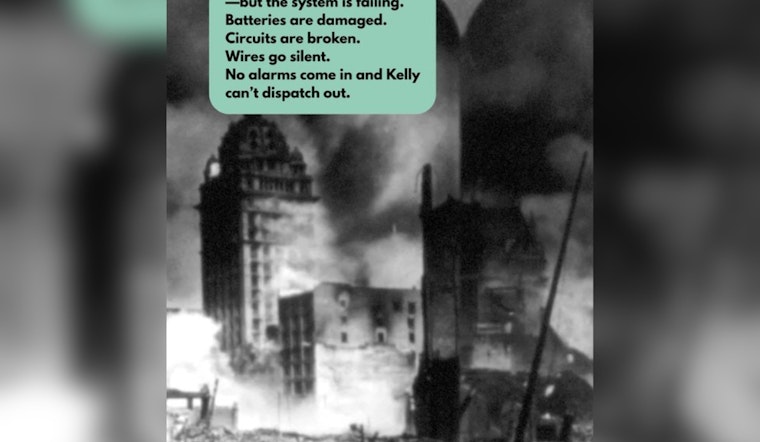
At 5:13 AM on April 18, 1906, as the great earthquake tore through San Francisco, the city's fire‑alarm network quietly failed. Batteries shattered, circuits opened and the wires went silent while flames spread. In a post this morning, the Department of Emergency Management resurfaced an operator's report that describes smashed battery jars, flooded battery rooms and dead alarm lines as the quake hit. It is a blunt historical reminder that warning systems can fail at the exact moment they are needed most.
SFDEM resurfaces the 1906 alarm report
According to the San Francisco Department of Emergency Management, the department posted an excerpt that opens with the clipped lines "batteries damaged. circuits broken. wires silent." Timed to the 120th anniversary of the Great Quake, the post repackages the original document as a cautionary example for modern emergency planning. City officials used the moment to nudge readers to think about resilience across communications, power and backup systems, not just the headline technology of the day.
Batteries damaged. Circuits broken. Wires silent. The city's alarm system goes down just when it's needed most. pic.twitter.com/cSyWdj8La2
— San Francisco Department of Emergency Management (@SF_emergency) April 18, 2026
The 1906 failure, in the operator's own words
Fire‑alarm operator J. C. Kelly's report, reproduced by the San Francisco Museum, records that the shock began just after 5:13 AM, that a striker battery was "open" and that "no alarms whatsoever came into the office" after the quake. Kelly describes broken battery jars flooding the power room and lines that tested out "all open," leaving switchboards and signal circuits dead while multiple fires started across the city. That chain of mechanical and electrical failures helps explain why the department's early responses in 1906 leaned on in‑person sightings and radios once the alarm telegraph system went down.
Why that breakdown still matters
Today, the alert ecosystem has more layers, but it is still vulnerable to the same physical forces that wrecked the 1906 equipment. The ShakeAlert system detects the start of a quake and distributes seconds‑long warnings to institutions, apps and integrated systems that can automate protective actions. The takeaway from Kelly's account is straightforward: redundancy and diverse channels, from radio to mass text to sirens and early‑warning feeds, cut the risk that a single outage leaves the public in the dark.
How the city and residents can shore up resilience
San Francisco encourages residents to sign up for AlertSF and to keep low‑tech backups like a battery‑powered or hand‑crank radio and extra batteries, in line with official guidance. You can enroll in the city's opt‑in text and email alerts through the City and County of San Francisco, and the city has highlighted investments to upgrade outdoor public warning sirens as part of broader resilience work. Federal preparedness resources such as Ready.gov likewise recommend a battery‑powered radio and extra batteries as part of a basic emergency kit so residents can receive broadcast information even if phones and the internet fail.
Bottom line
Kelly's 1906 report reads like both a stark historical record and a practical checklist for modern resilience: layered channels, tested backups and public preparedness. Whether through AlertSF signups, a battery radio in a go‑bag or investments in non‑cellular public warnings, the goal stays the same, to make it far less likely that citizens hear nothing when seconds matter.



