

























































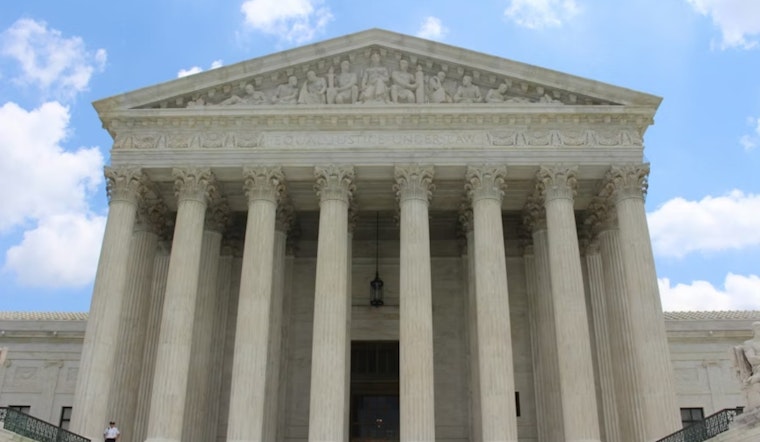
Penn & Teller, the Las Vegas duo famous for pulling back the curtain on illusions, are now trying to do the same thing at the U.S. Supreme Court. This week they told the justices that a Texas death penalty conviction rests on junk science, and urged the court to take up the appeal of inmate Charles Don Flores. His conviction hinged on an eyewitness identification that changed after a police “investigative hypnosis” session, a twist that has turned a long-running legal battle into a showdown over memory, science and the death penalty.
The pair wrote a friend-of-the-court brief in March that slams the hypnosis session as using the same cognitive tricks magicians deploy onstage, and brands the technique junk science of the worst sort. Their amicus filing, available on the Supreme Court docket, walks through specific scenes from the case to make that argument. For a broader rundown of the brief and the Flores petition it backs, see reporting in The New York Times.
How Texas Investigators Used Hypnosis
At the center of the Supreme Court petition is neighbor Jill Barganier, whose story shifted after a patrol officer led her through a hypnotic “memory” session at a police station. Before hypnosis, she described seeing two white men with long hair and could not pick Charles Don Flores out of a pretrial photo lineup. Months later, and after that hypnosis session, she identified Flores in court and told jurors she was “100%” certain he was one of the men she saw. Coverage that reconstructs the hypnosis session and its fallout is laid out in detail by Law360.
Texas Law And The 'Junk Science' Route
Flores’s lawyers have turned to Article 11.073, a 2013 Texas law that lets defendants seek new trials when scientific evidence used against them is later discredited. They also point to a 2023 change in state law that makes hypnotically refreshed testimony inadmissible in criminal trials. The 2023 statute and the legislative debates that produced it are broken down by The Texas Tribune, while the Article 11.073 framework is explained in court summaries at FindLaw. Even so, Texas courts have repeatedly refused to reopen Flores’s case, and to date, no death row prisoner has won a new trial under the 2013 statute, as Law360 reports.
Why The Magicians Jumped In
Penn Jillette and Teller argue that years of designing illusions give them unusual insight into how people can form rock-solid confidence in memories that are flat-out wrong. Their brief states that investigative hypnosis employs the same techniques magicians use to manipulate audience perception and warns that dressing it up as a reliable way to “recover” memory can do serious damage in a courtroom. The document itself is posted on the Supreme Court docket.
What The Court Could Decide
The Supreme Court is expected to decide in the coming weeks whether it will hear Flores’s case. SCOTUSblog reports that the petition is likely to be discussed at a private conference in late May or June. Flores’s certiorari petition argues that the Texas Court of Criminal Appeals repeatedly blocked his attempts to show that investigative hypnosis tainted his trial, and that petition is available in the Supreme Court docket. If the justices agree to hear the case, they could be asked to clarify when federal due process review kicks in for state court decisions that involve scientifically compromised evidence.
Legal Implications Beyond One Case
A decision to grant review would resonate well outside Flores’s case. Experts and advocates have long noted that mistaken eyewitness identifications are a leading cause of wrongful convictions, and courts still wrestle with how to handle contested forensic methods that may not live up to their billing. A broad mix of amici, ranging from the American Psychological Association to exonerees and defense organizations, has filed briefs urging the justices to step in, according to a list compiled by the Death Penalty Information Center. The eventual ruling could shape how lower courts treat future claims involving alleged “junk” forensic practices.
Penn & Teller’s cameo in the case all but guarantees public attention, but the justices will be focused on doctrine, precedent and the record in front of them. However, the court rules, the fight over Charles Don Flores has already highlighted how fragile human memory can be, and how high the stakes are when law enforcement techniques collide with the limits of science.





