

























































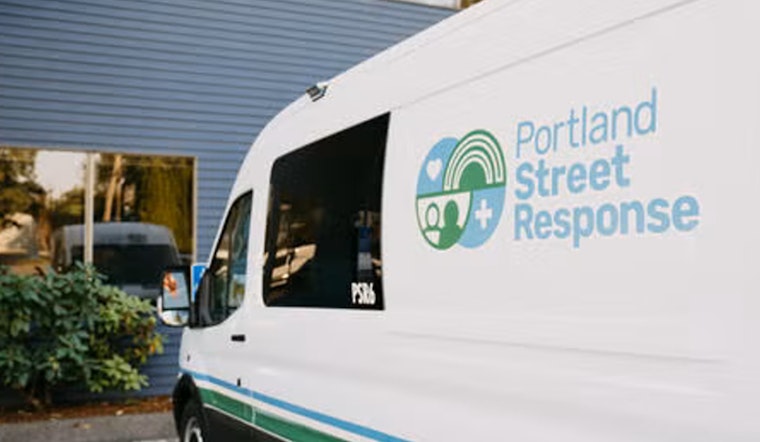
Portland's unarmed crisis team has quietly become one of the busiest players in the city's emergency network, handling thousands of low-risk 911 calls that once went straight to police, fire crews or crowded emergency rooms. A new national review, along with the city's own dashboards, shows a sharp rise in demand for Portland Street Response as cities across the country rethink who should show up to certain nonviolent mental health and welfare calls. That growth has pushed PSR into the middle of ongoing debates about funding, oversight and how to define success when the goal is to avoid arrests and ambulance rides.
Harvard Study Lifts The Curtain
According to Harvard Kennedy School's Government Performance Lab, the report "Examining Alternative Response: A Landscape Analysis of Nine Community Responder Teams" examined 2024 data from nine unarmed community responder programs and found that cities are steering thousands of low-risk 911 calls away from police and toward health-focused teams. Published in March 2026, the study is meant to pull together comparable data from different programs and offer practical lessons for cities kicking the tires on alternative response models.
Portland's Numbers
Per the City of Portland, PSR currently runs on roughly a $10 million annual budget with a staff of about 52. City reporting shows the team handled 15,353 calls last year, while its aftercare unit logged 5,617 follow-up visits. Mayor Keith Wilson increased PSR's hours and funding in 2025, and City Council has moved to formally recognize the team as an integral branch of the first responder system.
City Dashboard Shows Rapid Growth
KATU pulled figures from Portland's public dashboard and reported that PSR responded to just over 6,000 calls in 2022 and more than 13,000 in 2025, and that since launch the team has been dispatched nearly 50,000 times. The station's review found only 82 calls that ultimately needed a police response and roughly 750 patients transported to emergency rooms, suggesting that most situations are handled and calmed on scene.
Police Perspective
The Portland Police Bureau told KATU that "PSR is a great public safety partner and we’re sincerely grateful for the work they do," noting that officers routinely call in PSR when a law enforcement response "is not the best." The bureau cast PSR as a complementary tool that lets uniformed officers stay focused on traditional policing duties.
Independent Evaluations
Portland State University's Homelessness Research & Action Collaborative found that PSR handled 7,418 calls in its second year (April 1, 2022 to March 31, 2023), with only one call ending in an arrest. Roughly 2.5% of calls during that period required hospital transport. The PSU evaluation documented thousands of referrals and aftercare contacts, underscoring that a significant share of PSR's work continues well after the initial crisis response is over.
What The Harvard Report Recommends
The Harvard review points to wide variation among community responder programs, ranging from small pilots to large, complex operations, and urges more rigorous, standardized research to track safety, outcomes and cost-effectiveness. Portland has added the study to its PSR resources and continues public engagement while interviewing for a new program manager and holding community meetings, including a program manager candidate session on April 9 as listed on the city's site.
Why It Matters
For Portlanders, the headline is simple: PSR appears to resolve most low-risk calls on scene and direct people toward services instead of arrests or hospital stays. City officials and independent researchers say the model's long-term future will depend on steady funding, transparent data and a willingness to keep inviting outside evaluation, even as the program becomes more deeply embedded in Portland's public safety system.



