

























































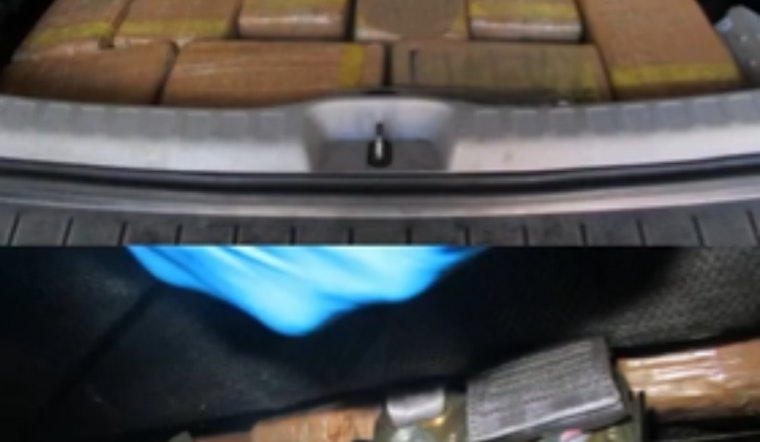
Customs and Border Protection officers at the San Ysidro Port of Entry yanked a supposedly low-risk driver out of the fast lane on Monday, stopping a vehicle enrolled in the federal Trusted Traveler program and uncovering more than 74 pounds of cocaine during what officials described as a routine secondary inspection. The San Diego field office publicly praised the officers for the find but kept operational details close, saying only that the bust is a reminder that even expedited lanes get scrutinized. No name has been released, and the agency says it will share more as the investigation moves forward.
In a post on X, Director of Field Operations Sidney Aki stressed that "trusted" status does not mean anyone sails through unchecked, saying no one gets a pass when it comes to protecting communities and crediting frontline officers with the stop. The social update pegged the haul at "over 74 lbs" of cocaine and confirmed the seizure took place at the San Ysidro Port of Entry. That post served as the first public word of the bust; CBP frequently follows these quick social hits with a more formal media release.
At the #SanYsidroPOE, @CBP officers found over 74 lbs of cocaine in a trusted traveler's vehicle during a routine inspection. "Trusted" doesn't mean unchecked – no ONE gets a pass when it comes to protecting our communities! #OFOProud🇺🇸 #BorderSecurity #TrustedTravelerProgram pic.twitter.com/hX0xBwFzc4
— Director of Field Operations Sidney Aki (@DFOSanDiegoCA) April 13, 2026
Trusted Status Is Not a Free Pass
The case slots neatly into a growing pattern of trusted travelers being used to move narcotics through San Diego’s land ports of entry. As detailed in Hoodline, officers at Otay Mesa in March pulled about 41 pounds of cocaine from a SENTRI participant’s vehicle. Local reporting and CBP logs show San Ysidro has seen several sizeable drug interdictions in recent years, including a 45-pound cocaine seizure in 2024 reported by the Times of San Diego.
How Inspections Work and What Usually Follows
Programs like SENTRI and Global Entry are designed to speed things up for pre-approved, low-risk travelers, but participants are still subject to full inspection. U.S. Customs and Border Protection has previously described San Ysidro cases where non-intrusive imaging, K-9 alerts and secondary inspections uncovered significant narcotics loads. In separate coverage, CBP has said officers in these situations seize both the drugs and the vehicles, then turn drivers over to Homeland Security Investigations for further processing and potential federal charges, a pattern that repeats across port-level releases. U.S. Customs and Border Protection
For travelers who depend on the fast lanes, the message is simple: pre-approval may speed your commute, but it does not grant immunity. Prior cases have ended with vehicles seized, trusted-traveler privileges revoked and drivers referred to federal investigators while prosecutors decide whether to pursue charges, as outlined in earlier coverage. The San Diego field office is expected to post a formal media release with additional details once this latest investigation moves ahead.



