

























































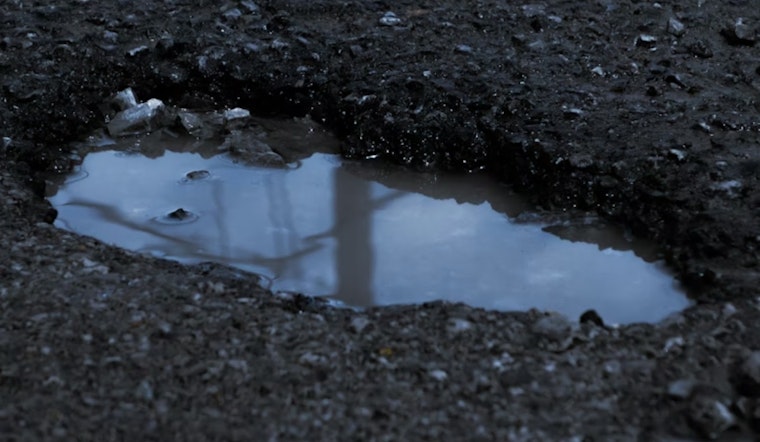
San Francisco is gearing up for a serious facelift on some of its roughest roads, with about 10 miles of streets from the Bayview to parts of the Marina and downtown slated for fresh pavement in the coming years. Crews are expected to start in July 2026, with the work rolling out in neighborhood-by-neighborhood phases through late 2028.
The mayor’s office says the project will tap about $33 million in gas-tax revenue the city expects to receive in the upcoming state budget, targeting roughly 10 miles of streets, mostly on the city’s east side. City leaders also told reporters they anticipate spending about $90 million on repaving citywide next year as part of a broader capital push, as reported by The San Francisco Standard.
The work is being scheduled through the Street Resurfacing Program run by San Francisco Public Works, which maintains roughly 940 miles of city streets and prioritizes blocks using a Pavement Condition Index, traffic levels and project readiness. Public Works outlines a range of treatments, from pavement preservation and micro-surfacing to grinding-and-paving or full reconstruction, and emphasizes coordination with utilities so newly smoothed streets are not immediately torn back up. The agency also maintains an interactive map of candidate blocks and posts no-parking and detour information ahead of construction, according to San Francisco Public Works.
Where Crews Will Work
The mayor’s rollout splits the work into five phases. It starts in July in the Bayview, where 24 blocks are expected to be repaved by March 2028. A Portola and Excelsior phase of about 50 blocks is slated to begin in November and likely run into summer 2028.
Early 2027 is set to bring repaving to a segment of Front and Sansome through the Financial District, Chinatown and North Beach, along with a 29-block stretch in the Marina and Russian Hill centered on Union Street and a 26-block run across Chinatown, Nob Hill and Pacific Heights. That mapping shows District 3 receiving roughly 37% of the state-funded work, District 9 about 24% and District 10 about 15%. District 3 Supervisor Danny Sauter told The San Francisco Standard, “If you drive over Sansome Street, it’s like the surface of the moon.”
Timeline, Parking And What To Expect
Drivers and residents should brace for short-term parking restrictions, lane reductions and some overnight paving windows. Public Works says crews will post “no parking” signs at least 72 hours in advance and will coordinate traffic controls around work hours. The department cautions that block-level schedules can shift if additional underground work or utility clearances are needed, so exact dates will be released as permits and clearances are secured. Residents can track the project’s interactive map and construction notices for block-by-block timing, per San Francisco Public Works.
Why This Matters
The city’s capital plan calls for about $1.1 billion in street resurfacing and reconstruction investments over the next decade and sets a target Pavement Condition Index that San Francisco aims to maintain to avoid more expensive full reconstructions. Those long-term numbers help explain why intermittent state infusions matter: smaller, regular overlays extend pavement life and keep the overall repair bill down, the plan shows, but schedules depend on funding flows and competing capital priorities.




