

























































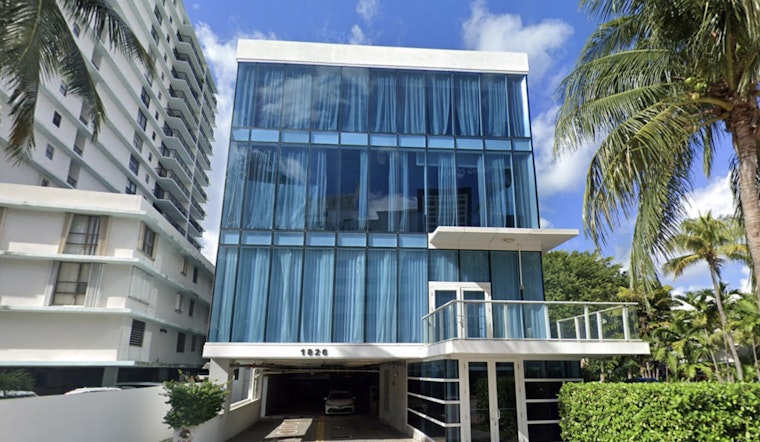
A narrow slice of Collins Avenue could soon sprout a 15-story tower, as an affiliate of Crescent Heights pitches a compact building at 1826 Collins Avenue that blends market-rate units with workforce housing under Florida's Live Local Act. The plan calls for 29 residential units, with roughly 40 percent reserved as workforce housing, and floor plans that range from tiny 400 to 475 square foot homes to one-bedrooms with dens and two-bedroom penthouses. Because the lot is tight and cannot accommodate a traditional garage, the proposal leans on a mechanical elevator system that would let valets shuffle cars between levels.
Project details and design
According to Florida YIMBY, the building would rise from a roughly 9,500 square foot site and incorporate about 3,500 square feet of office space. Built Form Architecture is listed as the project’s designer. The report notes that 12 of the 29 residential units would be income restricted at or below 120 percent of area median income, a threshold that allows the project to tap Live Local benefits.
Plans describe a mix of smaller workforce units and larger market-rate layouts, capped by a rooftop amenity area that would give residents an elevated perch above Collins Avenue. While the building may be slender, the program tries to squeeze in a bit of everything: compact homes, higher-end penthouses and a sliver of office space.
How the Live Local Act shapes the plan
Under Florida's Live Local framework, developments that dedicate at least 40 percent of units to households earning up to 120 percent of area median income can qualify for height, density and property tax incentives, as outlined by the City of Miami. Those rules are central to the Collins Avenue proposal, which leans on workforce units to unlock extra flexibility.
Per county calculations, Miami-Dade’s median income was about $87,200 as of May 1, 2025, a figure that helps set the income limits for the restricted apartments, according to Miami-Dade County. If the project is built, a recorded affordability covenant and related requirements would govern who qualifies for those workforce homes and how much they can be charged in rent.
What’s next and neighborhood questions
Miami Beach’s Planning Board is slated to take up the proposal at its May 5 meeting, according to the city calendar. Expect questions about how the building’s small footprint will function in practice and whether a mechanical valet parking system can keep up with Collins Avenue traffic without creating new headaches for neighbors.
The application also lands as Live Local filings surge across Florida, sparking broader debates about height, parking and neighborhood character that go far beyond a single site. Statewide pushback and support have turned these hearings into must-watch civic theater, a trend highlighted by The Real Deal.
Approval and legal notes
Even if Miami Beach’s Planning Board recommends approval, the developer would still need to clear several Live Local hurdles. The city’s guidance calls for a recorded affordability covenant that preserves lower rents for decades, a one-mile comparator analysis that shows how the project stacks up against nearby buildings and documentation proving that residential floor area meets program thresholds.
Those procedural steps can influence the final design and scale of the building, even where state law already offers extra height or density. In other words, Live Local may open the door, but the paperwork helps decide exactly how far that door swings.
The 1826 Collins proposal is an early test of how Miami Beach chooses to deploy the Live Local toolkit on a narrow, ocean-adjacent parcel. Neighbors and housing advocates alike are expected to watch next month’s Planning Board hearing for hints about the city’s appetite for denser workforce housing along Collins Avenue. Public materials for the project appear on developer pages, and the Lefferts portfolio lists 1826 Collins and includes renderings tied directly to the submission.


