

























































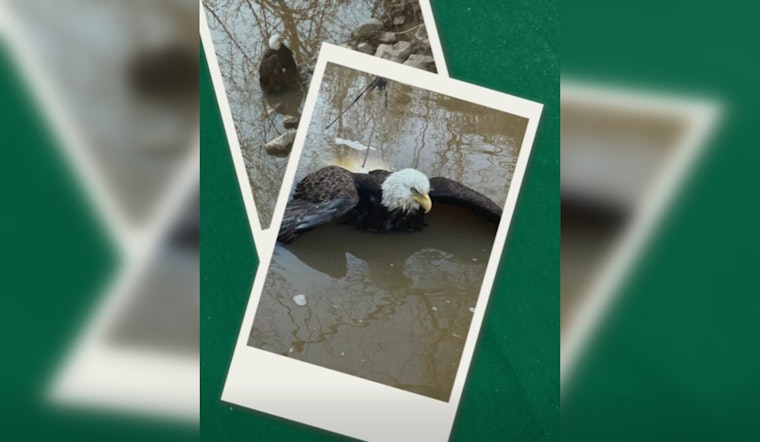
A seven-year-old female bald eagle that was found in rough shape in Lauderdale County is back in the skies after a team effort by state wildlife officers and veterinarians at the Memphis Zoo. The bird was discovered weak, soaked, and unable to fend for herself, then transported to the zoo for treatment before being released back in Lauderdale County. The pickup, care, and release were all recorded and shared by the state agency.
Officer Finds Eagle in Lauderdale County
In a Facebook reel posted by the Tennessee Wildlife Resources Agency, a TWRA officer is seen spotting the distressed raptor and carefully collecting her for transport. The officer identifies the bird as a seven-year-old female that cannot fend for herself. The clip shows responders drying the soaked eagle, securing her for the ride, and handing her off to Memphis Zoo staff for evaluation.
Memphis Zoo Triage and Release
Once at the zoo, staff triaged the bald eagle, provided supportive care, and monitored her recovery until she was strong enough to go back to the wild. When she was ready, the team returned her to Lauderdale County for release. The zoo’s website details its veterinary and conservation programs that support wildlife triage and rehabilitation, per Memphis Zoo.
Why Eagles End Up Weak
Bald eagles can become debilitated by trauma, disease or exposure to toxins such as lead and anticoagulant rodenticides, any of which can leave a bird too weak to hunt or fly. Federal research has documented widespread exposure of large raptors to these contaminants, according to the U.S. Geological Survey, and peer-reviewed studies have reached similar conclusions in a review in PubMed Central. Wildlife triage for birds in this condition often includes testing for such toxins.
How to Report Injured Wildlife
If you come across an injured raptor, the advice from experts is simple: do not try to handle it yourself. Instead, contact the Tennessee Wildlife Resources Agency or a licensed wildlife rehabilitator so trained personnel can step in. The Tennessee Wildlife Federation maintains a statewide list of licensed rehabilitators, and the TWRA website provides guidance on reporting wildlife in need, per the Tennessee Wildlife Federation and the Tennessee Wildlife Resources Agency.
In this case, the quick action by state officers and zoo caregivers ended with the eagle back in her home range, a small but meaningful win for Tennessee’s steadily recovering bald eagle population. Rescues like this show how crucial trained responders are for keeping local wildlife healthy.





