

























































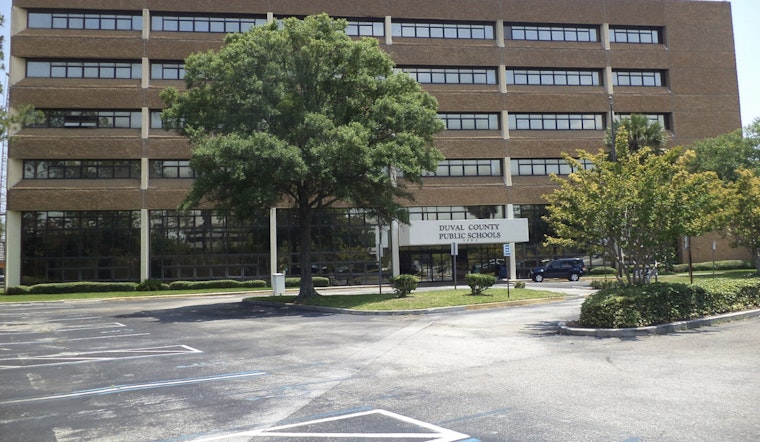
Duval County Public Schools are staring at a multimillion-dollar hole in next year’s budget, thanks to a statewide funding change that hits some of the district’s most ambitious students right where it counts: their college-credit courses.
District officials say Duval is set to lose roughly $3.2 million from a state allocation that helps pay for Advanced Placement (AP), International Baccalaureate (IB) and other accelerated courses. That reduction, they warn, could ripple down to classrooms in the form of higher exam costs for families and program tweaks that make it harder for students to bank college credits in high school. As reported by News4JAX, DCPS will lose about $3.2 million next year.
How the state formula changed
The hit stems from a quiet but powerful adjustment in how the state rewards districts when students successfully complete advanced courses. According to a legislative review from the Florida Department of Education, lawmakers reduced the extra funding weight districts receive for each completed AP, IB or AICE course, dropping the full-time equivalent (FTE) weight from 0.24 to 0.16.
On paper, it is just a decimal shift. In practice, it slashes the amount districts pull in through the Florida Education Finance Program for every student who finishes one of these challenging classes. With less money tied to those completions, the pool districts rely on to underwrite advanced-course offerings shrinks accordingly.
Local pushback and earlier warnings
Community members and education leaders have been raising red flags ever since lawmakers first floated changes to accelerated-course funding. Last spring, News4JAX reported that districts across Florida warned families could be looking at new fees, while some schools might have to rethink their menus of advanced classes, professional development for teachers and work-based learning supports.
Duval school board member Cindy Pearson urged residents at the time to show up and speak out, telling them to “Tell your story,” and arguing that feedback from students and families could still shape what happens in Tallahassee.
What this could mean for classrooms
Right now, districts commonly lean on these categorical dollars to cover exam fees, teacher training, textbooks, counseling support and stipends that help keep AP and IB programs running. With the allocation trimmed, Duval may be forced to shift money from its general operating budget, increase what families pay out of pocket, or cut back on the number of advanced-course sections it can afford to offer.
The same legislative package that reworked the funding formula also retooled several allocation and bonus rules. The House bill removed caps on awards to individual teachers and imposed new requirements for how some bonus funds must flow back into programs. Those technical changes are laid out in the text of House Bill 7069, available from the Florida Department of Education, and could reshape how districts decide to spend whatever money is left.
What’s next
The state budget is not finalized yet. Lawmakers and the governor still have to sign off before any of these cuts become official. Over the next several weeks, Duval officials expect to get clarity on whether the reduced funding is locked in.
In the meantime, the district plans to review its budget priorities and sit down with school leaders to talk through potential changes to course offerings, exam fees and program supports, trying to figure out how to keep advanced opportunities alive while absorbing a seven-figure hit.





