

























































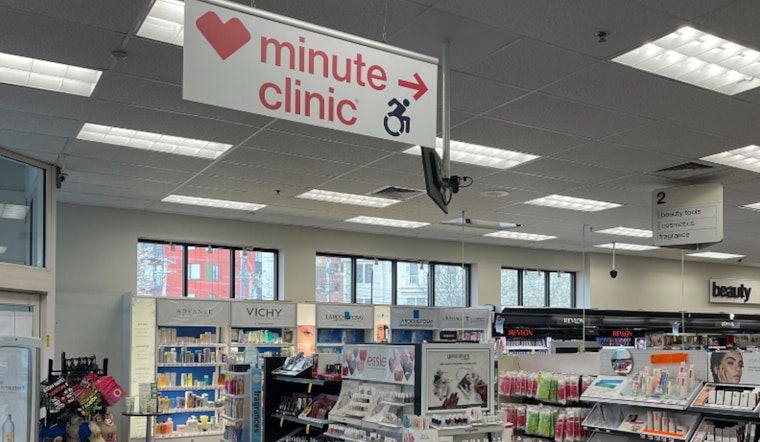
A preliminary state review says Mass General Brigham’s proposed tie-up with CVS MinuteClinic could push commercial health care spending up by roughly $40 million a year within three years. The finding lands as Bay Staters face long waits for primary care and rising medical costs, forcing state regulators to ask a tricky question: will this deal really open new doors to care, or just send more patients into one of Massachusetts’ priciest health systems at higher rates?
State review flags cost risks
The Health Policy Commission’s preliminary Cost and Market Impact Review estimates the affiliation would increase annual commercial health care spending by about $40.2 million by year three, driven by new primary-care utilization and higher prices when MinuteClinic services are absorbed into Mass General Brigham’s network, according to a Health Policy Commission preliminary report. The commission modeled conservative scenarios and noted the estimate could be larger if patient panels fill faster or if prices shift across payers. The review also flagged potential market effects the agency could not fully quantify, such as increased bargaining leverage for a larger MGB primary-care footprint.
Rising spending makes regulators wary
Massachusetts’ total health care expenditures reached $83.3 billion in 2024, and per-person spending rose 5.7 percent from 2023, topping the state’s 3.6 percent cost-growth benchmark for the fourth straight year, according to an Massachusetts Center for Health Information and Analysis annual report. That sobering backdrop helps explain why the HPC opened a formal cost and market impact review rather than simply clearing the affiliation with a quick administrative signoff.
How the clinics would change
Under plans filed with state regulators, CVS would convert 37 MinuteClinic locations across Massachusetts into MinuteClinic Primary Care sites, beginning with five locations in the first year and rolling out the rest over the following couple of years, as reported by The Boston Globe. The parties told regulators they expect roughly 80 advanced practice providers to manage panels of about 1,500 patients each, a setup the companies say could create capacity to serve up to 120,000 adult primary-care patients statewide.
Price gap and services at risk
The HPC’s analysis notes that Mass General Brigham has some of the highest prices in the state, while MinuteClinic’s convenience-care prices for common visits are typically much lower, often less than half of MGB’s prices for the same services, and the commission warned those prices would likely rise once providers at the 37 locations are brought under MGB’s umbrella. The review also says participating MinuteClinic sites would not provide certain services that many primary-care practices offer, including oral-health screening, prescriptions for controlled substances, and some behavioral-health screenings, and that pediatric convenience care would be discontinued at transitioned sites.
Companies and critics weigh in
CVS pushed back on the findings, saying the report "appears to overstate the potential impact of health care spending" and arguing the collaboration would expand access to primary care while reducing costs over time, as reported by The Boston Globe. Mass General Brigham and CVS say the affiliation could increase access in under-served areas. Critics and some commissioners, meanwhile, cautioned the model risks offering what one described as "primary care-light at a full primary care cost."
What happens next
The HPC’s preliminary report gives the parties an opportunity to respond and propose commitments to mitigate spending impacts before the agency issues a final report. Whatever the outcome, the review crystallizes a hard policy tradeoff for state regulators, who are trying to find new ways to expand primary-care access while guarding against price shifts that could drive up premiums and out-of-pocket costs for employers and households.




.jpg)