

























































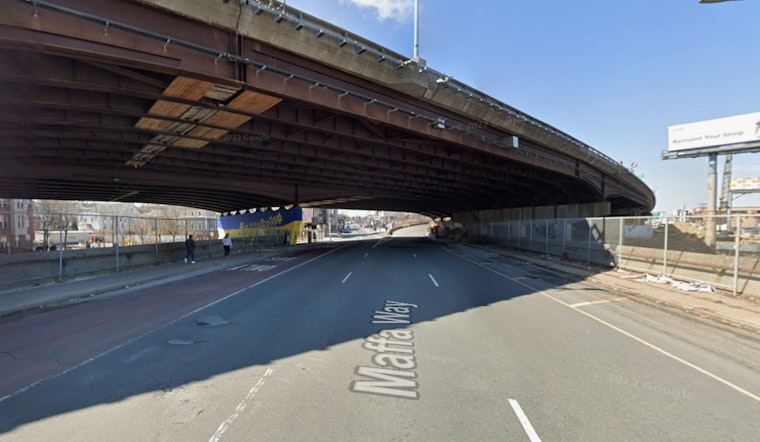
After years of construction dust and detours, MassDOT is wrapping up a multi-year overhaul of the twin bridges at Sullivan Square, carving out more breathing room and clearer routes for people walking, biking and riding the bus. On the Maffa Way span, the rebuilt deck now features a much wider sidewalk protected from traffic by a 10-foot curb-separated bike path, while the parallel Mystic Avenue bridge carries a widened shared-use sidewalk that links directly into the Grand Union Boulevard pathway. Nearby Lombardi Street picked up its own protected two-way bike path, and both bridges now reserve space for future dedicated bus lanes.
Streetsblog Massachusetts highlighted early April site photos that show off the new cross-sections and finished concrete work on the spans. According to MassDOT, the Maffa Way/Mystic Avenue Bridge Superstructure Replacements kicked off in spring 2024, with a project design that specifically bakes in transit, pedestrian and bicycle upgrades, including bus-priority lanes.
What's new for people walking and biking
Design documents from CHA Consulting show that Maffa Way now carries a 10-foot curb-protected bike path that keeps riders separated from the interstate ramps, along with a significantly wider, ADA-compliant sidewalk leading toward the Sullivan Orange Line entrance. New ramps and connector paths stitch the bridge sidewalks into the Grand Union Boulevard shared-use path, smoothing out the ride for people on bikes, scooters and other micromobility devices heading to Assembly station and Draw Seven Park.
What transit riders will notice
For bus riders, the changes are more subtle at first glance but could pay off in fewer slow crawls through the interchange. The two bridges already form a busy bus corridor: six MBTA routes use the spans, including the newly redesigned 85 and the 101 to Medford. Planners have reserved space for dedicated bus lanes that are expected to trim delays at Sullivan Square, Streetsblog Massachusetts reports. Those on-street changes line up with regional planning priorities for transit-priority corridors around Sullivan Square, as laid out in Boston Region MPO materials.
How this fits into bigger plans
The bridge rebuild slots into a broader set of state investments aimed at getting buses into and out of Sullivan Square more quickly. That list includes a $22 million RAISE award to push forward a Lower Broadway transit-priority corridor with center-running bus lanes and upgraded bike and pedestrian facilities, a project the Healey-Driscoll administration announced through Mass.gov. City and state officials are also coordinating the Rutherford Avenue and Sullivan Square design work so the new bridge segments fold into a more walkable, transit-first street grid, according to the City of Boston.
There is still some work before the dust fully settles. MassDOT and its contractor need to finish pavement markings, signage and other punch-list details before the corridor is completely re-striped. Engineering coverage and project materials anticipate that final pieces will continue into late 2025 or early 2026. As the MBTA rolls out its Bus Network Redesign and a more frequent-route network, routes such as the 101 are slated for higher-frequency service, a shift that industry and planning coverage suggests could amplify whatever time savings the new bus lanes eventually deliver.





