

























































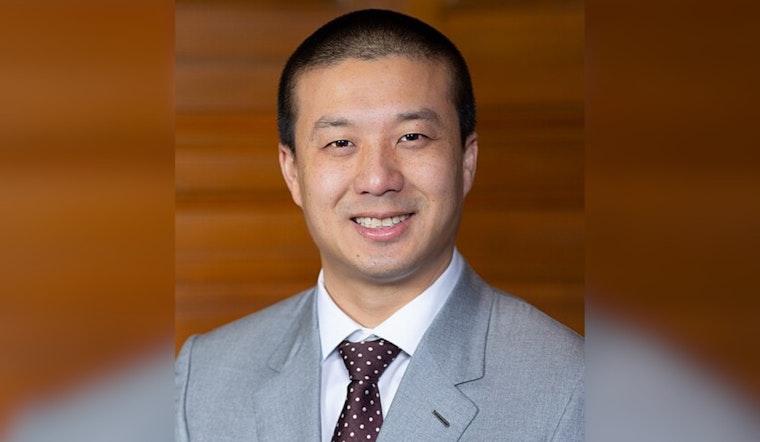
Ranked-choice voting could be the thing that knocks Alan Wong out of his appointed seat in San Francisco’s Sunset District. With four challengers on the ballot, a coordinated anyone-but-Alan strategy on second- and third-choice rankings could vault a rival past the incumbent and reshape both neighborhood representation and Mayor Daniel Lurie’s margin on the 11-member Board of Supervisors.
As reported by The San Francisco Standard, four candidates, Natalie Gee, Albert Chow, David Lee and Jeremy Greco, are running to replace Wong. Campaign consultants say they can ask voters to rank challengers in a way that nudges Wong off the board. Daniel Anderson, a consultant for Gee’s campaign, told The San Francisco Standard there is "definitely an element of 'anyone but Alan' strategy from all the other candidates, though not officially." That kind of quiet coordination would lean into the instant-runoff system San Francisco uses.
Local reporting shows the challengers come from different corners of Sunset politics and have very different financial backing. Mission Local has tracked the filings: Natalie Gee has outraised everyone with about $67,250 in 2025, while Wong’s campaign reported roughly $17,327 in the same period, and Gee has already qualified for San Francisco’s public-matching program. That fundraising gap changes the transfer math under ranked-choice voting and makes organizing for second-choice support a real part of the playbook.
Outside groups are already throwing serious money into the fight, which helps explain why the race looks tight on paper. The San Francisco Standard reports that outside groups have raised roughly $301,000 to support Wong and that GrowSF, a moderate PAC backed by wealthy donors, may spend six figures in the District 4 contest. Supporters say that the level of spending reflects concern that losing the Sunset would weaken the mayor’s legislative coalition at City Hall.
How Ranked-Choice Could Tip The Scale
San Francisco uses ranked-choice voting. In each round, the last-place candidate is eliminated and those ballots are transferred to the next-ranked candidate until someone clears 50 percent. A contender who starts out in second or even third place on first-choice votes can still win if they pick up enough support from eliminated rivals. For a plain-English explainer of how this all works, see the RCV Resource Center.
What Challengers Would Need To Do
In practical terms, the four challengers would need voters to rank other challengers ahead of Wong and avoid breaking up potential transfer-friendly blocs, a task that is much simpler in theory than on an actual ballot. "That would be a very difficult scenario for him. Very difficult," Jason McDaniel, a San Francisco State professor who studies ranked-choice elections, told The San Francisco Standard. Strategists point out that ideological splits among the four challengers make formal alliances awkward, yet informal cues at forums and neighborhood events could still steer enough second-choice rankings to decide the outcome.
Why The Sunset Is So Volatile
The Sunset has already been on a political roller coaster. Voters recalled Joel Engardio in 2025, and Mayor Daniel Lurie’s first choice to replace him resigned after a week, which led to Wong being sworn in late last year. That churn, along with ongoing fights over the Upper Great Highway and new zoning rules, has left the neighborhood in a mood where opinions can swing quickly. For more background on Engardio’s recall and Wong’s appointment, see the San Francisco Chronicle.
The key question for Sunset voters on June 2 will be whether the challengers can stitch together enough cross-cutting second- and third-choice backing to overcome incumbency and the money advantage of outside support. Whichever campaign does a better job mapping out vote-transfer pathways, and whichever outside groups decide to double down, will likely determine whether Wong’s short stint turns into a full term on the Board or fades into a one-term footnote in a turbulent chapter for the Sunset.





