

























































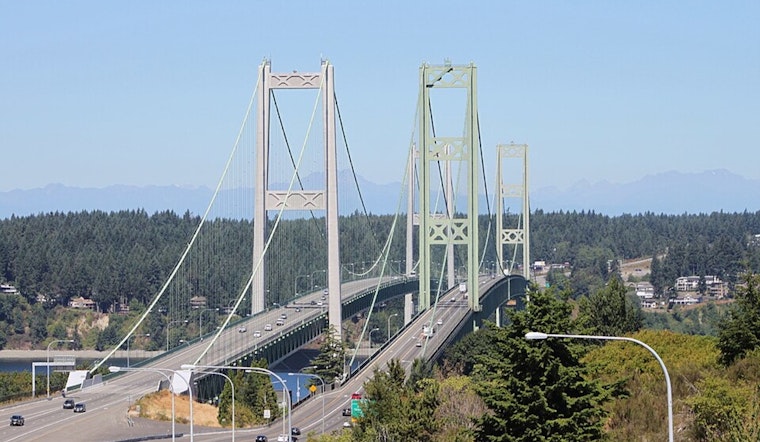
The 76-year-old westbound Tacoma Narrows Bridge, the older of the twin spans that carry State Route 16 between Tacoma and Gig Harbor, is staring down nearly $180 million in repair work if it is going to stay in service, according to state officials and lawmakers. The to-do list runs from immediate joint and power repairs to big-ticket preservation projects like full repainting of the towers and deck truss and installing cable dehumidification. Drivers already got a taste of what is at stake last year when emergency closures and short-term fixes squeezed lanes and turned evening commutes into rolling parking lots.
Rep. Jake Fey, D-Tacoma, told The Olympian that the estimate for short-, mid- and long-term preservation adds up to roughly $180 million. WSDOT spokesperson Cara Mitchell laid out the types of projects behind that figure, saying the agency has mapped out both near-term fixes and larger preservation work needed to keep the older span operating. Under current rules, maintenance on the westbound bridge comes out of WSDOT’s preservation budget, while toll revenue is reserved for upkeep on the newer eastbound bridge.
Short-term fixes and recent emergency work
WSDOT crews have already been pulled into repeated emergency repairs to keep the westbound bridge open, and the department has announced a multi-day closure in September 2025 to repair an expansion joint, according to a WSDOT news release. The agency has warned commuters that concrete curing time and night work often push closures into peak travel hours, leading to lane reductions that ripple across SR 16. Officials say those stopgap jobs are essentially bought time while they scramble for funding for larger preservation projects.
What the $180 million would pay for
The biggest single cost is repainting the towers and deck truss, an effort estimated at about $110 million. Cable dehumidification, a project designed to help protect the main cables, is pegged at roughly $38 million. Near-term work on finger joints and emergency power fixes is estimated at about $12 million, while longer-range deck rehabilitation comes in at roughly $20 million, according to WSDOT estimates reported by The Olympian. State officials argue that tackling this list in a deliberate, scheduled way is cheaper and less punishing for drivers than letting problems snowball into a cycle of emergency shutdowns.
Where the money might come from
Major preservation work on the Narrows spans has historically relied on a mix of toll revenue, targeted transfers and state preservation funds. In 2022 the Legislature ordered quarterly general-fund transfers that total $130 million for the Tacoma Narrows account, part of a broader change to the bridge’s financing; that transfer language is written into the 2022 bill that reworked how the bridge is paid off. Gov. Bob Ferguson has also spotlighted higher preservation spending in recent budget proposals, arguing that putting money into routine maintenance now can head off far more expensive reconstruction later.
Why timing matters to commuters
WSDOT estimates the westbound span carries about 45,000 vehicles a day, so any long-running work zone is almost guaranteed to rattle South Sound commutes and freight traffic. The department’s preservation blog and reporting on bridge conditions both stress that delaying major work usually drives up costs and complexity over time, a point that shaped the governor’s recent pitch for historic preservation funding. How the state juggles money, construction schedules and traffic impacts will determine whether this is handled in a few big, disruptive contracts or in smaller chunks that try to keep as many lanes open as possible.
For now, transportation officials say the first hurdle is locking down stable funding. After that, crews will need time to plan multi-year construction contracts that can keep traffic moving while the work is underway. Drivers can expect intermittent lane restrictions on the westbound bridge for the foreseeable future as the state tries to thread the needle between preserving the structure and keeping commuters on the move.



.jpeg)