

























































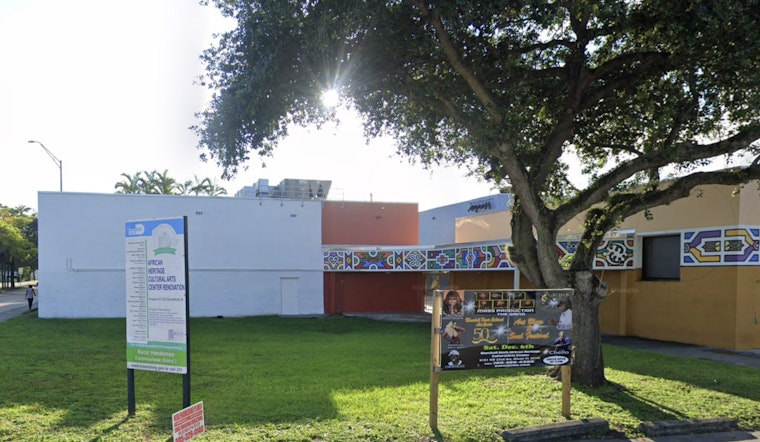
Arts Access Miami is moving deeper into Miami‑Dade’s Central District, rolling out free music, dance and visual‑arts programming for thousands of students in Liberty City, Brownsville, Allapattah, West Little River and Gladeview. The expansion was formally launched on May 18 at the Marshall L. Davis Sr. African Heritage Cultural Arts Center, where student ensembles performed for a crowd of education leaders and community partners. During the event, organizers presented Miami‑Dade County Public Schools Superintendent Dr. Jose L. Dotres with the initiative’s inaugural Arts Champion Award.
The May 18 celebration featured student performances and speeches from district and city officials, according to Hy‑Lo News. A community calendar post also highlighted the African Heritage Cultural Arts Center as the venue and laid out the morning schedule, per South Dade Spotlight (Locable). Organizers described the launch as part of a neighborhood‑by‑neighborhood plan to guarantee consistent arts instruction across entire feeder patterns, rather than leaving access to chance from school to school.
What the Central Dade Alliance Is Built to Do
The Central Dade Arts Alliance is scheduled to begin in the 2026–2027 school year and is expected to serve about 3,500 students across Brownsville, Allapattah, Liberty City, West Little River and Gladeview, as outlined by Arts Access Miami. Under the model, schools are paired with local nonprofit organizations that provide in‑school and after‑school music and arts instruction tailored to each campus. The programming is designed to track academic and behavioral outcomes, so partners can see what is working and where to adjust. Leaders say the alliance is built around scalable programs and data‑driven accountability so that successes in one neighborhood can be copied in the next.
Early Results and Why Leaders Are Pushing to Scale Up
Organizers are leaning on early outcomes from previous alliances as proof that the strategy is worth expanding quickly. Independent coverage of the coalition’s 2024–25 donor impact report noted that participating students posted noticeable gains in attendance and reading. According to WLRN, the report found that Arts Access students had stronger attendance and higher language‑arts scores than their peers, results the coalition now cites as a key justification for moving into Central Dade. Local leaders at the launch said the new rollout is meant to extend those same supports to schools that have historically had fewer arts options.
Funding, Partners and What Comes Next
Arts Access has evolved into a broad countywide coalition. Its website cites tens of thousands of students served since 2020 and a growing roster of nonprofit partners, alongside major philanthropic backing that has helped scale programs. According to Arts Access Miami, the initiative has already reached more than 40,000 students since 2020. Axios reported that a multi‑million dollar grant awarded last year helped accelerate that expansion. The Miami Foundation has backed the artlook® mapping tool and grant programs that connect schools, funders and arts providers, per The Miami Foundation. Organizers say more specifics on Central Dade programming and partner lineups will be shared before the fall semester.
With the Central Dade alliance slated to launch in the 2026–27 school year, parents and principals can look for a mix of in‑school arts classes, after‑school ensembles, youth performances and community festivals to roll into the neighborhood. Organizers describe the Central Dade effort as the third of five regional alliances that will eventually link into a single countywide arts education system, and they point to earlier work in Miami Gardens and South Dade as evidence that the model can deliver classroom‑level gains. School officials and partners say the focus now is on steady follow‑through and on watching whether the data continue to match the ambition.





