

























































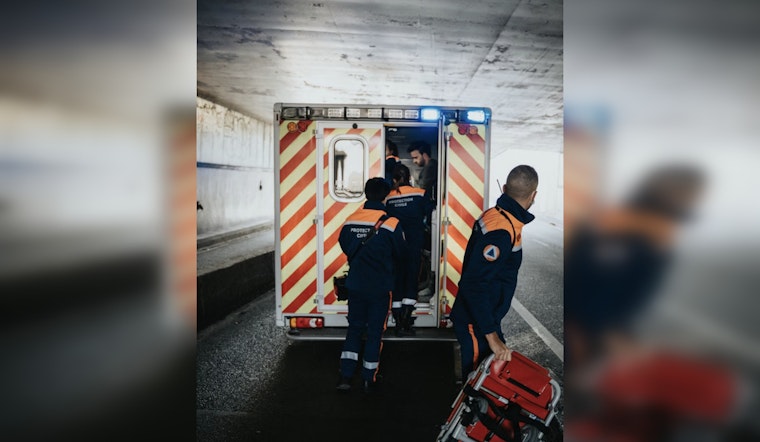
Ambulances pulling up to metro Atlanta emergency departments are increasingly getting stuck in the driveway instead of unloading inside. With emergency rooms at or near capacity, paramedics say they are routinely kept waiting outside - sometimes with a patient still strapped to a stretcher for an hour or more - before they can hand off care. Those delays tie up ambulance crews and slow the entire 911 system.
As reported by The Atlanta Journal-Constitution, photographers documented crews wheeling patients across Grady Memorial Hospital parking lots when ambulance bays were full, pairing those scenes with state offload data that show long waits at many of the region's busiest hospitals. The result is a stark look at how often EMS teams are stuck at hospital doors instead of getting back on the road.
State Data Show Long 'Wall Times' At Major Hospitals
Georgia's quarterly APOT report for January through March 2026 shows that metro-area hospitals transferred patients from ambulances to emergency department care within 20 minutes only 44% of the time, well below the state's 90 percent benchmark. The report lists Grady Memorial with about 13,162 EMS records and a 90th-percentile offload time of 58 minutes. Emory Decatur and Emory Hillandale met the 20-minute goal only about 22% and 19% of the time, respectively, according to the Georgia Department of Public Health.
Officials Point To Staffing And Capacity Problems
Michael B. Johnson, director of the Department of Public Health's Office of EMS and Trauma, warned hospital and EMS leaders in a letter that workforce gaps and limited resources are squeezing bed availability across the system. "Hospitals and EMS agencies continue to experience workforce shortages and resource limitations, affecting hospital bed availability," Johnson wrote. County EMS chiefs say those constraints are showing up as longer waits in the field and a more strained ambulance network, according to The Atlanta Journal-Constitution.
Why Offloads Matter For 911 Response
When an ambulance crew is stuck waiting to transfer a patient, that unit is not available for the next 911 call. Multiply that by several rigs, and response times can creep up across an entire county. Industry groups say these extended "wall times" pile on to workforce stress and can complicate how hospitals meet their legal obligations under EMTALA. The American Ambulance Association has pushed for clearer coordination, better reporting and state-level remedies aimed at cutting the time EMS units spend holding patients at the hospital door.
Hospitals Say They Are Rolling Out Fixes
Hospital systems told reporters they are looking for ways to shave minutes off the handoff process, from tweaking triage workflows to using command-center tools that help move patients across hospital networks more efficiently. Emory Healthcare said it has introduced a new patient assessment process and a Capacity Command Center to help "load-balance" patients. The state, for its part, notes it created an APOT task force in 2025 to study offload performance and recommend improvements, according to the Georgia Department of Public Health. Those materials, along with local reporting, frame the problem as systemic and something that will require coordination among EMS agencies, hospitals and county leaders.
What Comes Next For Atlanta
County officials and hospital executives are weighing options that range from freestanding emergency sites to new ambulance contracts and tighter capacity management as they look ahead to busy summer months and major events. For now, the state data underline a simple pressure point: when hospital beds are full, the stress ripples all the way back to the 911 caller waiting for an ambulance to arrive.





