

























































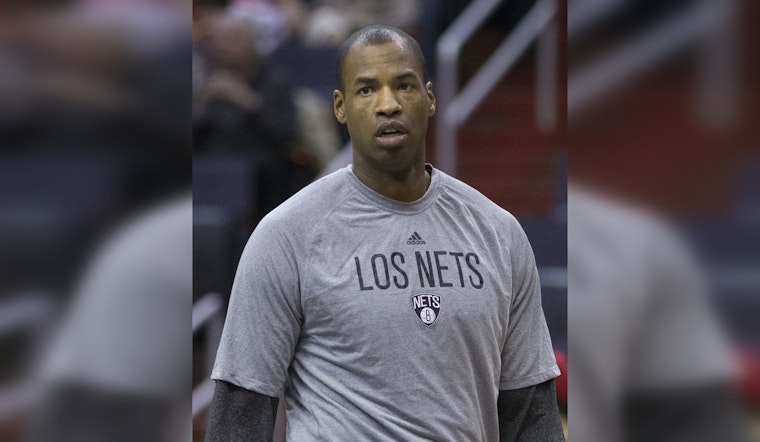
Atlanta and the basketball world are grieving the loss of Jason Collins, the former NBA center who broke one of sports' biggest barriers when he became the first openly gay active player in a major North American men’s professional league. Collins died Tuesday after an eight-month fight with an aggressive brain tumor, his family said. He was 47.
Collins spent 13 seasons in the NBA and later became a visible presence off the court as an NBA Cares ambassador and advocate for LGBTQ+ inclusion. His family described his final months as a valiant struggle and said they were deeply moved by how many people rallied around him.
According to 11Alive, the family released a statement through the NBA saying, “We are heartbroken to share that Jason Collins, our beloved husband, son, brother and uncle, has died after a valiant fight with glioblastoma.” They added that they were grateful for the outpouring of love and prayers over the past eight months and for the “exceptional medical care” Collins received, and they asked for privacy as they make arrangements.
NBA Commissioner Adam Silver offered condolences and highlighted just how far Collins’ reach extended beyond the paint. “Jason Collins’ impact and influence extended far beyond basketball,” Silver said, underscoring Collins’ role in helping make the league more inclusive, according to AP. Silver also sent sympathies to Collins’ husband, Brunson, and to the rest of the Collins family, while the league pointed to Collins’ longtime service as an NBA Cares ambassador and his reputation for kindness and professionalism.
Career and milestones
A 7-foot center out of Stanford, Collins carved out a 13-year NBA run that was long on toughness and team-first play. He suited up for multiple franchises, including the New Jersey Nets, Memphis, Minnesota, Atlanta (from 2009 to 2012), Boston and Washington, before a brief return to Brooklyn in 2014. Over those seasons, he averaged about 3.6 points and 3.7 rebounds per game, according to Basketball-Reference.
Collins’ most seismic moment did not come in a box score. In April 2013, he publicly discussed his sexuality for the first time in a first-person essay for Sports Illustrated. The piece, which made national headlines, is widely credited with helping push forward conversations about LGBTQ+ inclusion in sports and remains archived on the outlet’s site.
Diagnosis and final months
Collins revealed he had been diagnosed with Stage 4 glioblastoma in December 2025, going public with the news and describing how he was pursuing experimental treatments in an essay for ESPN. His family had first confirmed in September 2025 that he was undergoing treatment.
Even as his health declined, honors kept coming. Just last week, Collins was named the inaugural recipient of the Bill Walton Global Champion Award at the Green Sports Alliance Summit. He was too ill to attend the ceremony, so his twin brother, Jarron, accepted on his behalf and told the crowd, “He’s the bravest, strongest man I’ve ever known,” according to AP.
Legacy
Former teammates, coaches and advocates say Collins’ decision to come out, coupled with his steady, often quiet work off the court, helped change how fans and franchises think about who belongs in professional sports. Those who knew him point not only to his historic announcement, but also to the way he showed up for people behind the scenes.
The family thanked supporters for their kindness during his illness and emphasized Collins’ role as a mentor to young athletes, according to 11Alive. Collins is survived by his husband, Brunson Green, and his twin brother, Jarron, who remained by his side throughout his treatment.





