

























































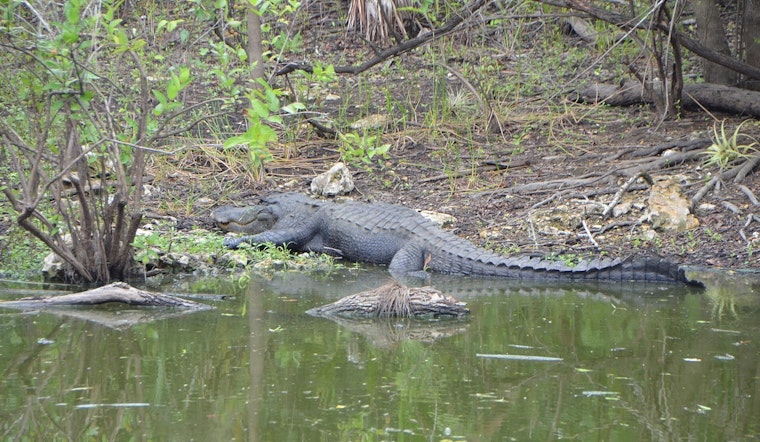
A quiet night in the Ave Maria community near Naples turned into a full-blown reptile rumble when two large alligators crashed through a home's screened lanai, shredding mesh, twisting metal and rattling everyone inside.
Homeowner Kayla Burress said she initially thought someone was breaking into the house. Her baby was sleeping just feet away when she looked outside and saw the real culprits: two big gators locked in a violent fight on the porch, slamming each other into the enclosure and leaving visible damage behind. No one in the home was reported injured.
According to CBS Miami, Burress grabbed her phone and filmed the encounter as one alligator clamped down on the other's tail while they thrashed against the screen. "It was scary," she told the outlet, adding that she quickly warned neighbors to keep a close eye on their children and pets after the brawl. CBS Miami identified the location as Ave Maria in Collier County and aired video showing the torn lanai and the animals' aggressive behavior. The station reported that wildlife experts say clashes like this are more common when alligator mating season begins.
As reported by WINK via CNN Newsource, a Florida state nuisance alligator trapper was called out to deal with the situation. That syndicated report said one of the reptiles appeared to have blood on it and that the battle was likely about territory, not courtship. Experts cited in that coverage urged residents not to approach or try to move aggressive alligators and advised everyone to keep a safe distance from waterways as gators become more active this season.
Mating Season Means More Gators Near Homes
The Florida Fish and Wildlife Conservation Commission (FWC) notes that courtship behavior in alligators typically kicks off in early April, with mating taking place in May or June. Territorial males can push younger or smaller gators into new areas, including canals and ponds beside homes.
FWC points out that Florida has a large, widespread alligator population, which helps explain why sightings and property run-ins spike in spring. Those seasonal movements, along with fights between males over territory, are among the most common reasons nuisance trappers are called into neighborhoods.
How Officials Recommend Staying Safe
"Generally, an alligator may be considered a nuisance if it's at least 4 feet in length and believed to pose a threat to people, pets or property," the FWC states. Through its Statewide Nuisance Alligator Program, the agency dispatches contracted trappers when removal is deemed necessary.
FWC warns residents never to feed or approach gators, to keep small children and pets away from the edges of ponds and canals, and to report dangerous animals to the Nuisance Alligator Hotline at 1-866-FWC-GATOR (866-392-4286).
Not The First Time For Ave Maria
Last spring, doorbell-camera footage captured gators clambering toward a front door in the same community, highlighting how suburban streets and wild reptiles often collide in Southwest Florida. That earlier clip was reported by outlets including PetaPixel.
Residents say these viral moments and frequent removal calls have become a warm-weather pattern they now half expect. After the latest lanai smackdown, community feeds quickly filled with safety tips, and neighbors told reporters they were shaken but not exactly shocked.
Burress said her family is safe, and the torn enclosure is now the big immediate headache while wildlife officials handle the reptile side of the mess. Authorities continue to stress that citizens should report hazardous gators to the hotline instead of trying to capture or move them. For anyone living near water in gator country, keeping screens, fences and pets secure remains the best defense against an up-close encounter.





_6.jpg)