

























































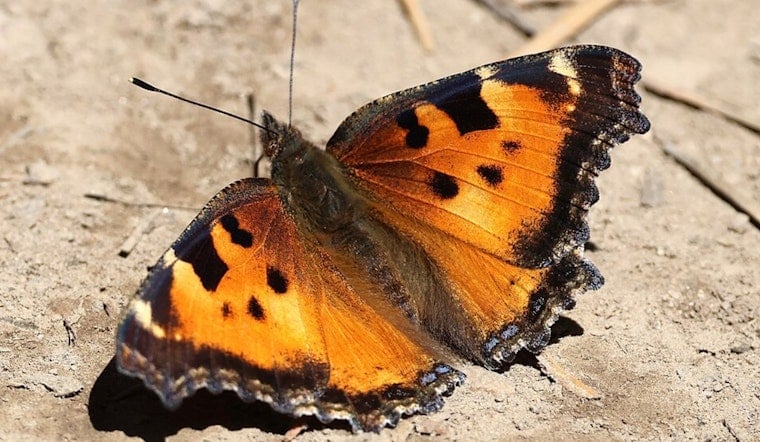
Bay Area trails, backyards and ridge lines have turned into moving orange mosaics this spring, as clouds of tiny butterflies suddenly seem to be everywhere. Hikers say short bursts of insects can briefly block the view on popular paths or drift across parking lots in shimmering waves. The surprise visitors are California tortoiseshells, a native butterfly that occasionally shows up in huge, highly visible numbers when conditions line up just right.
Why they’re showing up now
Scientists point to a straightforward recipe behind the spectacle: plenty of host plants, paired with a warm, dry spring that gave eggs and caterpillars a major survival boost. Federal climate data show that March 2026 was unusually warm and dry across the contiguous United States, a pattern that can cut down on winter die-off and speed up insect development, according to NOAA’s National Centers for Environmental Information.
What these tiny orange butterflies are
The swarming insects are California tortoiseshells (Nymphalis californica), whose caterpillars rely mainly on wild lilacs in the Ceanothus genus for food. The larvae usually hatch in clusters on ceanothus leaves and, when the shrubs are abundant and the weather cooperates, their numbers can spike dramatically. Ecologist Stuart Weiss told The Mercury News that the species’ population “exploded” this spring because breeding conditions were so favorable and mortality stayed low. Species guides list ceanothus as the primary larval host, which helps explain why the butterflies are thickest in spots where those shrubs dominate the landscape.
Where people are seeing them
Reports of dense flights stretch from the Santa Cruz Mountains into the South Bay, including Bonny Doon, Boulder Creek, Saratoga and Los Gatos, as well as popular preserves such as Rancho Cañada del Oro and Rancho San Antonio. Local accounts and interviews gathered by The Mercury News line up with a flood of community sightings logged across the region this month.
Are they harmful? How to help native pollinators
For homeowners and park managers, this is more natural light show than long-term problem. Heavy feeding by caterpillars can temporarily strip leaves, but ceanothus and most other native shrubs generally rebound. Anyone hoping to give local butterflies a hand can plant native ceanothus varieties and other nectar-rich native species - gardening references list options suited to California yards and open spaces. For more on host plants and identification, see Butterflies and Moths of North America, along with native-plant resources such as Calscape.
Whether this burst of activity fades in a few weeks or helps seed new breeding pockets around the Bay, the irruption is a reminder that post-fire regrowth and shifting spring weather can set off dramatic, if short-lived, pulses in local wildlife. If you stumble into a particularly thick swarm, photos and location notes shared with local naturalist projects can help researchers track just how far this season’s flutter has spread.


