

























































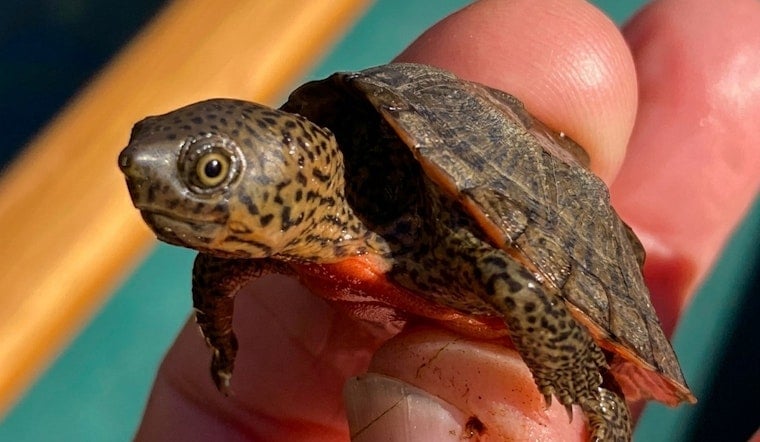
A federal magistrate judge in Phoenix ordered Albert Bazaar — formerly of Angie, Louisiana, a rural village of fewer than 300 people in Washington Parish — held in custody on May 7 following his arrest on charges of poaching and trafficking thousands of protected turtles from Florida and funneling them into the Asian pet trade through a San Francisco-based co-conspirator. The case, which stretches from the swamps of the Sunshine State to the Bay Area to Taiwan, is one of the more brazen wildlife trafficking schemes to land in a Bay Area federal court in recent years.
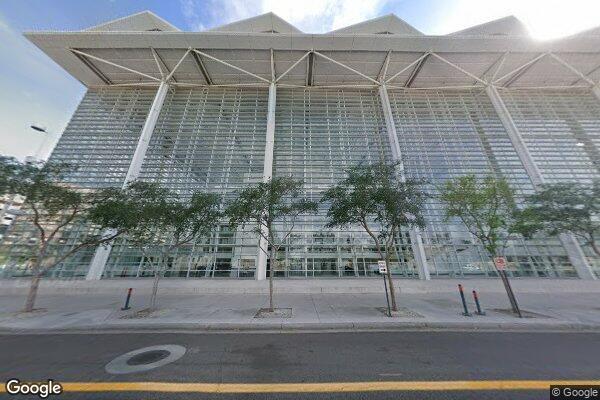
Sandra Day O'Connor United States Courthouse | Source: Google Street View
A Multi-State Poaching Pipeline
According to the U.S. Department of Justice, Bazaar is alleged to have poached and sold over 1,700 loggerhead musk turtles, 100 stripe-neck musk turtles, and 15 striped mud turtles from their native Florida habitats between January 2022 and December 2023. All three species are protected under Florida law, which bans unregulated harvest of freshwater and marine turtle species, and all three carry protections under the international CITES treaty. The turtles were estimated to be worth more than $550,000 on the Asian pet market.
The scheme was no small-time side hustle. As reported by the Washington Times, across eight documented transactions, Bazaar sold the wild-caught reptiles to an unnamed San Francisco exporter, who then shipped them to Taiwan — falsely labeling them as captive-bred to obtain the necessary export permits. The Bay Area buyer even bankrolled Bazaar's Florida poaching trips from Louisiana, including providing funds specifically to purchase a boat and a van.
Bazaar is also charged with submitting fraudulent paperwork to the U.S. Fish and Wildlife Service (USFWS) claiming the turtles had been legally bred in Alabama and Georgia — a declaration prosecutors allege was fabricated wholesale. The federal Lacey Act criminalizes both the sale or transport of wildlife taken illegally under state law and the submission of false documentation tied to wildlife in interstate or international commerce, the DOJ noted.
The Bay Area Connection
The indictment was filed in San Francisco's federal court — a direct consequence of the Bay Area exporter's central role in the operation — making the Northern District of California the prosecuting jurisdiction. The unnamed San Francisco co-conspirator has not been publicly charged, which raises real questions about where that arm of the investigation stands. Hoodline has reported that a Bay Area trafficking ring has been partially unraveled with Bazaar's arrest, though the full scope of the local pipeline remains to be seen.
Louisiana itself has a long, complicated history as a gateway for the global turtle trade. According to National Geographic, USFWS export data shows that 17 million wild, live turtles were shipped commercially from the United States between 2012 and 2016 — with 16 million of them passing through New Orleans alone. While state officials have insisted the vast majority were hatchlings from licensed farms, conservationists have long argued that Louisiana's historically permissive harvest regulations make it a natural staging ground for poachers looking to launder wild-caught animals into the legal trade stream.
What's conspicuously absent from the DOJ's announcement is any name, charge, or public identification of the San Francisco exporter — referred to throughout only as "a co-conspirator." That language is standard, but the venue choice is worth noting: the indictment was filed in the Northern District of California, not in Florida where the poaching occurred or in Arizona where Bazaar was actually arrested. One plausible reading of that — and it is a reading, not a confirmed fact — is that federal prosecutors view the SF middleman as the more significant target, and that Bazaar's cooperation may be helping build that case from the ground up. Neither the DOJ nor any outlet covering the case has publicly identified the co-conspirator.
Surging Demand, Shrinking Populations
The demand side of this equation is hard to overstate. Growing appetite for exotic freshwater turtles as pets and status symbols across Asia has turned North American species into a prime target for criminal networks. The Hill cited University of Michigan research estimating that U.S. commercial musk turtle exports alone surged from around 8,000 in 1999 to more than 281,000 by 2016 — and those are just the legal numbers. Illegal trafficking fills the gap that lawful supply can't satisfy, with individual animals sometimes fetching hundreds of dollars apiece in Asian markets.
Wildlife experts are blunt about the stakes. The conservation director at Roger Williams Park Zoo told the Star Tribune that poaching has become ruthless, with thousands of turtles leaving the U.S. annually at rates wild populations simply cannot sustain. One major study found that more than half of the world's 360 living turtle and tortoise species are now at risk of extinction, with overexploitation consistently ranked among the leading causes of decline.
A Pattern of Similar Cases in the Southeast
Bazaar is far from the first to face federal charges for running Florida turtles toward Asian markets. In March 2024, the Justice Department announced that Kevin Olbrych of Spring Hill, Florida was sentenced to 15 months in federal prison for trafficking Florida box turtles, loggerhead musk turtles, and ornate diamondback terrapins — selling them through an Oregon middleman and ultimately to buyers in China. Authorities found hundreds of turtles crammed into pools at his home, and his trafficking continued even after a 2018 police raid.
The Collaborative to Combat the Illegal Trade in Turtles has documented at least 30 major trafficking cases across 15 states since 2018, per the Partnership for Amphibian and Reptile Conservation. The pattern is consistent: poachers operating in states with weaker protections, plugging into networks that connect wild Florida waterways to black markets in Hong Kong, Taiwan, and mainland China.
Operation Southern Hot Herps
Bazaar's arrest came through USFWS Operation Southern Hot Herps, a joint enforcement effort specifically targeting turtle poachers across the southeastern United States. The investigation drew in Homeland Security Investigations, the Florida Fish and Wildlife Conservation Commission, the California Department of Fish and Wildlife, and the Alabama Department of Conservation and Natural Resources, as KSLA reported. Senior Trial Attorney Ryan Connors of the DOJ's Environmental Crimes Section and Assistant U.S. Attorney Kenneth Chambers for the Northern District of California are prosecuting. A status conference is scheduled for May 14 in Phoenix, where Bazaar faces up to five years in prison and a $250,000 fine per charge if convicted.
Legal Implications to Watch
The indictment carries charges under two separate legal frameworks — conspiracy and multiple Lacey Act violations — each with their own maximum penalties, meaning Bazaar's total exposure could climb steeply if prosecutors pursue each count to conviction. The Lacey Act's specific prohibition on submitting false federal wildlife documentation is particularly significant here, since Bazaar allegedly fabricated USFWS paperwork to obscure the wild-caught origins of the animals. As AZFamily noted, it remains unclear precisely where in Arizona Bazaar was arrested or what brought him to Phoenix — details that may emerge at the upcoming status conference.
As with all federal indictments, the charges against Bazaar are allegations only. He is presumed innocent unless and until proven guilty beyond a reasonable doubt in a court of law.



