

























































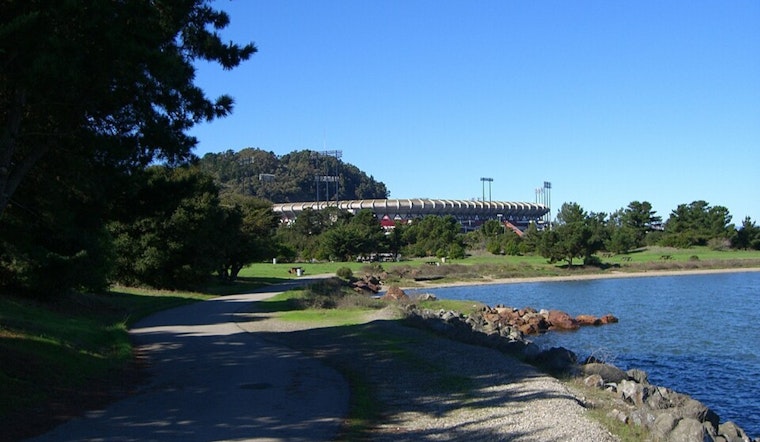
Bargain hunters are buying up chunks of the San Francisco Bay, shelling out just a few hundred bucks for 5,000-square-foot underwater "lots" off the city’s southeastern shoreline. At recent sales, some submerged parcels near Candlestick Point went for under $1,000, a jarring contrast in a city where most homes cost seven figures. Buyers frame the moves as speculative land-banking or creative waterfront plays, while regulators and coastal experts warn that turning sea into buildable land is a long, legally tangled slog.
What Sold And Where
The parcels sit off the Bayview and Hunters Point shoreline and come with addresses that sound normal until you realize they are underwater. One example is 0 Bancroft Ave Lot 17, a 4,996-square-foot seabed plot off Hunters Point, along with other grid-style parcels mapped near Candlestick Point and the Bayview waterfront. As reported by SFGATE, those street-style labels reflect historic planning grids that now lie beneath the Bay.
A Vantage Auctions catalog on Proxibid shows one parcel, Lot #3008, closing with a high bid of around $800. A Zillow copy of the listing shows some parcels launching with opening prices as low as $250, illustrating how the auction format produced sub-$1,000 sales for shoreline-adjacent properties that would otherwise be far out of reach for most buyers.
How The Listings Hit The Market
The underwater plots were posted on Zillow and bundled into Vantage Auctions land catalogs, where the listing language pitched them as unique opportunities but also flagged that there are no surveys or clearly established access rights. The Real Deal reported that the listings began appearing in early May and pointed to the auction catalog as the main sales vehicle. Rock-bottom opening bids, combined with online-only closing, help explain how pieces of the Bay floor sold for just a few hundred dollars in some cases.
Floating Future: Experts Weigh In
Designers and advocates for floating structures say the Bay could, in theory, support moored platforms or floating homes in sheltered spots, but only with serious engineering and a mountain of approvals. Dr. Koen Olthuis of Waterstudio told ABC7 that floating foundations and units are technically feasible in protected waters, while stressing that permitting and regulatory sign-offs would be major hurdles. Local historians and planners note that San Francisco’s shoreline was once expanded by extensive fill, yet say repeating that today runs headfirst into modern environmental protections and public-trust rules.
Permitting And The Bay Plan
The San Francisco Bay Conservation and Development Commission’s Bay Plan tightly restricts new Bay fill, generally allowing it only for specific water-oriented public uses. That means private, residential-style fill projects would face an uphill battle for permits. On top of that, federal dredge-and-fill permits under the Clean Water Act and navigable-waters rules, administered through the U.S. Army Corps of Engineers, would be required for any effort to place material in the Bay. Those overlapping state and federal reviews make private land-making projects costly, slow and legally uncertain long before anyone can think about pouring concrete.
Why Buyers Still Bite
For some investors, the calculation is straightforward: spend a few hundred dollars now for a sliver of a chance at future waterfront positioning, or at least the possibility that public projects or policy shifts could change the game decades from now. Nicolo Gobbi, the broker who listed the Bancroft parcel, told Mission Local that the lot sold for nearly $800 and that his firm expects to list more underwater parcels. He also acknowledged that auctions move quickly and that firms sometimes do only limited research on title or access before going to market. Market watchers characterize these buys as low-cost, long-odds wagers rather than serious near-term development plays.
Bottom Line
For now, these tiny slices of seabed are more curiosity than a construction site. They are sold as-is, come with tax bills and sit behind multiple layers of environmental review. The auctions highlight just how creative and speculative some buyers get in an overheated housing market. Whether any of these cheap, soggy lots ever turn into actual buildable waterfront will depend less on bargain hunters and more on regulators, engineering advances and the slow churn of Bay planning.





