

























































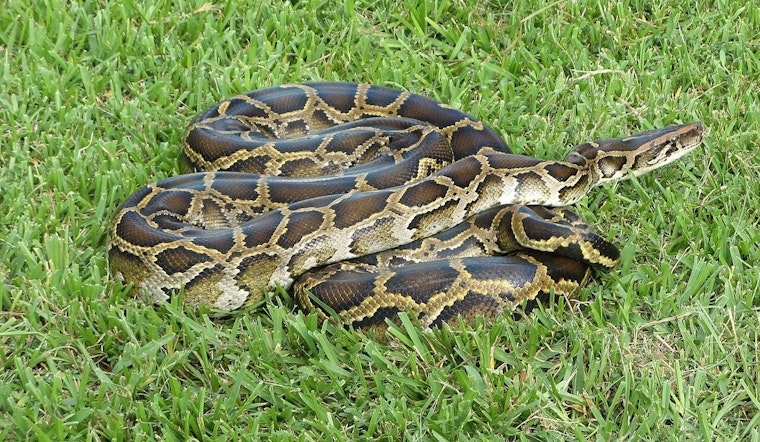
Scientists tracking invasive Burmese pythons in the Everglades got a surprise at a nest in the Francis S. Taylor Wildlife Management Area, where they watched vultures chow down on a clutch of python eggs. The research team describes the encounter as the first recorded case of a bird attacking a python nest, after they found punctured eggs and scattered shell fragments while the brooding female lingered nearby in shallow water. The scene has researchers wondering whether scavenger birds might quietly be helping to slow python reproduction.
UF Team Documents The Egg Raid
The observation is detailed in a University of Florida case study published in Reptiles & Amphibians, which reports that field crews documented at least 17 eggs: three displaced with only shell fragments left behind and 14 punctured and partially eaten. The authors note that the team made the discovery while tracking pythons using a radio telemetry "scout snake" program, and that remaining eggs were removed so hatchlings could not disperse into surrounding habitat.
Researchers Say Monitoring Remains The Main Weapon
UF scientists say they are continuing to monitor python nests to better understand reproduction and to pull eggs out of circulation before hatchlings emerge, a strategy Melissa Miller outlined to the Miami Herald. Miller told reporters that moments like the vulture raid add to growing evidence that native wildlife is eating invasive pythons at several life stages, not just once the snakes reach adulthood.
Vultures Join Growing List Of Python Predators
Native predators have already been linked to python deaths: a USGS study documented cottonmouths and American alligators feeding on juvenile pythons, and earlier research captured a bobcat removing and devouring python eggs on camera in a 2022 Ecology and Evolution paper. Together, those findings suggest pythons are increasingly folded into local food webs, even if scientists caution that these predator encounters by themselves will not wipe out the invasive population.
What This Does, And Does Not, Mean For Management
Researchers point out that vultures are likely to target eggs only when nests are left unguarded, while female pythons normally coil around their clutch, thermoregulate, and defend the eggs during incubation. Female pythons can lay roughly 50 to 100 eggs and typically nest in late spring, with hatchlings emerging in July and August. Wildlife agencies still focus on removing breeding females and their eggs: the Florida Fish and Wildlife Conservation Commission runs contractor removal programs and the Python Action Team to locate nests, break up reproduction, and reduce hatch success.
What Scientists Are Watching Next
Biologists following pythons with radio telemetry say they will keep watching to see whether avian egg raids have any measurable effect on hatch rates as this nesting and hatching season plays out. The UF telemetry project has expanded its scout snake work in recent seasons to sharpen detection and removal of breeding females and their nests, researchers told UF/IFAS.
For now, vultures are an unexpected footnote in the Everglades' long fight with invasive pythons: one more pressure on nests that managers can either pair with targeted removals or simply log as part of a broader, years-long control push. Scientists say systematic monitoring, not wishful thinking about scavengers, will ultimately determine whether birds make any real dent in python reproduction.





.jpg)