

























































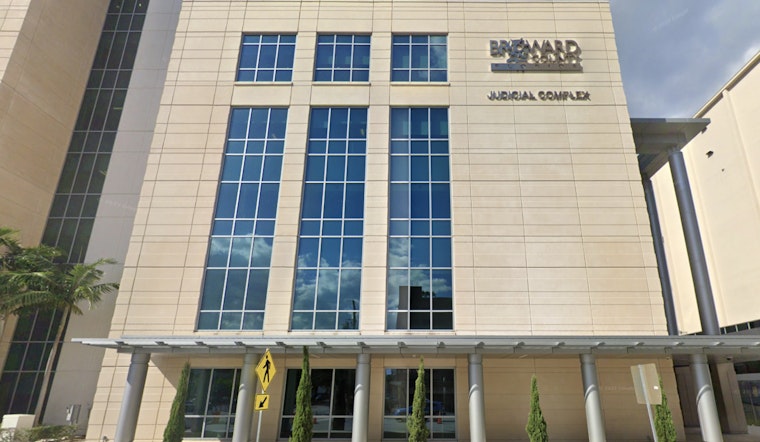
Last month, a Broward County traffic judge ordered every pending school-zone speed-camera case in his courtroom dismissed, a move defense attorneys say strikes at the heart of Florida's new automated enforcement push. The order, which took effect April 24, found that the device used to calculate drivers' speeds "is not an approved enforcement tool," leaving city officials and drivers across South Florida trying to square the ruling with an ongoing wave of camera installations.
The ruling technically reaches only Broward County cases, but the legal strategy behind it is already showing up elsewhere, according to CBS12. "This applies to Broward County only at this time, however, other judges could also agree," attorney Ted Hollander of The Ticket Clinic told the station, adding that similar motions are being argued in courtrooms around the state.
In Central Florida, those challenges have already paid off. In Osceola County, prosecutors paused camera enforcement and judges dismissed a batch of camera-issued tickets after questions surfaced about whether the devices were actually inside the legally defined school-zone boundaries, as reported by WFTV. Channel 9's reporting notes that the sheriff's office suspended the program while it reviews camera placement and device approvals, and that dozens of notices were tossed at a recent hearing.
All of this is being watched closely in Palm Beach County, where several municipalities already have active programs that could be vulnerable to the same challenges. A statewide map maintained by The Ticket Clinic lists Boca Raton, Boynton Beach, Delray Beach, Loxahatchee Groves and Wellington among Palm Beach locations using school-zone speed cameras. And the West Palm Beach City Commission voted last September to install more than 20 cameras in school zones across the city, according to WPTV, although not all of those devices have started issuing citations yet.
What judges are actually scrutinizing
The courtroom fights so far have turned on technical details that usually live deep in state rulebooks. Judges are asking whether the specific radar or speed-detection hardware a city is using appears on the state's approved list, and whether each camera is physically located inside the statutory boundaries of a school zone, not just near one.
Florida's camera rules are rooted in Section 316.0776 of the Florida Statutes, and in Speed Detection System specifications published by the Florida Department of Transportation. Both have been cited in recent challenges as defense attorneys press cities to prove that every device, and every installation, meets the letter of state law.
What drivers should know
For drivers who already received a $100 school-zone notice, the ticket does not disappear just because other cases were dismissed. Each notice remains in force unless and until a judge throws it out. Recent hearings, however, show that challenges can succeed when they focus on narrow legal issues instead of broad complaints about fairness.
Defense attorneys and advocates have zeroed in on three main questions: whether the warning signs are posted correctly, whether the cameras sit inside the legally defined school zone and whether the devices themselves are on the state's approved list. That strategy tracks with local reporting and summaries from The Ticket Clinic, which highlight those same issues as fertile ground for contests.
Whether the Broward ruling grows into a statewide precedent will depend on what other judges decide, whether any of the dismissals are appealed and whether lawmakers in Tallahassee or the Florida Department of Transportation step in with clarifying guidance. For now, Palm Beach officials and drivers are watching court dockets and city-hall agendas closely as Florida's newest enforcement tool collides with old-fashioned courtroom scrutiny.



