

























































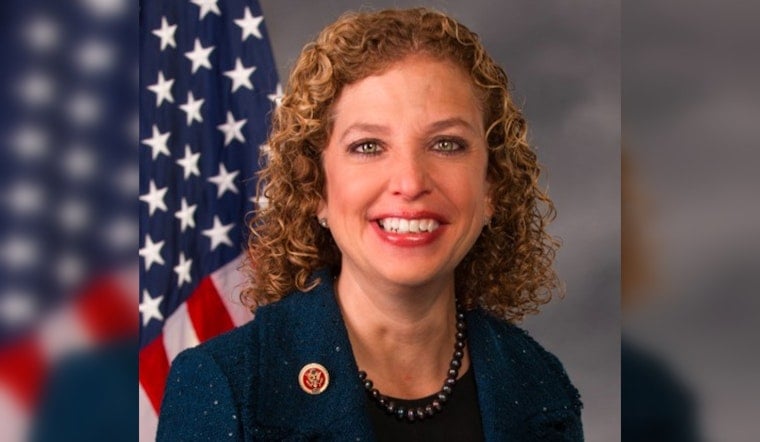
Black political leaders in Broward County are leaning hard on Rep. Debbie Wasserman Schultz to stay out of the newly drawn 20th Congressional District, warning that a run there could unravel more than three decades of Black representation and turn next year’s Democratic primary into a racially charged brawl. Wasserman Schultz has said she is running for reelection but has not decided which district to call home, and activists say what is on the line is not just one race, but the pipeline that has allowed Black candidates to reach Congress from South Florida.
In a May 4 press release, the Democratic Black Caucus of Broward County publicly urged Wasserman Schultz to steer clear of FL‑20 and warned that a non‑Black incumbent taking over a Black‑opportunity seat could set a troubling precedent, according to WLRN. The caucus noted that several Black candidates are already in the Democratic primary and argued that a heavily Black electorate should have a representative drawn from its own communities. Their appeal was framed less as a personal attack on Wasserman Schultz and more as an effort to defend political space that, they say, was painstakingly carved out over decades.
State Sen. Rosalind Osgood put it even more bluntly in an interview with CBS Miami. “We don't want it to be her legacy that she remains in Congress by disenfranchising the Black community,” Osgood said, urging Wasserman Schultz to “pause and hear us” about why Black life experience matters in a district like this. CBS Miami reports that Wasserman Schultz is testing the waters with polling in both the revamped CD‑20 and a sprawling CD‑22, but has not tipped her hand. That uncertainty is fueling a behind‑the‑scenes scramble among local hopefuls who would prefer not to have to run through a sitting member of Congress.
Redistricting Shakeup
All of this drama traces back to the state’s mid‑decade redistricting. On May 4, Governor Ron DeSantis signed a new congressional map that redraws 21 of Florida’s 28 districts and, critics say, could net Republicans as many as four additional seats. The move brought immediate lawsuits and a hurried game of musical chairs as incumbents and challengers alike hunted for safe or at least viable districts, according to WLRN. CD‑20 was reshaped in that process and now votes and looks different than it did just months ago, a shift that sits at the heart of the fight over who should run there.
Demographic And Electoral Stakes
The reworked CD‑20 is about 40 percent Black and has been represented by Black members of Congress, including Alcee Hastings and more recently Sheila Cherfilus‑McCormick, for more than thirty years, a streak that community leaders say should not be treated as disposable. At least five Black candidates have already filed for the Democratic primary, CBS Miami reported, setting up a crowded contest that many activists fear could be overwhelmed if a well‑known incumbent with a national fundraising network jumps in. For voters in western Broward, organizers say, the race is being cast as a battle to keep representation anchored in local experience rather than in pure name recognition.
Voices On The Ground
On the ground, the rhetoric has been fiery. Activist Elijah Manley warned on social media that “any white incumbent that attempts to carpetbag and run in the new CD‑20 is a Jim Crow Democrat and will face united opposition from the black community,” according to the Miami Herald. Organizers say comments like that reflect deeper fears that the gains secured in the early 1990s, when court‑ordered maps helped the region elect Black members of Congress, could be rolled back by this latest redraw and by a recent Supreme Court ruling that affects how race can be used in mapmaking.
What's Next
Wasserman Schultz now faces a politically delicate choice: chase the numbers in CD‑20 and risk a community backlash, or opt for another seat and leave the district’s long‑running tradition of Black representation to be decided in a more open primary. Local leaders say the coming weeks of qualifying, fundraising and private polling will determine whether this turns into a test of unwritten norms about who runs where, or a bruising identity fight that draws national attention. If she jumps into CD‑20, the primary is expected to become a marquee skirmish that outside groups and donors will watch closely. If she stays out, the same new lines will still determine who speaks for western Broward in Washington. Either way, the dispute is a vivid example of how redistricting and shifting legal standards are reshaping South Florida politics on a tight clock.





