

























































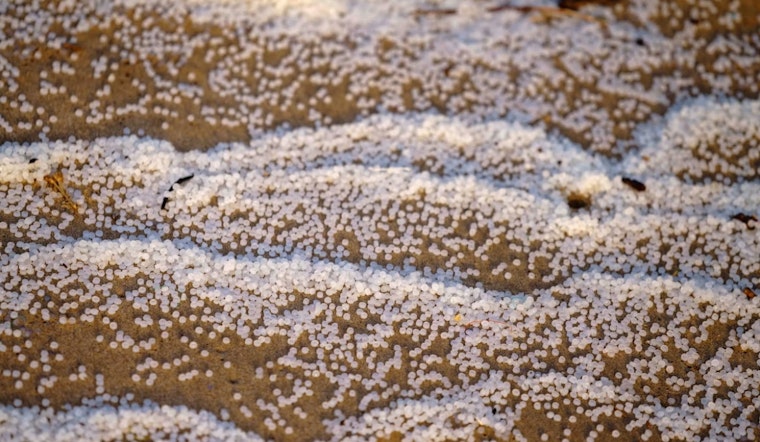
On a recent weekend at Carlsbad’s Rotary Park, volunteers knelt in the dirt beside the rail line and filled their sample bottles with what looked like oversized grains of rice. In just ten minutes, they counted nearly 700 of the tiny white plastic pellets known as nurdles, a stark snapshot of how pre-production plastic is slipping into San Diego’s lagoons and shorelines.
Nurdles are the basic building blocks of almost every plastic product. Local advocates say they are easily spilled from rail hopper cars or during handling, then blown by wind or washed through storm drains into sensitive wetlands. That eye-popping Carlsbad tally, combined with a recent deal with one of the country’s biggest railroads, is turning up the heat on regulators to treat pellet spills as more than stray litter.
Settlement With BNSF Aims To Tighten Rail Rules
Nearly two years after San Diego Coastkeeper and partner groups first flagged repeated pellet spills along the coast, railroad and environmental officials announced an agreement aimed at cutting leaks by tightening inspections and tracking.
As reported by NBC 7 San Diego, BNSF has agreed to increase inspections of pellet railcars, refuse cars that are visibly leaking and step up monitoring at known hotspot locations along the coastal rail corridor. The goal is to catch problems before nurdles roll off rail beds and into nearby lagoons.
New Rail Rules, Fees and Monitoring
San Diego Coastkeeper has outlined additional terms it says are part of the resolution. According to the group, BNSF will be required to ensure both loaded and empty pellet cars are sealed, turn away noncompliant cars and impose escalating fees on shippers that keep sending leaky equipment.
The group says the agreement also calls for a year-long monitoring program at selected San Diego sites and financial support for county plastic pollution work. On top of that, BNSF has agreed to roll the standards out nationwide and to work with industry groups on broader best practices, according to San Diego Coastkeeper.
Volunteers And The International Count
The Rotary Park haul came from a standardized ten-minute survey that is part of the International Plastic Pellet Count, a project organized by the U.S. PIRG Education Fund. Volunteers fanned out along the tracks, collected nurdles within a set time and recorded the results so the numbers can be compared across sites.
Organizers say the count helps map pollution hotspots and put pressure on regulators, while national groups warn that trillions of pellets enter the oceans each year. The Carlsbad tally was among those documented by The San Diego Union-Tribune.
Legal Fight And A Regulatory Gap
Behind the scenes, the nurdle issue has also moved into the legal arena. In April 2024 San Diego Coastkeeper and the Coastal Environmental Rights Foundation sent BNSF a 60-day notice that documented repeated pellet deposits in Batiquitos, San Elijo and other lagoons and warned that the railroad could face Clean Water Act litigation.
The groups argue those discharges are unpermitted and back up that claim with detailed filings that include dates, photos and maps tying pellet deposits to rail activity. The full notice, which lays out their evidence and legal theory, is available from San Diego Coastkeeper.
Why The Pellets Matter To Health And Wildlife
On the sand, nurdles can look a lot like food to sea turtles, seabirds and fish. Scientists say that once ingested, these microplastics can move through food webs and that the pellets themselves can act like tiny sponges for hydrophobic pollutants, which can hitch a ride into animal tissues.
Recent scientific reviews have detected microplastics in human blood, lung tissue and placenta samples. That growing body of work has scientists concerned about long-term exposure, even at low levels, and about the chemicals that may travel on or within plastic particles. For a deeper dive into the human health literature and how microplastics move through the body, see the review in Frontiers in Toxicology.
How Locals Can Help
For residents who keep spotting nurdles on the beach or along rail lines, there are ways to turn frustration into data. Advocates encourage people to document what they find and send reports to citizen-science projects such as Nurdle Patrol, then sign up for local pellet counts using the International Plastic Pellet Count toolkit.
Short, standardized ten-minute surveys help build a dataset that volunteers, scientists and regulators can use to target monitoring and enforcement efforts where they are needed most.
Legal Implications
The settlement with BNSF and the 2024 notice letter highlight how patchy pellet oversight remains, with a mix of local enforcement, voluntary industry commitments and case-by-case lawsuits. Some advocates are pushing for a clearer national standard.
In Congress, Rep. Mike Levin has reintroduced the Plastic Pellet Free Waters Act, H.R. 7634, which would direct the Environmental Protection Agency to prohibit certain pellet discharges into waters of the United States, according to Congress.gov.
Those tiny beads may not look like much scattered along the sand, yet local volunteers, lawyers and lawmakers now argue they add up to a measurable threat for San Diego’s lagoons and the wider food chain. For officials watching the rollout of new monitoring programs and rail industry practices, the Rotary Park count is exactly the kind of local evidence they say will guide what happens next.



