

























































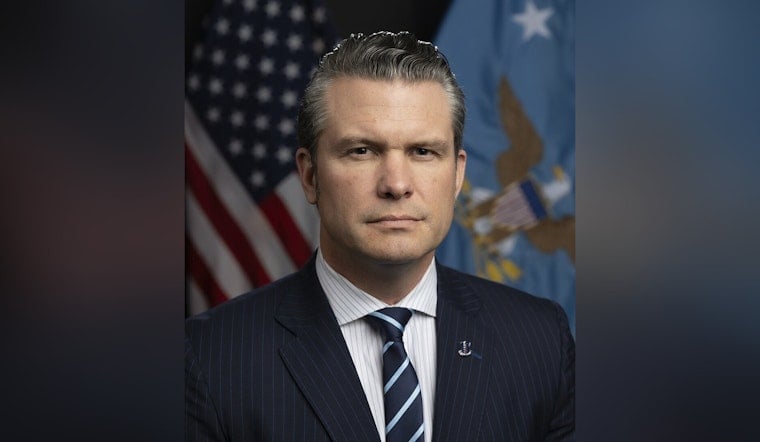
U.S. Defense Secretary Pete Hegseth used his Saturday appearance at the IISS Shangri-La Dialogue in Singapore to warn that China’s rapid military buildup has sparked “rightful alarm” across the Indo-Pacific and to press Asian partners to shoulder more of their own defense. He cast the moment as a test of allied resolve, urging countries to boost spending, put more ships and submarines to sea, and build the industrial base needed for long-term deterrence. That message hits close to home in Hawaii, where Indo-Pacific Command and Pearl Harbor-area bases would be central to any regional contingency.
What Hegseth told defense leaders
Addressing defense officials and security experts, Hegseth said “there is rightful alarm regarding China’s historic military buildup” and warned against allowing any single state to dominate the Pacific. He declared that “the era of the United States subsidizing the defense of wealthy nations is over” and urged partners to increase their own defense spending and capabilities instead of relying on U.S. primacy. He also drew laughs and some nervous nods with a pointed quip calling for “less Shangri-La, more ships, more subs,” a line reported by the Honolulu Star-Advertiser.
Why Hawaii is watching
Hegseth’s pitch carries real weight in the islands because U.S. Indo-Pacific Command, headquartered at Camp H.M. Smith on Oʻahu, serves as the joint headquarters that coordinates presence, rotations and contingency planning across the region. In practical terms, the kinds of steps he is urging, from expanded ship and submarine deployments to stronger logistics and industrial support, would translate into increased activity at Pearl Harbor and other Hawaiian facilities. Camp H.M. Smith’s role as the theater headquarters is outlined on public pages from U.S. Indo-Pacific Command.
Allies, arms and what's next
Hegseth tried to balance his warnings with reassurance, saying U.S.-China relations were “better than they have been in many years” even as he pushed for stronger deterrence and readiness. He told the forum that any decision on future arms sales to Taiwan would “depend on the president” and stressed to regional partners that current operations elsewhere were not undercutting the stockpiles needed in the Indo-Pacific. The speech and the follow-up exchanges were covered in reporting by The Washington Post.
Bottom line for Hawaii
For Honolulu officials and defense watchers, Hegseth’s address is a clear reminder that decisions in Washington on budgets, force posture and ship rotations ripple quickly through the islands. The Pentagon has posted the full speech on its DVIDS site, and local coverage from the Honolulu Star-Advertiser is tracking what could follow, from more port visits to expanded exercises.




