

























































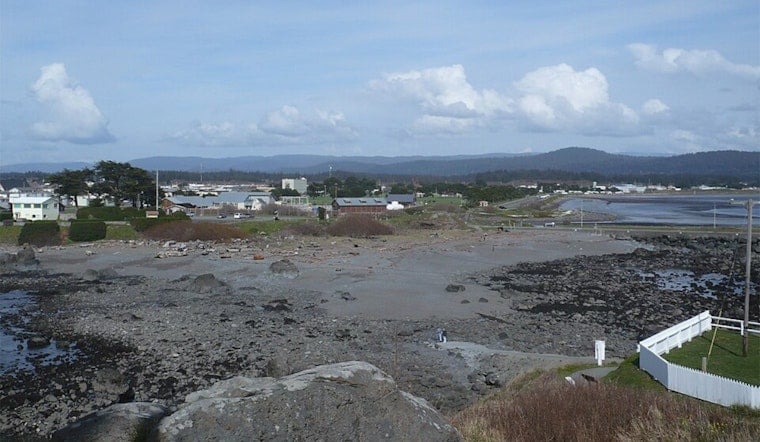
On the map, Crescent City looks like California’s last true coastal bargain. Tucked up at the state’s far northern edge, it is still possible to snag a three-bedroom place near the beach for under $400,000. The local market hovers in the mid-$300,000s even as wages lag and housing choices stay scarce. That mix, affordable on paper but expensive in everyday life, is quietly rewriting who can actually afford to live and work by the water.
According to the San Francisco Chronicle, Crescent City’s average home price sits around $353,000, and it is the only incorporated town in Del Norte County. The Chronicle also reports that visitors outnumber locals by wide margins, vacancy rates hover near 2 percent, and the city counted 22 vacation rentals in 2024, all of which tighten an already tiny housing pool. Roughly 40 percent of the workforce is employed by government, thanks in part to Pelican Bay State Prison, which further shapes who lives here and who just passes through.
Market trackers back up the basic story. Redfin logged a March 2026 median sale price near $343,000, while Zillow puts typical home values in the mid-$360,000s. Those numbers still keep Crescent City well below the price tags in most California beach towns. The catch: listings tend to disappear quickly, and a noticeable share of the buyers come from outside the county.
The local economy leans heavily on public employers, including schools, county offices and the maximum-security Pelican Bay State Prison. A Del Norte County community health assessment notes that Crescent City’s official population counts include an estimated 1,677 Pelican Bay inmates and that the prison population has shifted in recent years, while state correctional reports show Pelican Bay’s on-the-books totals changing week to week. That cluster of institutional residents and jobs helps explain why the everyday problem for many locals is not the sticker price itself, but the lack of available homes.
Park Economy and Conservation Wins
Redwood National and State Parks function as the region’s economic engine. The National Park Service reports about 1.2 million recreation visits in 2025, and conservation partners say the parks protect roughly 45 percent of the world’s remaining protected old-growth coast redwoods. Those trees pull in tourists, film scouts and second-home buyers, and the conservation victories keep coming, including recent reports from the Yurok Tribe that free-flying condors may have nested in an old-growth redwood. All of it helps the local economy while also adding one more layer of pressure to a limited housing market.
Roads, Closures and A Tunnel Talk
Getting to Crescent City is its own challenge. Highway 101’s notorious Last Chance Grade is prone to landslides and, by some counts, closes multiple times a year, sparking long-running talk of a major tunnel. At the same time, California State Parks has advised that Caltrans will launch a significant overhaul of Highway 199 starting in May, with full closures from 10 a.m. to 2 p.m. on Tuesdays through Thursdays for roughly a year. Those midday shutdowns will mean regular delays for commuters and freight. Together, these chokepoints heighten the region’s isolation and drive up the cost of commuting and construction for residents and contractors.
What Locals Are Feeling
City officials and real estate agents say Crescent City only looks like a deal if you ignore supply. Newly built apartments are leased before tenants even move in, and modest rentals draw thick stacks of applications. Local planning documents and housing market trackers describe a tight rental scene, low wages and a strained social-housing system that leaves many working families squeezed out. Decisions on short-term rental rules, where new housing gets built and how state infrastructure dollars are spent will send the clearest signals about whether the town’s current affordability can actually last.
Bottom Line
Crescent City’s mid-$300,000 price tags make it look like a unicorn along California’s coastline, but everyday life is shaped by institutional populations, seasonal tourism and fragile transportation links. For buyers and policymakers alike, the next year of construction, any new vacation-rental regulations and the highway projects now on deck will help decide whether Crescent City stays the state’s last "affordable" coastal town or turns into a cautionary tale about what that word really means when there are not enough homes to go around.





