

























































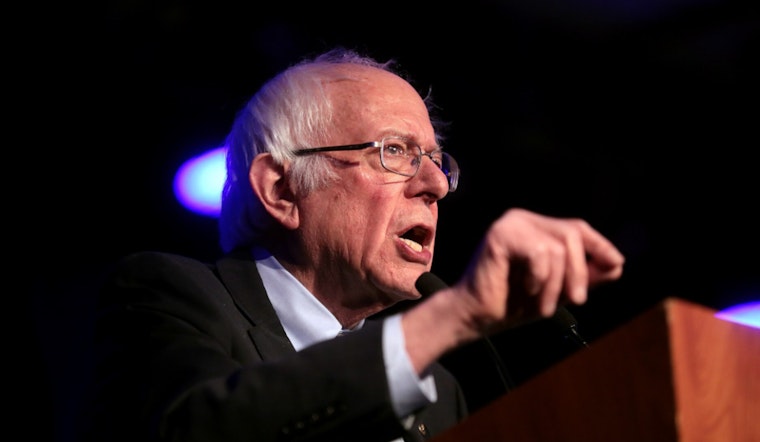
When Sen. Bernie Sanders lit up a Senate HELP Committee hearing by saying that "As a result of the 'Big Beautiful Bill,' 15 million Americans have been thrown off the healthcare that they need," it sounded like a political thunderclap. But that headline-grabbing number stitches together long-term forecasts, separate what-if scenarios, and current data in a way that blurs the line between what models predict over the next decade and what has actually happened so far.
Here is a cleaner, sourced breakdown of what is real-time enrollment data and what is still just projection.
PolitiFact and the statement
Fact-checking outlet PolitiFact reviewed Sanders' April 22, 2026 remarks and rated the claim Mostly False. In its coverage and related state reporting from WRAL, Sanders' office is described as having combined a Congressional Budget Office projection tied to the 2025 reconciliation law with a separate estimate about expiring premium tax credits to get to roughly 15 million.
What the CBO actually projected
The nonpartisan Congressional Budget Office analyzed the law and related baseline changes and estimated that the health provisions in the One Big Beautiful Bill would increase the number of uninsured Americans by about 10.9 million in 2034. When CBO folded in baseline items such as the expiration of enhanced premium tax credits and a proposed HHS marketplace rule, the total projection rose to about 16.0 million by 2034.
The CBO letter breaks out those numbers by category, including Medicaid provisions, marketplace changes, and tax-credit effects, and it is explicit that these are long-range projections, not a present-day headcount. Full details appear in the Congressional Budget Office analysis.
Enrollment so far: what the data show
Current federal enrollment data tell a much smaller story. The Centers for Medicare & Medicaid Services reported that 23.1 million consumers selected or were automatically re-enrolled in Affordable Care Act marketplace plans for 2026, about 1.2 million fewer than in 2025.
That drop is not trivial, but it is nowhere near the 15 million Sanders described as already "thrown off" coverage. The numbers are laid out in the Centers for Medicare & Medicaid Services open-enrollment report.
The subsidy cliff: an independent projection
One significant part of Sanders' 15 million figure comes from the potential end of enhanced premium tax credits. Independent modeling from the Urban Institute estimates that if those enhanced credits lapse, about 4.8 million more people would be uninsured in 2026 compared with a scenario in which the credits are extended.
That is a policy-sensitive projection, not a done deal. Congress could sharply reduce that impact by restoring or extending the subsidies.
Medicaid work rules and paperwork risk
Another piece of the projected coverage losses is tied to new Medicaid work requirements and more frequent eligibility redeterminations included in the 2025 law. Reporting from KFF Health News notes that states such as Nebraska began early rollouts in 2026 and that analysts expect many disenrollments will be driven by paperwork and verification problems rather than people actually failing work tests.
In practice, administrative churn, missed notices, difficult verification steps, and system limits are all expected to fuel a substantial share of short-term losses if implementation problems are not fixed.
Bottom line
Sanders' 15 million line pulls from credible analyses, but it blends distinct long-term projections and separate, policy-dependent estimates, then presents them as an immediate body count. Fact-checkers and independent analysts say that is premature: most of the larger numbers are modeled outcomes that would play out over years and depend heavily on what Congress, CMS, and state governments decide to do next.
What to watch next
The key things to watch now are whether Congress extends enhanced premium tax credits, how CMS finalizes marketplace and enrollment rules, and how states handle redeterminations and any work requirements. Those choices will decide whether the projected losses ever fully materialize. For the moment, federal data point to a modest dip in 2026 enrollment and a much larger, still-conditional risk on the horizon.


.jpg)