

























































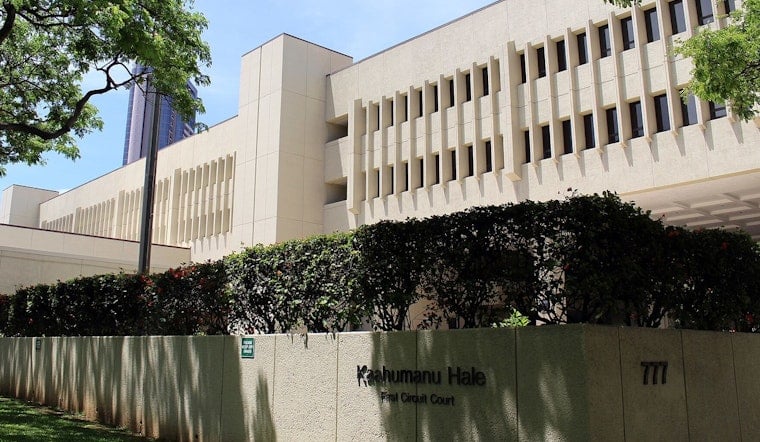
Eight years after launching a wrongful-death lawsuit, the siblings of Peter J. “Peter Boy” Kema Jr. are still in a grinding legal fight to hold the State of Hawaiʻi responsible for the 1997 death they say should never have happened. Their complaint targets the Department of Human Services and Child Protective Services, accusing them of sending Peter Boy back to his parents even after multiple reports of abuse. The case is still active in Honolulu Circuit Court, with a settlement conference on the calendar for July 30, 2026, and a civil trial set for Sept. 28, 2026, if no agreement is reached. Plaintiffs Chauntelle, Allan and Lina Acol have kept the case moving while their lawyers press for answers and damages.
According to the Honolulu Star‑Advertiser, the siblings’ legal team says the case has been dragged out for years by delays and procedural battles. Lead attorney Randall Rosenberg told the outlet that the state’s liability is “obvious” and that Peter Boy endured sustained abuse before his death. The 2018 lawsuit contends that DHS and CPS were negligent when they reunited the child with the Kema household and failed to properly investigate or respond to warnings about violence.
Appeals Court Kept the Case Alive
On Jan. 14, 2025, the Intermediate Court of Appeals turned back the state’s attempt to get the lawsuit tossed on statute-of-limitations and standing grounds. The panel said the Acol siblings might be able to prove that they did not truly discover that Peter Boy was dead until their parents later entered guilty pleas. The opinion also walked through how the State Tort Liability Act and the doctrine of fraudulent concealment interact with claims brought against the state, then sent key factual issues back to the trial court to sort out.
Parents’ Pleas and What Prosecutors Say Happened
Peter Boy disappeared in 1997 when he was six. Prosecutors say he died from septic shock after an infected arm wound went untreated. His mother, Jaylin Kema, pleaded guilty to manslaughter in December 2016. His father, Peter Kema Sr., followed with a guilty plea in April 2017 and received a 20-year sentence that July, as reported by Civil Beat. Peter Boy’s body has never been recovered, a haunting detail that still hangs over both the criminal history and the ongoing civil case.
Legal Fight Turns on Timing and the State’s Immunity
The appeals court underscored that, although Hawaiʻi has waived sovereign immunity for certain tort claims, the State Tort Liability Act includes a strict two-year deadline for filing suits against the state under HRS 662-4. Whether the Acols’ wrongful-death claims are timely is therefore a central issue. The court explained that the discovery rule and fraudulent concealment can delay when a claim legally “starts,” but deciding whether those doctrines apply here is a fact-intensive question for the trial court and possibly a jury, according to the Intermediate Court of Appeals.
Rosenberg has also cautioned that even if the family prevails, any payout might be constrained by damage caps and how the state manages its risk. He told the Honolulu Star‑Advertiser that Hawaiʻi is self-insured up to $2 million. That financial reality shapes both the family’s push for a public accounting and their expectations for what a legal victory could actually deliver.
What Lawyers Say About the Clock
Speaking to Hawaii News Now in 2025, Rosenberg explained that “Normally the wrongful death statute says that you have two years to file from the date of the person’s death,” which is why the discovery rule and allegations of fraudulent concealment sit at the heart of the Acols’ case. He argues the siblings, several of whom were still minors long after Peter Boy vanished, did not have the information or capacity to bring claims until their parents’ detailed courtroom admissions in 2016 and 2017.
The upcoming settlement talks and the September 2026 trial date will reveal whether the state is prepared to resolve the dispute quietly or face a public trial over decisions made nearly three decades ago. For longtime neighbors and child-welfare advocates who have followed Peter Boy’s story since the 1990s, the lawsuit has become a test of whether Hawaiʻi’s child-protection failures will be fully acknowledged in a court of law.





