

























































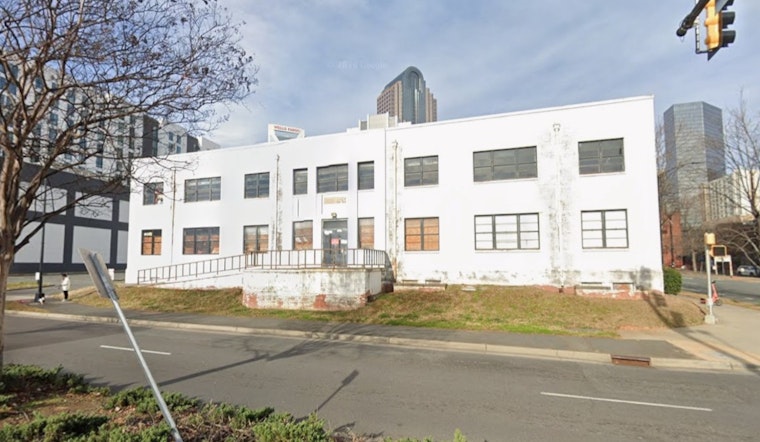
The McCrorey YMCA, one of the last surviving pieces of Charlotte’s historic Brooklyn neighborhood, is back up for sale and right back in the crosshairs of a familiar fight between developers and preservation advocates. Long vacant and officially landmarked by the city, the two-story brick building is being marketed as part of a larger uptown package that brokers say could unlock major redevelopment. Neighbors who remember when the Y was a community hub worry that listing it this way makes demolition more likely than restoration.
Opened in 1951, the McCrorey branch was the only YMCA available to African Americans in Charlotte during segregation. The building at 334 S. Caldwell St. has sat empty through several ownership changes and most recently sold in 2017, according to WBTV. For many residents, its legacy as a meeting place, educational center and neighborhood anchor is exactly why the push to preserve it has never really gone away.
Foundry Commercial has been hired to market the property and is bundling the McCrorey building with an adjacent office lot, presenting the combined site as roughly a 1.89-acre uptown development opportunity that could support mixed-use, residential and hospitality projects, according to the Revere listing. The marketing materials lean on transit access, existing parking income and a short walk to uptown amenities as key selling points for potential investors.
Arthur Griffin, who grew up nearby and remembers walking through the building as a boy and seeing the faded “YMCA” lettering, told WBTV he hopes the structure can be renovated into community space and a place where students can learn Brooklyn’s history instead of being razed. He said earlier efforts to save the property were overlooked, but he is still holding out hope that it is not too late.
Historic designation and protections
The Charlotte City Council approved a local historic-landmark ordinance for the Brooklyn McCrorey Branch YMCA in September 2021 after a recommendation from the Charlotte-Mecklenburg Historic Landmarks Commission, according to City of Charlotte records. The designation covers the building’s exterior and footprint and notes that the parcel is zoned Uptown Mixed Use. The city report states that landmark status “could significantly contribute to its long-term preservation.” Coverage in Charlotte Magazine also pointed out that the commission can delay demolition for up to a year, although that pause does not amount to permanent protection.
Developers’ pitch
The Revere offering sheet lists Foundry Commercial as the exclusive agent and frames the combined parcel as ready for high-density redevelopment, with flexible zoning that could support a range of mixed-use concepts. The sales pitch echoes broader uptown trends of turning underused commercial parcels into new housing and hospitality projects close to sports and entertainment venues, while also emphasizing existing revenue from parking and strong transit connections.
Brooklyn’s history still hangs in the balance
Brooklyn was once a thriving, largely self-sufficient Black neighborhood, but it was mostly wiped out during urban-renewal efforts in the 1960s and 1970s. The landmark report prepared by Gate City Preservation notes that more than a thousand structures were lost and identifies the McCrorey YMCA as one of the few buildings that survived. Its PWA Moderne architecture and the lingering “YMCA” ghostmark on the facade make it a rare, physical link to the neighborhood’s civic life and to civil-rights-era organizing that took place there.
What to watch next
The property is listed under Parcel ID 125-064-01 and is recorded in city documents as owned by SLT-Brevard, LLC. Any future buyer will have to go through the city’s landmark review process and required public hearings, according to City of Charlotte records. With Foundry handling the listing and the Revere offering active, preservation groups and neighborhood advocates say they will be watching closely to see whether the next proposal keeps the historic exterior and story intact or aims to clear the site for denser new development.





