

























































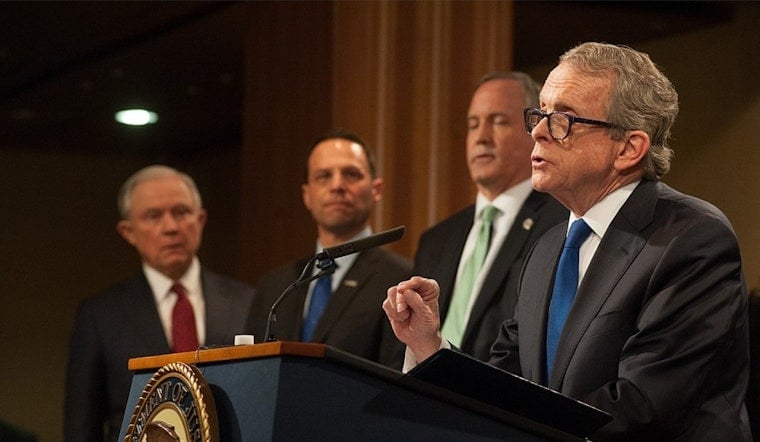
Gov. Mike DeWine has handed Ohio’s Medicaid officials new emergency powers to move faster against providers flagged as high risk, just as federal investigators ramp up scrutiny of alleged billing abuses in the state’s home-care waiver programs. DeWine’s office says the goal is to crack down on suspect billing while keeping legitimate in-home care flowing to the patients who depend on it.
The executive order, filed as EO 2026-01D, gives the Ohio Department of Medicaid authority to speed up revalidation for higher-risk providers, terminate agreements with providers that have not billed or delivered services in more than a year, and require recredentialing whenever the Medicaid director decides it is necessary, according to the Ohio Governor's Office. DeWine’s announcement also said the state will ask federal officials for a six-month moratorium on new home-health and hospice enrollments and will move to require GPS-enabled electronic visit verification for in-home caregivers. His office framed the package as an extension of long-running anti-fraud efforts that, the release says, have led to hundreds of indictments and recovered millions of dollars for taxpayers.
Federal crackdown widens
At the federal level, the Centers for Medicare & Medicaid Services has ordered a six-month nationwide freeze on certain new Medicare enrollments for hospices and home-health agencies and plans to ramp up data-driven investigations and targeted enforcement aimed at keeping bad actors out, according to CMS. The agency said the move is part of a coordinated federal anti-fraud effort and is meant to stop fraud “before it starts” by slowing the entry of suspicious new operators into the system.
Congressional task force demands records
On Capitol Hill, the U.S. House Oversight Committee has launched its own line of inquiry. Chairman James Comer and a newly formed task force have requested documents, communications and audits from the Ohio Department of Medicaid tied to Home & Community-Based Services programs. The committee’s May 12 letter lists dozens of specific providers and asks for records by May 26, as shown in a House Oversight Committee press release and a separate House Oversight Committee letter. The committee cited prior reporting that flagged clusters of provider offices and questionable billing patterns in the HCBS waiver program.
Statehouse reaction and local reporting
Statehouse reaction came quickly. Some legislative leaders pushed for even faster audits and enforcement, while others warned that sweeping actions could unintentionally cut off services for vulnerable Ohioans, according to coverage by WOUB Public Media. Local investigative work that helped spotlight billing clusters and suspicious provider addresses is summarized by the Springfield News-Sun, which also details DeWine’s emergency rules and the House committee’s document request.
What providers should watch
Providers billing Ohio Medicaid are being urged to review their revalidation status and any recent messages in the state’s provider portal, since higher-risk providers could now face quicker, more frequent reviews. The state’s enrollment and revalidation process is laid out on the provider resources page and could be accelerated for some providers under the emergency order, according to Ohio Medicaid. Because emergency rules move faster than the usual administrative process, affected providers may also see shorter notice periods when new requirements roll out.
For now, state officials say their priority is to stop improper billing without cutting off needed care, while federal regulators and Congress sift through data, records and audit findings. More emergency rule filings from Ohio Medicaid and additional oversight activity in Washington are likely as investigators review the material and weigh potential hearings or further enforcement steps.



