

























































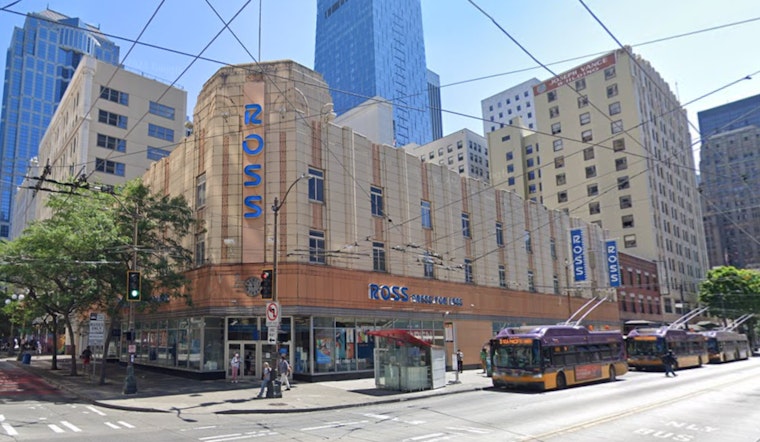
A plan for a striking 21-story mass-timber tower at Pike Street and Third Avenue has quietly fallen apart, leaving one of downtown Seattle’s most visible corners back in limbo.
Developers withdrew their application on Friday for the project that would have replaced the former Ross Dress for Less store at 301 Pike St, according to the Puget Sound Business Journal. No new proposal has been filed for the site, and the future of the building is once again an open question.
Ross shut its downtown location on Jan. 16, 2026, ending nearly 30 years in the space. The mass-timber project was supposed to be the next chapter for the high-profile corner at the southeast edge of Third and Pike, a stretch that has long been both a transit hub and a trouble spot.
Earlier plans called for a 21-story residential tower with about 340 apartments, two levels of above-grade parking and ground-floor retail, at an estimated cost between $160 million and $180 million, as reported by Connect CRE. Building Reimagined LLC, a partnership between architect Clark Barnes and BNBuilders, led the proposal.
The team had said it had secured limited partners and a mass-timber supplier, but still needed a general partner to complete the capital stack. Representatives did not immediately respond to requests for comment on the withdrawal, according to the Puget Sound Business Journal.
The project site itself carries a fair bit of history. The building at 301 Pike St began life as an F.W. Woolworth store, a three-story Art Deco structure completed in 1940 that later became home to Ross. The city’s historical inventory considers the Woolworth building architecturally significant, which means changes to its facade would trigger extra scrutiny from preservation officials, according to the City of Seattle Department of Neighborhoods.
Why the Proposal Stalled
The tower was always an ambitious bet. Developers had publicly acknowledged that they were still piecing together financing and hunting for a co-developer, a familiar sticking point for large mass-timber projects that come with higher upfront costs and tighter lending options.
The project team’s own disclosures, that it had limited partners but no general partner in place, signal that capital constraints likely played a major role in the decision to pull the plug, according to reporting by Connect CRE. Without a deep-pocketed lead partner willing to shoulder the risk, the numbers apparently stopped penciling out.
Downtown Retail and Development Context
The timing has not been kind to big downtown bets. Seattle’s core has been wrestling with sagging weekday foot traffic and elevated office vacancies, trends that have squeezed ground-floor retailers and made lenders more cautious about speculative projects.
This spring, Hoodline reported that downtown office weakness has dragged down property values and forced major tenants and retail anchors to rethink their footprints, as downtown skyscrapers took a $3.7 billion gut punch. In that environment, a pricey, design-forward timber tower without a locked-in partner was always going to be a tough sell.
With the application withdrawn, the owner and developer have a few options. They could try to rework the design, find a new partner or put the site on the market, according to the Puget Sound Business Journal. For now, the Woolworth and former Ross building sits empty at street level, and one of downtown’s most prominent corners will stay in a holding pattern until a financially viable plan emerges.



