

























































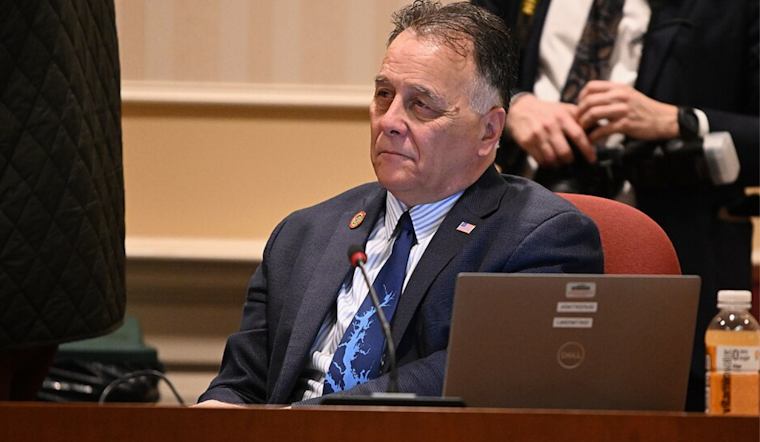
In Maryland Senate District 6, a Republican primary that was supposed to be a sleepy intra-party contest has turned into a full-on political brawl, with Sen. Johnny Ray Salling and challenger Daniel Eisenhart throwing around court filings, residency challenges, and sharp-elbowed social media blasts. What started as a low-profile challenge has now featured peace-order requests, a defamation lawsuit, and a tug-of-war over where the incumbent actually lives, all unfolding as the June 23 primary looms over Eastern Baltimore County.
Peace orders and claims of harassment
In April, Salling filed a court petition seeking peace orders against Eisenhart and several others, alleging harassment and threats. A judge rejected those petitions, according to WYPR. Salling told the station that opponents had "crossed the line" and claimed his family had been targeted, comments that hardened the tone on both sides. Campaign insiders say the failed peace-order bid only poured fuel on an already simmering feud, feeding a cycle of public accusations and retaliatory online posts.
Money and filings
On the money front, the contest is lopsided. Campaign finance reports show Salling with more than $60,000 in cash on hand, while Eisenhart has about $135, according to filings compiled by the Maryland State Board of Elections. State candidate listings show Eisenhart registered a small local committee and is running a lean, grassroots operation out of Dundalk. With that kind of financial gap, the race has leaned more on personal attacks, paperwork skirmishes, and ballot-related tactics than on expensive mailers or wall-to-wall ads.
Residency questions and the paper trail
One of the sharpest flashpoints is where Salling actually resides. Public assessment and tax entries have become Exhibit A in Eisenhart’s argument. Reporting by The Baltimore County Informer points to state assessment records for a Homberg Avenue property that list its "principal residence" status as "no." At the same time, social posts tied to family members feature a Timonium address outside District 6. Together, those details form the core of Eisenhart’s charge that the incumbent is out of step with Maryland’s residency expectations for legislative candidates.
Signs, social posts and a defamation case
Campaign signs have not been safe either. Both camps say their yard signs have been pulled up or torn down, while dueling social media posts have brought the dispute into public view. The online back-and-forth eventually reached a courtroom when Eisenhart filed a defamation lawsuit against Salling, as reported by WYPR. Eisenhart has repeatedly raised questions about Salling’s residence, an argument that has energized some local critics and pushed residency to the center of his pitch. For many voters in Dundalk and Essex, the back-and-forth has shifted attention away from policy debates and toward transparency, credibility, and local roots.
Legal implications
Behind the political fireworks are some very real legal hooks. Article III, Section 9 of the Maryland Constitution sets residency rules for senators and delegates, and Maryland courts have treated the word "reside" as a question of domicile when they review ballot challenges in candidate eligibility cases, as described in recent court opinions and legal analyses. Those interpretations guide how judges sort out where a candidate legally "lives" for election purposes. On a separate track, peace orders function as short-term civil protections under Maryland law rather than criminal charges, but filing for one, or having one denied, can still shape a campaign narrative and influence how voters view claims of harassment, according to the Maryland People's Law Library.
What’s next
The June 23 primary will settle who carries the Republican banner in District 6, and both campaigns are digging in for a final sprint across Eastern Baltimore County neighborhoods. Over the next few weeks, voters will be weighing campaign cash, residency records, and personal conduct alongside the usual mix of party loyalty and local concerns. For official candidate filings, sample ballots, and key voting dates, visit the Maryland State Board of Elections.





.jpg)