

























































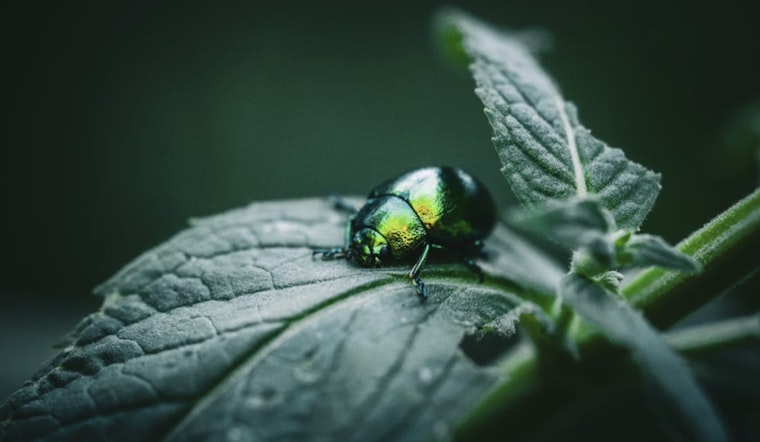
Adult emerald ash borer beetles are crashing the party early in Oregon this year, showing up weeks ahead of schedule after an unusually mild winter. Forestry officials say the jumpstart gives the invasive insects extra time to mate and lay eggs, which is bad news for ash trees across city streets, parks and river corridors because the larvae feed under the bark and can eventually kill the trees.
As reported by KGW, state and federal partners are already spotting adult emerald ash borers flying well before their usual season. Oregon Department of Forestry invasive species specialist Wyatt Williams told KGW that updated temperature models had predicted an earlier appearance this spring, and ODF forest entomologist Christine Buhl said, "these changes in climate favor insect pests."
The Oregon Department of Forestry's May Tree Health Bulletin had projected that adults would normally begin to emerge in the first two weeks of June, with most activity wrapped up by mid July. Last year in the Willamette Valley, the first recorded emergence was on June 10, a benchmark the bulletin uses to show how far ahead of schedule this spring's sightings appear to be.
What Early Emergence Means For Trees
Adult beetles cause only small feeding wounds on leaves and bark, but their larvae do the real damage by chewing through the cambium under the bark and girdling trees. In other emerald ash borer outbreaks, the results have been devastating. Federal research has found that ash populations in heavily infested areas can suffer mortality rates approaching 99 percent within just a few years of the pest becoming established, a pattern documented in long term forest studies.
How To Protect High-Value Trees
Treatment options are available, although they are limited and often expensive. OSU Extension details systemic products and application methods, including emamectin benzoate trunk injections and soil or trunk injections of other systemic insecticides. These treatments can protect trees for roughly one to three years, but they need to be reapplied and tend to work best when used before a tree is heavily infested.
Cities and local utilities have been gearing up since emerald ash borer was first detected on the West Coast in 2022, and Portland removed ash species from its approved street tree lists back in 2019 as part of that preparation. The City of Portland maintains an Emerald Ash Borer response plan, and EAB Detected Across Three Counties traced early detections across Oregon in 2024.
Where To Report Suspected Sightings
If you think an ash tree might be infested, officials say to look for D shaped exit holes in the bark, thinning or dieback in the canopy, or heavy woodpecker activity on trunks and branches. Suspected sightings should be reported to the Oregon Invasive Species Hotline at 1 866 INVADER or submitted through the online reporting form. The Hotline asks for clear photos and a precise location so specialists can confirm the pest and map any new detections.
State foresters say the earlier emergence is a clear reminder that warmer winters and hot springs can shrink the time communities have to respond. They are urging land managers to review preparedness plans and consider steps such as updating tree inventories, treating high value ash trees or planning targeted removal and replanting. For more details on identification, treatment choices and local planning efforts, see guidance from the Oregon Department of Forestry and OSU Extension.





