

























































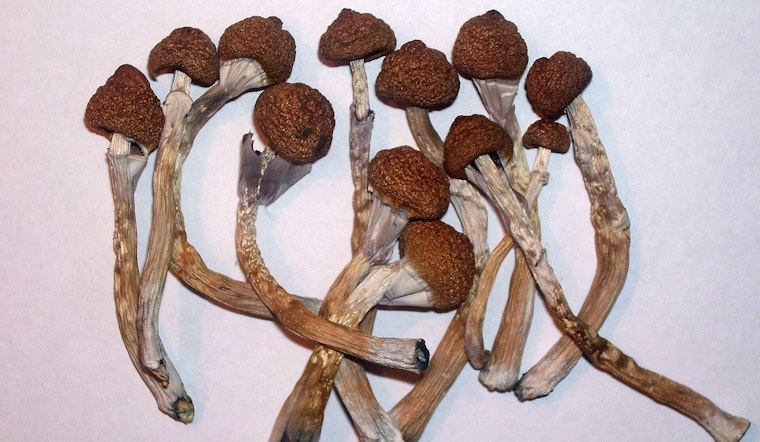
The Madison-area Usona Institute has landed on a very short federal shortlist, winning fast-track status to study psilocybin as a treatment for major depression after an April 18 executive order vaulted certain psychedelic drugs onto a national priority list. The award hands Usona a special review voucher meant to speed up Food and Drug Administration timelines and puts the nonprofit in a three-team club selected for accelerated scrutiny. Local researchers say the nod validates years of work, even as it raises thorny questions about how and where any future treatments would actually reach patients.
According to Wisconsin Public Radio, the voucher comes through a new federal pilot program that aims to shrink what is often six to ten months of FDA review down to roughly one to two months for qualifying applications. Usona, a nonprofit medical research organization based just outside Madison, will apply the award to its work on chemically synthesized psilocybin for major depressive disorder. Officials and scientists stress that the voucher can speed the regulatory calendar but does not loosen the evidence standards that FDA will use to judge the data.
What the Executive Order Does
The April 18 directive orders the FDA to create Commissioner’s National Priority Vouchers for psychedelic therapies that have earned breakthrough designation and tells the Department of Health and Human Services to back new state-federal partnerships, including a $50 million commitment through ARPA-H, according to the White House. It also instructs the Attorney General and HHS to begin a “timely rescheduling” review for products that make it through Phase 3 trials, an effort meant to shorten the distance between approval and real-world medical use. White House materials frame the move as a response to stubbornly high suicide rates and treatment-resistant mental health conditions, particularly among veterans.
Who Won the Priority Vouchers
After Usona, federal officials awarded vouchers to two more programs: Compass Pathways’ COMP360, a synthetic psilocybin candidate now in rolling new drug application review, and Transcend Therapeutics’ TSND-201, a methylone-based program in development for PTSD. Compass disclosed the rolling review and voucher in a statement from Compass Pathways, and Transcend confirmed its award in a separate release from Transcend Therapeutics. Industry watchers say the trio, which includes two psilocybin efforts and one methylone program, is a sign of how quickly late-stage psychedelic research has moved from fringe concept to potential approval track.
On-the-Ground Research in Wisconsin
Madison researchers emphasize that psilocybin therapy is not a quick pill-and-go kind of treatment. Dosing sessions in Hutson’s labs typically run six to eight hours with multiple clinicians monitoring each participant, followed by integration and counseling afterward, Paul Hutson told Wisconsin Public Radio. The Usona Institute is listed as the sponsor of a Phase 3 trial of psilocybin for major depressive disorder on ClinicalTrials.gov, a signal that the nonprofit is already working near the end of the traditional testing pipeline. That model, built around long clinic visits, teams of trained staff, and therapy before and after dosing, raises looming questions about how to train enough clinicians, how many centers can realistically offer the service and whether insurers will pay for such intensive care.
Legal and Regulatory Implications
For all the momentum, the drugs in question are still classified as Schedule I under federal law. The executive order instructs agencies to develop plans for handling, access and rescheduling as trials move forward, according to the White House. The voucher system itself does not alter FDA approval thresholds but can compress review timelines, analysts told The Washington Post, and federal officials have signaled that they will also probe access routes such as Right-to-Try. Put bluntly, a faster FDA decision on psilocybin will not automatically translate into wide-open clinical access while the drug remains tightly regulated.
Usona described itself as “deeply grateful” for the selection in comments reported by Urban Milwaukee, and UW–Madison researchers say they are preparing training pipelines in case regulators clear these therapies. For now, patients are still expected to encounter psilocybin primarily through clinical trials while federal agencies, universities and private firms sort out who will provide these labor-intensive treatments and who will foot the bill. The voucher may be a jump-start for Madison’s mushroom research, but whether the broader health system can keep pace is the part no one can fast-track.




