

























































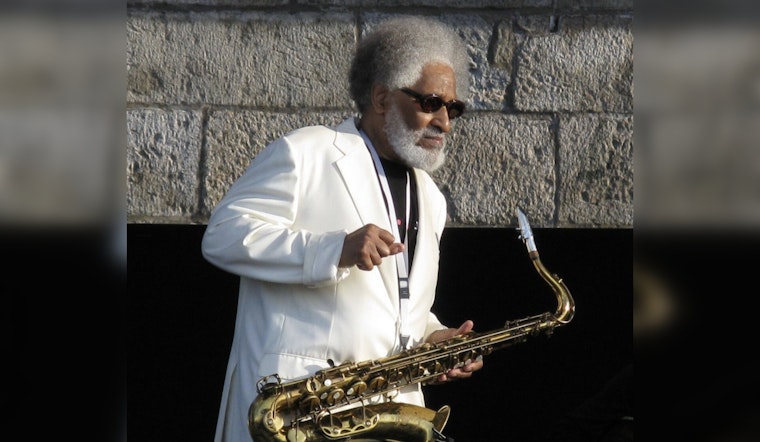
Sonny Rollins, the titanic tenor saxophonist whose fearless improvisations and huge, burnished sound helped shape modern jazz, died Monday at his home in Woodstock, New York. He was 95. For more than half a century, Rollins pushed his horn through everything from blistering bebop runs to unaccompanied cadenzas, becoming a benchmark for generations of players and listeners.
Publicist Terri Hinte confirmed the death, telling The Associated Press that Rollins died at his Woodstock home. She did not cite a specific cause. The AP reports that he had been largely housebound in recent years because of various physical problems and that pulmonary fibrosis ultimately forced him into retirement. According to the AP, he played his last full concert in 2012 and stopped performing altogether in 2014.
Harlem Roots And Early Breaks
Born Sept. 7, 1930, in Harlem, Rollins moved fast through the New York jazz world, joining Thelonious Monk's band in his late teens and later jamming with Miles Davis and Bud Powell, according to The Washington Post. His 1956 album "Saxophone Colossus," along with a run of late 1950s records, announced a muscular, melodic approach that became a template for tenor saxophonists who came after him.
Bridge Practice And Reinvention
At the height of his early fame, Rollins stepped away from the club circuit and into a different kind of practice room. He spent roughly two years in a kind of self-imposed retreat, shedding on a windswept niche above the East River on the Williamsburg Bridge before re-emerging with the 1962 album "The Bridge," as reported by The Guardian. That bridge period became central to his legend, a personal workshop that sharpened the musical risks he would take onstage for decades.
Awards, Film Work And Rock Cameos
Rollins's sound refused to stay in one lane. He contributed original music to the 1966 film "Alfie," showed up on the Rolling Stones' 1981 track "Waiting on a Friend," and collected late-career Grammys, including best jazz instrumental album for "This Is What I Do" (2001) and a solo award in 2006, as detailed by The Washington Post. He kept recording into his later years, ran his own Doxy Records imprint, and balanced touring with a famously demanding practice routine.
He Called Himself "A Work In Progress"
Despite the accolades, Rollins liked to frame himself as a perpetual student. He often brushed off honors, saying he considered himself "a work in progress" and telling reporters, "I don’t consider myself a musician that has learned as much as I want to learn," in a 2007 interview, according to The Associated Press. Survivors listed by the AP include a nephew, Clifton Anderson, and nieces Vallyn Anderson and Gabrielle DeGroat.
Enduring Reach
As one of the last living giants of the bebop era, Rollins leaves behind a body of work and a set of musical practices that students and professionals still study. He was honored as an NEA Jazz Master and received recognition from both the Kennedy Center and the National Medal of the Arts, per NPR/WUNC. Musicians and critics say his blend of melodic invention, rhythmic drive, and sheer tonal power will keep echoing through tenor saxophones for generations.





