

























































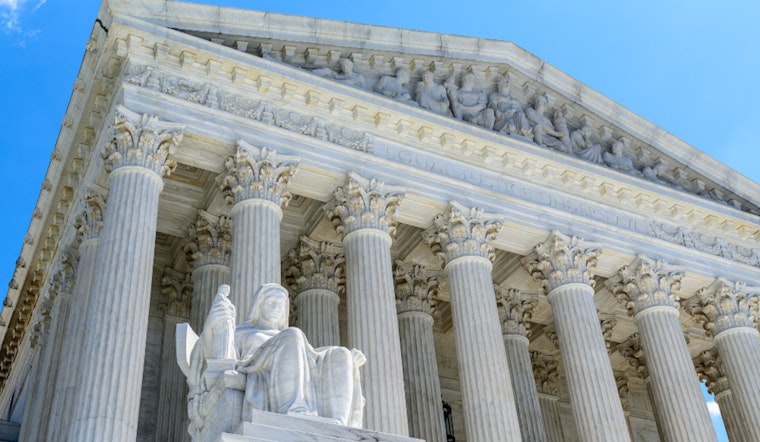
The Supreme Court on Monday sidestepped what could have been a defining showdown over the future of the Voting Rights Act, sending two high-profile redistricting cases back to lower courts instead of settling a central question about how the law can be enforced. The move leaves Native American tribes, Black voters and voting-rights advocates in an uneasy holding pattern as they head toward the 2026 midterms.
In brief, unsigned orders, the justices wiped away lower-court rulings in challenges to legislative maps in Mississippi and North Dakota and told those courts to take another look in light of last month’s decision in Louisiana v. Callais, according to AP. The North Dakota case was brought by the Turtle Mountain Band of Chippewa Indians and the Spirit Lake Tribe, while the Mississippi case involves the state NAACP and a group of voters. The orders offered almost no explanation, effectively instructing trial judges to redo their homework using the Callais framework.
Justice Ketanji Brown Jackson dissented from the court’s decision to vacate those rulings, writing, “Thus I see no basis for vacating the lower court's judgment,” and stressing that Callais did not answer the looming question of whether private parties can sue to enforce Section 2 of the Voting Rights Act, per the Supreme Court. She argued the court should have left the lower-court decisions intact instead of sending them back.
What Callais changed
In April the court tightened the standard for proving Section 2 vote-dilution claims, putting more weight on evidence suggesting intentional discrimination rather than relying on disparate impact alone. That shift, legal experts say, is likely to make it tougher for private plaintiffs to win these cases and is already reshaping how lawyers build voting-rights challenges, according to analysis from the Brennan Center.
Why this matters now
The immediate effect is procedural chaos for states and localities racing to lock in maps and election rules before November. Judges now have to figure out how to apply Callais to cases that were already in progress. Observers told The Texas Tribune that the new standard could give legislatures more room to draw maps along sharp partisan lines heading into the 2026 midterms.
What's next in the courts
Lower courts will now re-examine whether private citizens, tribes and advocacy groups can continue bringing Section 2 suits at all, a question that has been bubbling up in the 8th Circuit as panels in North Dakota and Arkansas have cast doubt on private enforcement. In the Arkansas case, a key brief was due this week, and the matter is still on the Supreme Court’s docket, WFAE reports.
Legal implications
If future rulings end up limiting private enforcement, the job of policing racial discrimination in voting would fall much more heavily on the Justice Department, tying protections for minority voters more tightly to whoever controls the executive branch. Civil-rights groups say they are alarmed by the court’s latest move and insist they will keep pressing their cases in court and in Congress, according to AP.



