

























































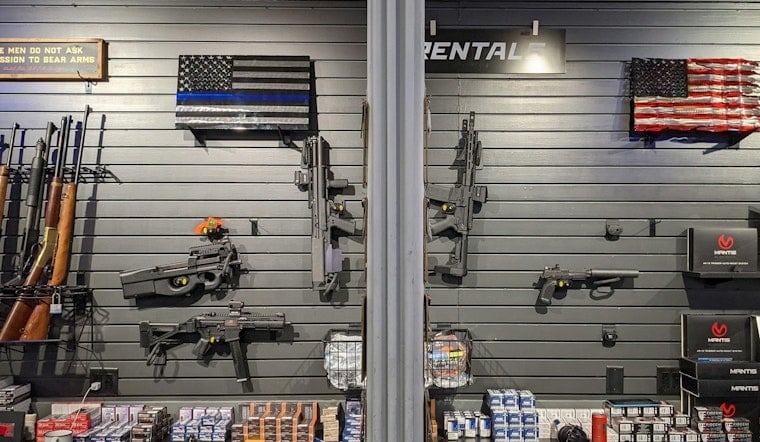
The U.S. Supreme Court on Monday declined to step in to block a City of Chicago lawsuit that accuses a Gary, Indiana gun shop of funneling firearms into the city and onto crime scenes. With the justices staying on the sidelines, the case will move forward in Cook County, where Chicago is seeking injunctive relief and damages tied to the flow of guns. City lawyers say they are targeting a pattern of sales that allegedly supplied weapons later recovered at shootings across Chicago.
The dealer had asked the high court to pause the litigation, but the justices did not grant that relief, according to Crain's Chicago Business. The dispute is docketed at the Supreme Court as No. 25‑775, and filings on the court’s site show the city filed an amended complaint on Jan. 13, 2026, after the Illinois Appellate Court revived the suit. As outlined on the Supreme Court docket, both sides traded briefs in recent weeks while waiting to see if the justices would intervene.
Chicago originally sued the Indiana dealer in 2021. The case was reinstated on March 14, 2025, when the Illinois Appellate Court reversed a trial court dismissal for lack of jurisdiction, according to court records and the published opinion. The complaint alleges the store repeatedly sold guns to so‑called “straw purchasers” and traffickers who then resold firearms in Chicago. Investigative reporting and tracing cited by the city, detailed by FindLaw, show more than 850 crime guns recovered in Chicago from 2009 to 2016 were linked to the shop.
The legal fight has centered on whether an out‑of‑state dealer can be sued in Illinois courts. The appellate panel said the record contained extensive evidence that the dealer purposefully directed sales into the Illinois market, which the court said satisfied the "minimum contacts" test and allowed the claims to proceed in Cook County. Those jurisdictional findings are discussed at length in the city’s filings on the high court docket. Westforth had urged the justices to step in after the trial judge dismissed the case, arguing that Illinois courts lacked authority over an Indiana business.
City leaders and gun safety advocates welcomed the Supreme Court’s decision not to block the suit. "This decision is a step toward accountability. We will keep fighting until we end the gun violence epidemic in our city," Mayor Brandon Johnson said in a statement quoted by Everytown Law. Reporting and court exhibits show the shop later announced it would close and liquidate inventory in July 2023 after years of inspections and citations. ProPublica reviewed deposition testimony and agency records that underpinned those allegations.
What happens next
The case now returns to the Circuit Court of Cook County at the Richard J. Daley Center, where Chicago is expected to push ahead with discovery and seek both injunctive relief and damages tied to the alleged trafficking. If defendants lose in state court, they can pursue additional appeals in Illinois or raise federal questions later. For the moment, the appellate court’s reinstatement of the lawsuit and the Supreme Court’s refusal to intervene leave the city’s claims intact. The Circuit Court of Cook County maintains the public dockets and local filing details, and the Circuit Court of Cook County notes its role as the trial forum for these kinds of cases.
Why it matters
Lawyers and advocates say the appellate ruling, along with the Supreme Court’s decision not to block it, could make it easier for cities to pursue civil claims against out‑of‑state vendors whose sales patterns are tied to local gun violence. Supporters call the opinion an important precedent confirming that targeted out‑of‑state dealers can be sued where the harm is felt, and they say the pending Cook County litigation will test whether civil remedies can change retail behavior and reduce downstream harms. Everytown Law has characterized the appellate decision as setting that precedent.





