

























































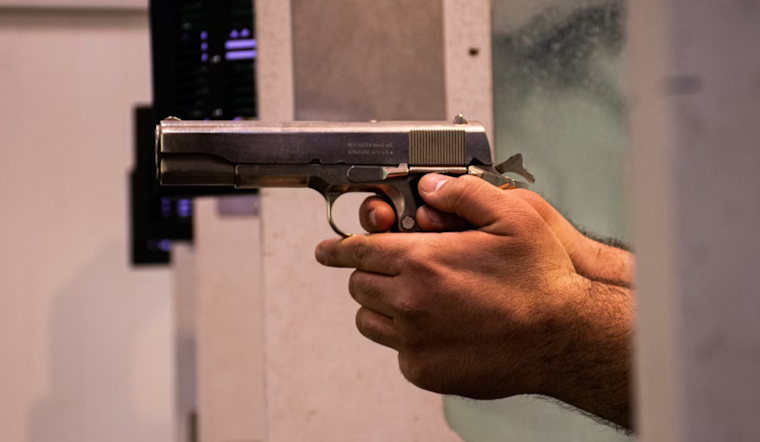
Maryland’s sweeping rules on where licensed residents can carry a gun are no longer just a local fight. The state’s “sensitive places” carry ban is now sitting at the doorstep of the U.S. Supreme Court, with gun-rights groups and state officials asking the justices to spell out which public spaces can legally be declared off-limits under the Court’s post-Bruen playbook.
Attorneys for the Second Amendment Foundation, Maryland Shall Issue, and the Firearms Policy Coalition say they have asked the high court to review Novotny v. Moore, while the state has filed its own petition in the related Moore v. Kipke matter, according to the groups’ case pages and local reporting. The plaintiff organizations list an array of plaintiffs and legal filings on the Firearms Policy Coalition, and local coverage of the petitions is available from the Tampa Free Press.
What the appeals court decided
A three-judge Fourth Circuit panel issued a January 20, 2026, opinion that mostly upheld Maryland’s Gun Safety Act of 2023 while carving out at least one major exception. The court affirmed bans for many of the places the state listed, including government buildings, school grounds, state parks, mass-transit facilities, museums, and entertainment venues, but found that the law’s default ban on carrying in private buildings open to the public could not stand. The published panel opinion walks through location-by-location historical analogues and is the basis for the current competing petitions; see the Fourth Circuit’s opinion for the detailed analysis.
Why Bruen matters
The fight traces directly to the Supreme Court’s 2022 decision in New York State Rifle & Pistol Ass’n v. Bruen, which directed lower courts to decide Second Amendment challenges by asking whether modern regulations align with this Nation’s historical tradition of firearm regulation. Under Bruen, a regulation survives only if the government can point to historical analogues that justify comparably disarming people for comparable reasons. That history-and-tradition test is the legal lens at the center of the Novotny and Kipke disputes.
Arguments from both sides
Gun-rights lawyers argue that Maryland’s list is so broad that it effectively wipes out the public-carry right recognized in Bruen and that the high court should step in to set firm boundaries. The petitioners contend the state has tried to rebrand nearly every public gathering spot as a “sensitive place,” a move they say cannot be justified under historical precedent.
Opponents, including Everytown Law and allied public-safety groups, counter that the restrictions are focused on crowded or vulnerable locations where the presence of firearms poses particular risks and that the Fourth Circuit properly upheld most of the statute; see Everytown’s statement for that perspective.
Legal stakes for Marylanders
The litigation is not just a doctrinal skirmish. It directly affects where permit holders may travel and the criminal exposure they face if they carry in a banned location. Critics warn that overlapping statutes and permit restrictions could leave lawful carriers vulnerable to prosecution or loss of firearms rights, and commentators point to state sentencing rules that permit multi-year penalties in certain weapons offenses. For context on the litigation and statutory penalties, see the parties’ case pages and state sentencing materials.
What happens next is procedural but consequential. The Supreme Court will decide whether to grant review at one of its conferences. If it takes one or both petitions, the justices could squarely address how to apply Bruen’s history-and-tradition test to modern “sensitive places.” A decision to grant review would set a schedule for briefing and argument and could reshape how courts nationwide treat a long list of location-based carry restrictions.





