

























































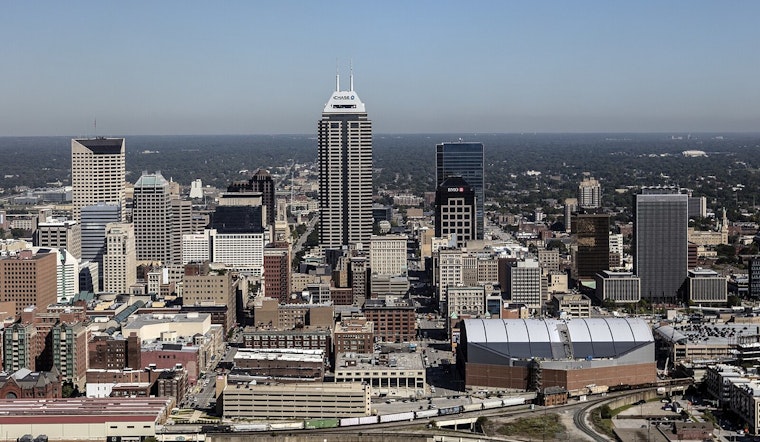
Indiana quietly notched one of its strongest population gains in years in 2025, as new residents poured into the Indianapolis suburbs and other growing communities. Nearly 39,000 people were added to the Hoosier headcount, pushing the state’s population close to 7 million and keeping Indiana firmly in the regional growth race.
According to the Indiana Business Research Center, the state added 38,579 residents between July 2024 and June 2025. The center’s estimates show that 66 of Indiana’s 92 counties logged population gains, a sign that growth is spreading rather than clustering in just a few hot spots.
Republican state Rep. Zach Payne of Charlestown credited recent policy moves for the influx, telling WIBC 93.1 FM, "Efforts to cut taxes, reduce red tape, and address affordability issues are bringing businesses, jobs, and people to our state." Fellow Republican Rep. Dave Heine of Fort Wayne added that "Indiana continues to grow and prove it is the best state in the Midwest," capturing the generally upbeat mood among statehouse boosters.
Where the new Hoosiers live
The strongest growth clustered in the suburban ring around Indianapolis and a handful of fast-growing counties. Boone County led the state with a 2.6% population jump, while Hancock County followed closely with a 2.4% increase. Hamilton County posted the biggest numeric gain, adding about 7,351 new residents, and Allen and Johnson counties each grew by just over 3,200 people, according to Indiana Economic Digest.
Migration patterns: international vs. domestic
Researchers say most of Indiana’s new residents still came from abroad, although that pipeline is not as wide as it used to be. International migration brought in roughly 17,900 people in 2025, but that inflow dropped about 53% from 2024. At the same time, domestic migration picked up speed, jumping roughly 102% to about 12,200 people, according to Indiana Public Media. That mix of slower global arrivals and stronger domestic inflows helped Indiana outpace its neighboring states in 2025, even as analysts warned that the international side of the ledger may keep cooling.
What it means for housing, jobs and services
The Indiana Business Research Center notes that the state’s natural increase, defined as births minus deaths, shrank last year and could act as a brake on future growth. "This marks the first time in the last four years that Indiana’s natural increase has declined," the center reported, a reminder that migration is now doing more of the heavy lifting.
Even so, the economy is still moving in the right direction. Indiana’s real GDP reached about $422.4 billion in 2025, up roughly 2.5% from 2024, according to USAFacts. That growth gives policymakers and local leaders some breathing room as they scramble to match rising population numbers with enough housing, schools and public services.
For planners and developers, the immediate challenge is turning those headline population gains into sustainable communities rather than strained infrastructure. Analysts cited by Indiana Economic Digest say the brief rural rebound appears to be fading and urge officials to track migration trends and building permit data closely so growth does not outrun the state’s ability to handle it.





.jpg)